Coffee Triangle
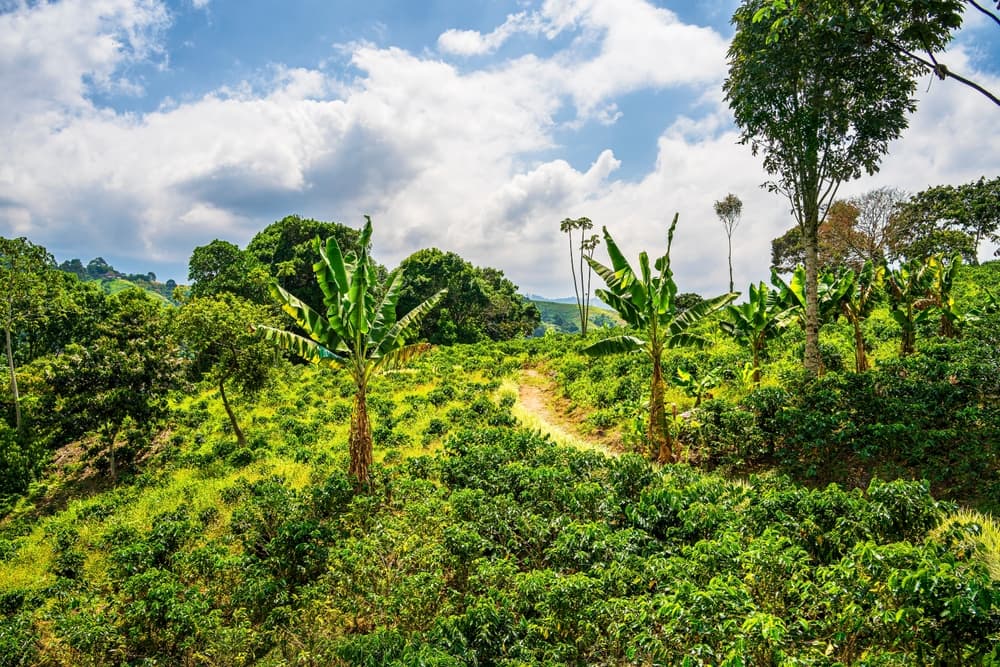
Salento-Filandia-Salamina Triangle UNESCO-listed, coffee farms between 1,400 and 1,800 metres and 60-metre wax palms in Cocora Valley.
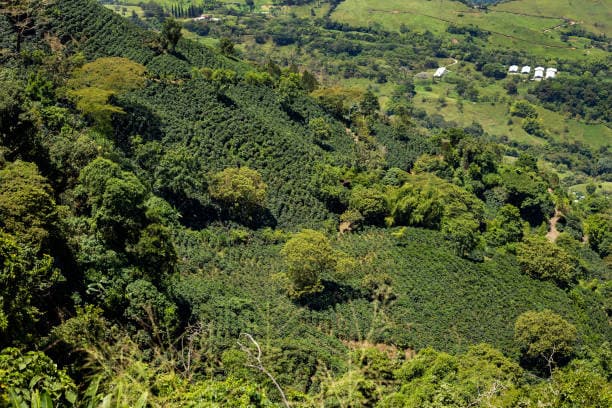
The Coffee Triangle, or Eje Cafetero, spans three departments of the Central Cordillera: Quindío, Risaralda and Caldas. From our offices in the capital, we send travellers by plane (45 minutes to Pereira or Armenia) or overland from Medellín (6 to 7 hours on the Coffee Highway). The region was inscribed as a UNESCO World Heritage site in 2011 under the designation Cultural Landscape of Coffee Region of Colombia, a recognition that focuses on the interplay between rugged terrain, family plots of 5 to 10 hectares and peasant architecture in bahareque—woven bamboo walls and daub painted in vivid colours.
Arabica coffee grows here between 1,200 and 2,000 metres, on volcanic soils nourished by the historical eruptions of Nevado del Ruiz and Nevado del Tolima, two still-active volcanoes rising above 5,000 metres. This altitude creates a stable temperate climate: 18 to 24°C during the day year-round, cool nights around 14°C, and light that shifts rapidly because of high-altitude mists (the neblina) that roll in late morning. Rain falls mostly in April-May and October-November, but it is localised and alternates with long clear spells, which accounts for the double harvest each year.
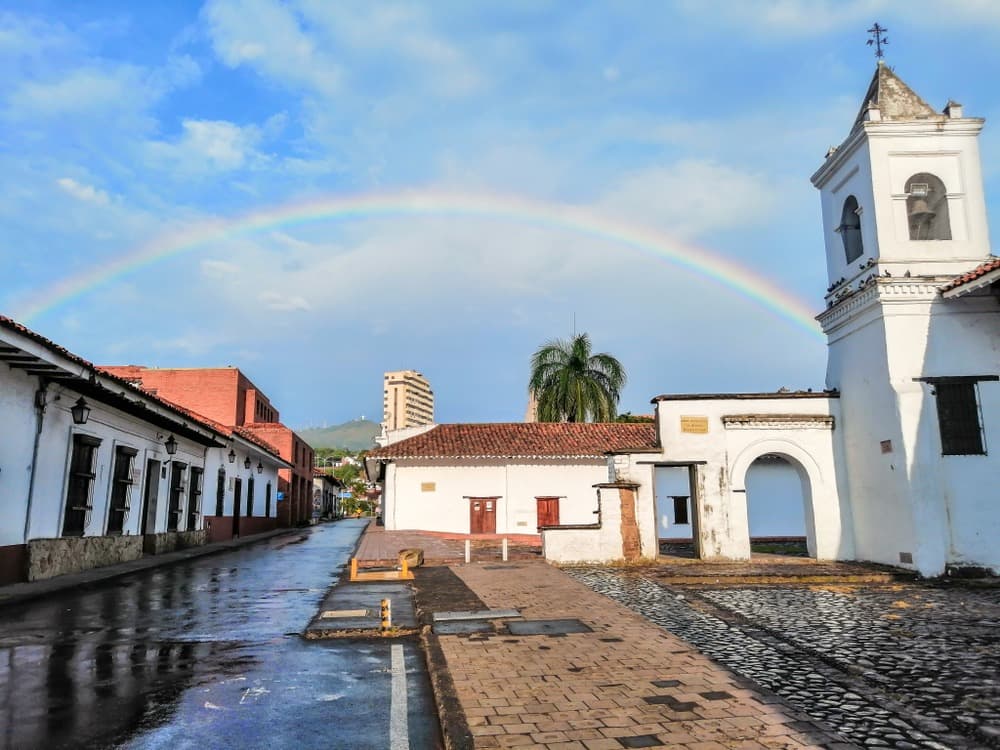
Three villages structure a stay in the region. Salento, in Quindío, serves as the base for Cocora Valley and concentrates the guesthouses, roastery workshops and tejo bars—that Colombian game where metal discs are tossed at powder-filled targets. Filandia, 25 minutes further north, is quieter and preserves a central square lined with houses featuring carved wooden balconies; bejuco basketry workshops there still craft traditional coffee baskets. Salamina, in Caldas, sits apart from mainstream circuits and offers the country's best-preserved peasant colonial architecture, with its carved doors (puertas talladas) that residents maintain house by house.
Cocora Valley, 11 kilometres from Salento, is home to wax palms (Ceroxylon quindiuense), Colombia's national tree, which can exceed 60 metres. The full circuit through Bosque de las Palmas, Casa de los Colibríes and finca La Montaña takes 5 to 6 hours of walking with 700 metres of elevation gain, over muddy trails most of the year. For less ambitious walkers, a short 2-hour loop to the main viewpoint remains possible. Los Nevados National Park, accessible from Manizales, offers another dimension: high-altitude páramo between 4,000 and 4,500 metres, Otún lake and approach to the Santa Isabel glacier for acclimatised hikers.
A stay at a coffee farm remains the heart of the experience. We work with around fifteen family-run estates between Quimbaya, Pijao and Aguadas that welcome travellers. The visit follows the grain's cycle: hand-picking of red cherries (chapolera), depulping on hydraulic lines, fermentation for 18 to 36 hours in cement tanks, drying for 8 to 15 days on marquesinas—those wheeled covered platforms. Tasting is done cupping-style, the standardised method of the Specialty Coffee Association, with coffees rated between 82 and 88 points. At table, you'll taste bandeja paisa (rice, red beans, minced meat, chicharrón, plantain, egg, avocado), trucha de Cocora caught locally, and aguapanela with lemon, a hot drink made from reduced sugarcane juice that pickers drink mid-morning.
Must-see
Cocora Valley and wax palms. A 5 to 6-hour walk from Salento through cloud forest to Bosque de las Palmas where 50 to 60-metre Ceroxylon trees stand out against green ridgelines.
Night at a Pijao coffee farm. Stay with specialty producers, rising at 5:30 a.m. with pickers during harvest (April-May and October-November), followed by the complete process through to cupping late morning.
Salamina and peasant architecture. Village in Caldas at 1,822 metres, away from tourist flows, where residents restore their own carved doors and 19th-century bahareque balconies.
Toche Wax Wood. Alternative valley to Cocora, accessible by Willys jeep from Salento, where the concentration of palms is denser and trails nearly empty.
Los Nevados National Park. High-altitude páramo above 4,000 metres from Manizales, Otún lake and approach to Santa Isabel glacier for already-acclimatised walkers.
When to go
The region can be visited year-round thanks to its stable temperate climate (18 to 24°C during the day, 13 to 15°C at night), but two periods stand out. The driest months run from December to March then July to August, with clear mornings over the volcanoes and hiking trails easily passable. This is the season we recommend for Cocora Valley and Los Nevados Park, where visibility above 4,000 metres determines the appeal of the walk.
The rainy seasons, April-May and October-November, bring 200 to 300 mm a month and make trails very muddy, but they coincide with the two coffee harvests: this is the best time to truly understand farm work. Rain often falls late afternoon, leaving mornings usable. We avoid Colombia's long holiday weekends (Semana Santa in March-April, late December and early January) when Salento and Cocora become congested.
Practical advice
We recommend devoting 4 to 5 full days to the region to combine two nights on a farm, a day at Cocora, a day at Filandia or Salamina and possibly a foray toward Los Nevados. Three days suffice for a first approach centred on Salento and a single farm. The logistics gateway is through Pereira (Matecaña) or Armenia (El Edén) airports, both connected to Bogotá and Medellín in 45 minutes' flying. On the ground, distances are short but mountain roads are slow: allow 1h30 between Salento and Manizales, 45 minutes between Salento and Filandia.
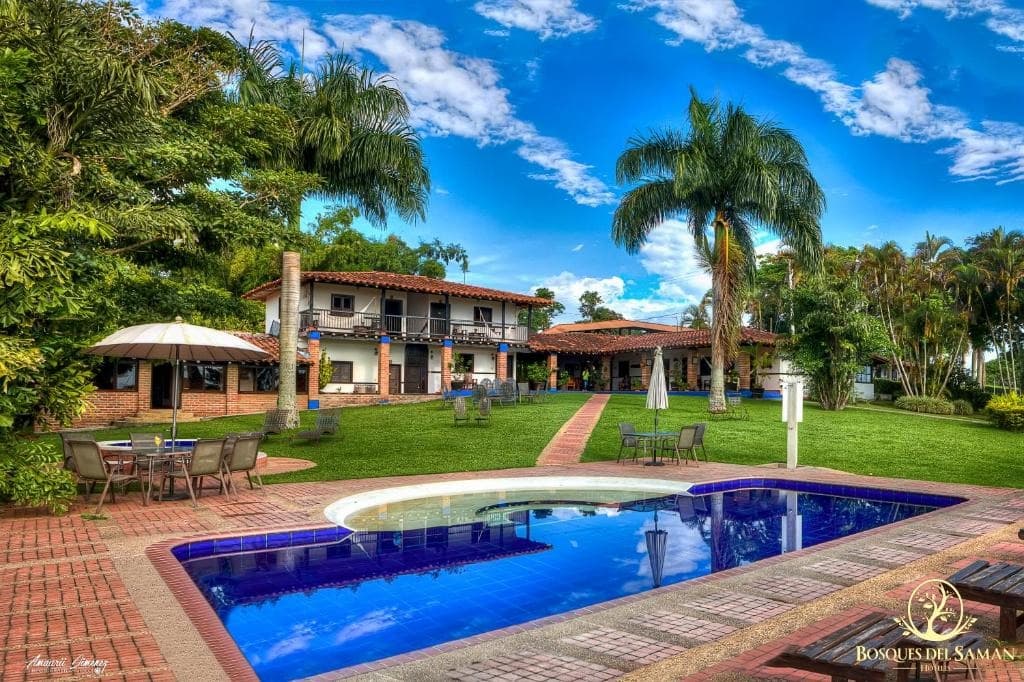
The Coffee Triangle combines naturally with the Andes and Bogotá at the start or end of an itinerary, and works well as a gentle transition before the Caribbean coast or after the southern Andes. The comfort level is high: upscale farms offer rooms with private bathrooms, pools and chef-driven kitchens, while simpler peasant lodgings remain clean and welcoming. The region is particularly suited to contemplatives, families with children from age 6 (the short Cocora walks are accessible) and travellers wanting to understand an agricultural supply chain from end to end. Active hikers will find their match at Los Nevados, but should plan prior acclimatisation.