Pacific and Whales
An oceanic frontier without roads, where humpback whales give birth from July to October facing the Afro-Colombian villages of Chocó.
Colombia's Pacific facade stretches nearly 1,300 kilometers, from the Panamanian Darién in the north to the Ecuadorian border in the south. From our offices in Bogotá, we approach it as a world apart, with no road connection to the rest of the country. Everything arrives by plane or boat. The departments of Chocó, Valle del Cauca, Cauca, and Nariño share the same geography: dense jungle pressed against the ocean, crossed by brown rivers like the Atrato, San Juan, and Baudó, which drain one of the most rain-soaked regions on the planet, receiving 8 to 12 meters of rainfall annually in some areas.
The population, 80% Afro-descendant, descends from maroons who fled the colonial mines of Cauca starting in the 17th century. Today, villages like Nuquí, Bahía Solano, El Valle, Joví, Termales, Coquí, and Jurubidá live off artisanal fishing, subsistence crops (plantain, rice, coconut), and, for the past two decades, community tourism that we develop with local community councils. Further south, on the Cauca coast, López de Micay and Guapi preserve their own musical traditions, currulao and marimba de chonta, recognized by UNESCO in 2010.
The cuisine reflects this autonomy from the rest of Colombia: fish encocados in coconut milk, tapao de pescado cooked in leaves, piangua (a mollusk gathered from mangrove swamps by Cauca women), arroz clavado. Borojó, a very dense local fruit, and viche, sugarcane alcohol clandestinely distilled for decades before being recognized as heritage in 2021, accompany patron saint festivals and sung funeral vigils (alabaos), practiced especially in Chocó.
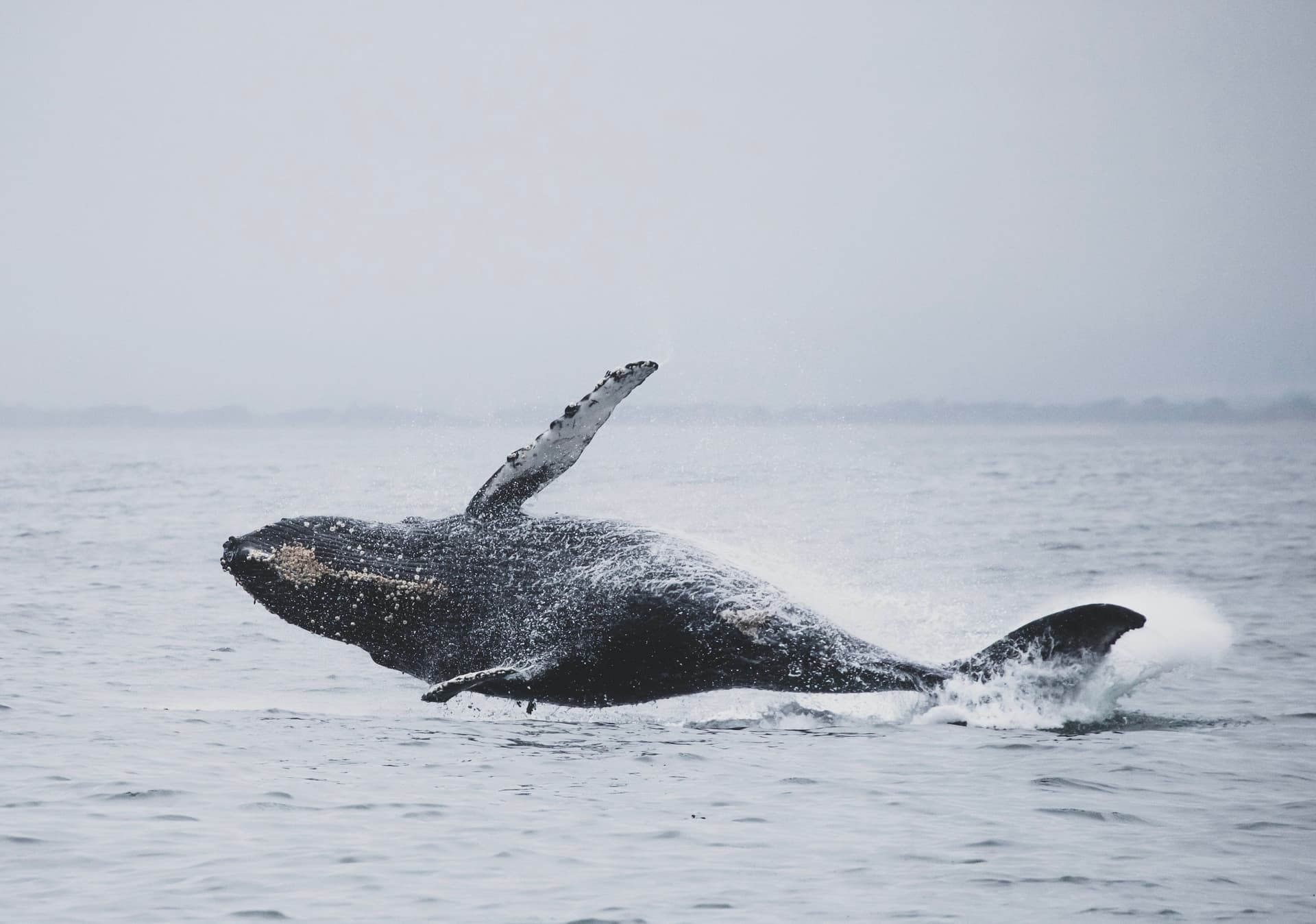
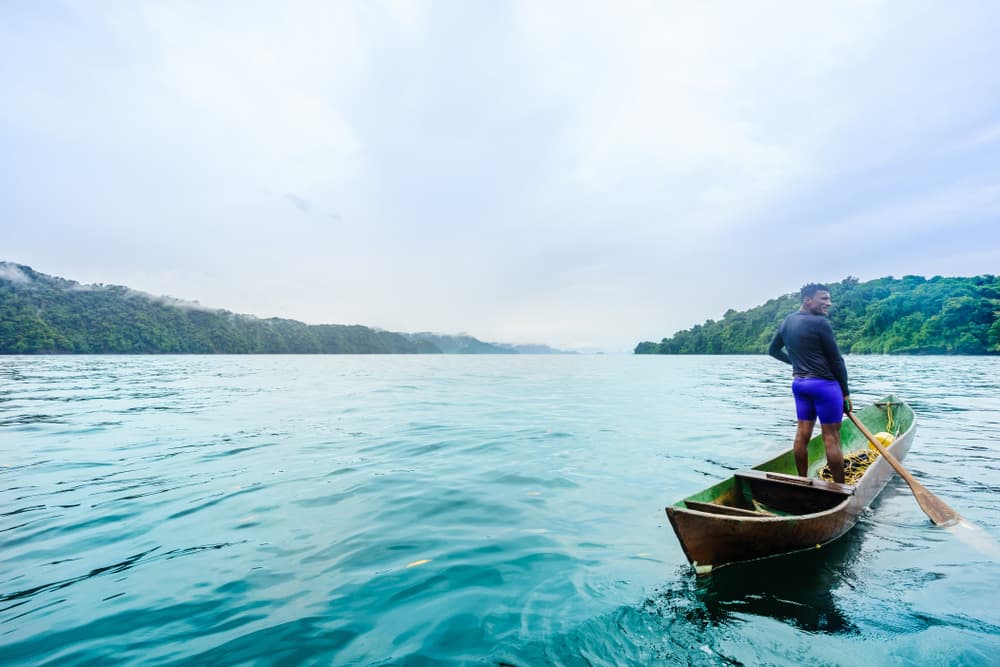
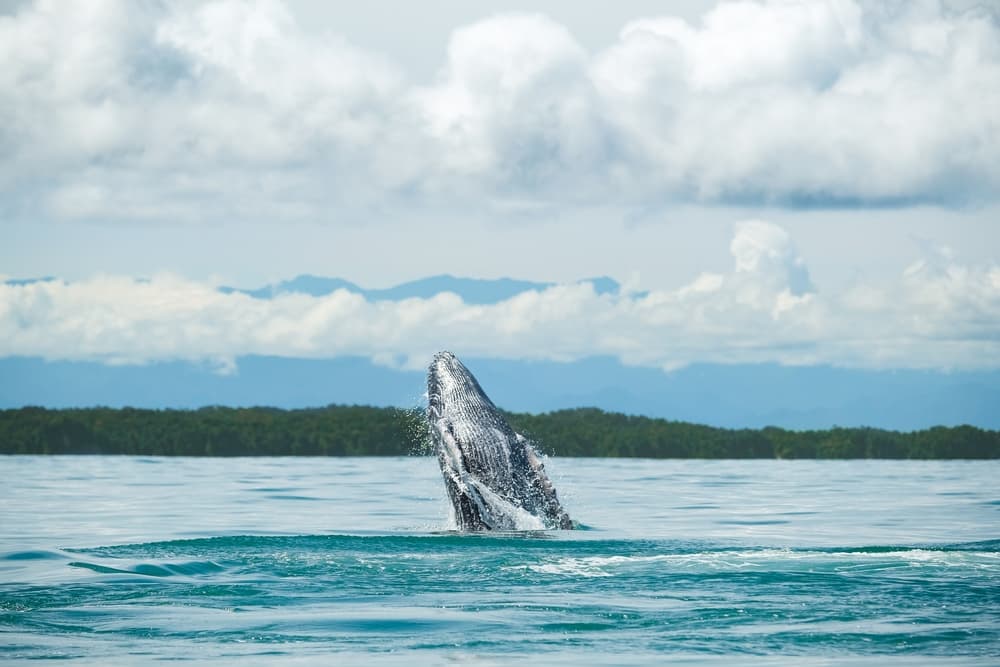
The region's biological interest lies in its position: the Chocó biogeographic zone, which extends from Panama to Ecuador, concentrates one of the world's highest densities of plant endemism. Utría National Park, accessible by lancha from Nuquí in 45 minutes, protects 54,000 hectares of forests, mangroves, and reefs. It is in its bay that humpback whales, after 8,000 kilometers of migration from Antarctica, come to give birth and nurse their calves from mid-July to mid-October. Observation outings are conducted in converted fishing boats from Joví or Termales, on 3 to 4-hour sessions led by local captains trained by Yubarta, a cetology foundation that has worked in the area since 1986.
Beyond the whales, the Pacific offers nearly deserted beaches (Guachalito, El Almejal), freshwater waterfalls that empty directly into the ocean like Cascada del Amor near Termales, nighttime outings to watch leatherback turtles nesting between September and December on the El Valle beach, and observation of poison dart frogs Phyllobates in the Jurubidá forest. Sport fishing around Bahía Solano attracts a limited clientele between January and April, when the waters are clearer.
You must accept that this region cannot be visited like the rest of Colombia. No roads, no reliable mobile network, electricity by generator cut off at night in most ecolodges, permanent humidity. This is precisely what has preserved the communities and the forest. We send travelers here who want slower time, direct exchanges with hosts, and who accept letting the weather reshape their plans.
To Discover
Humpback whales in Utría's bay. Three-hour lancha outings from Joví or Termales, from mid-July to mid-October, to observe females and their calves in the calm waters of the national park, led by captains trained by the Yubarta foundation.
Guachalito and El Almejal beaches. A dozen kilometers of black volcanic sand bordered by coconut palms and jungle, with a few wooden ecolodges spaced hundreds of meters apart, with no neighbors or road access.
Fishing and Afro cooking in Bahía Solano. Morning outing with a fisherman from Mecana or Huina, return to the village and fish preparation in encocado or tapao style with a family, accompanied by fried plantain patacones and borojó juice.
Leatherback turtle nesting at El Valle. Nighttime patrols on the La Cuevita beach between September and December, with biologists from the Caguama program, to witness the nesting of the world's largest sea turtles, often exceeding 400 kilos.
Currulao and marimba in the south. In Guapi and López de Micay, in Cauca, evenings at chonta marimba makers' homes allow you to hear this Afro-Colombian music recognized by UNESCO, played by families rather than on stage.
When to Go
The reference season remains whale season, from mid-July to mid-October, with peak sightings in August and September. Temperatures oscillate year-round between 24 and 30°C, with humidity exceeding 85%. It rains every month, often in late afternoon or at night, but the heaviest rainfall falls between May and November. January, February, and March are the least rainy months, with calmer seas suitable for sport fishing and diving around Cabo Marzo, but no whales.
High local season corresponds to Colombian school holidays: Holy Week, mid-June to mid-July, and late December. Ecolodges are fully booked six months in advance during the whale season window; we therefore recommend securing dates as early as January for an August or September departure. Outside whale season, the region remains accessible but the main draw disappears, except for travelers focused on the forest, communities, and fishing.
Practical Advice
We recommend a minimum of four nights on site, ideally five, given transfer times. Access is by flight from Medellín (Olaya Herrera airport) to Nuquí or Bahía Solano, 50 minutes on 19-seat aircraft operated by Satena or San Germán. Baggage is limited to 10 kilos in the hold. From Nuquí airport, allow 30 to 60 minutes by lancha to reach ecolodges in Joví, Termales, or Guachalito. Weather can delay flights by a day; we always plan a margin before a return international flight.
Comfort is rustic but refined: wooden bungalows on stilts, mosquito nets, non-potable running water, meals taken communally featuring fish of the day. No air conditioning, limited wifi. The region combines well with the Coffee Triangle or the Andes and Bogotá at the beginning or end of a circuit, less easily with the Caribbean Coast for logistical reasons (no direct flights). It suits contemplatives, families with children from age 8, wildlife watchers, and travelers who have visited Colombia before and seek a less-traveled side of the country.