Andean South and Desert
From the ochre Tatacoa Desert to the megalithic statues of San Agustín and the painted hypogea of Tierradentro, an archaeological and Andean loop south of Bogotá.
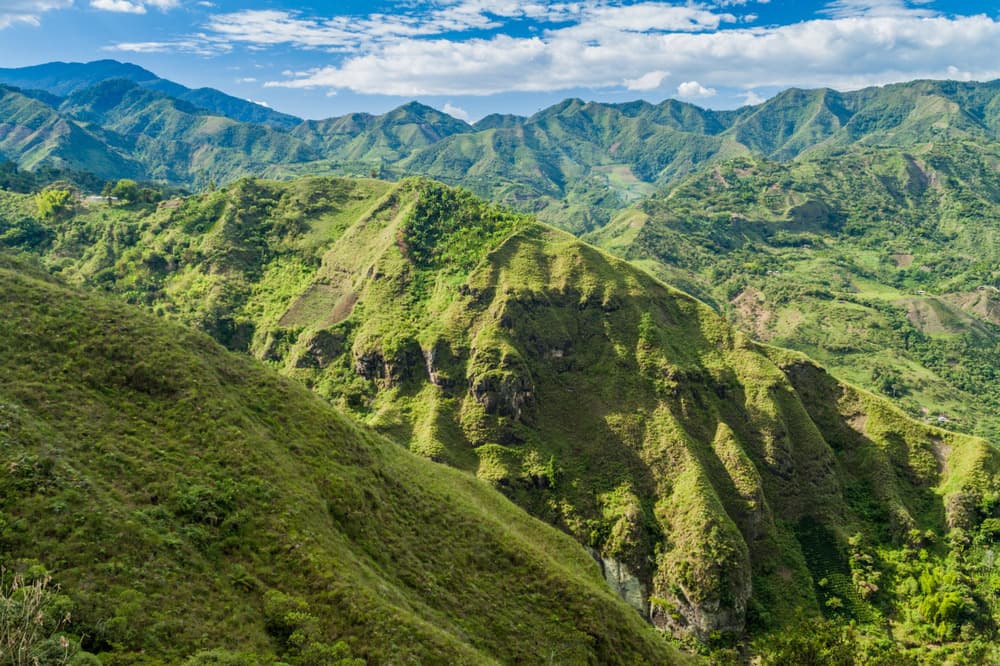
Colombia's Andean south begins roughly five hours south of Bogotá, where the Magdalena Valley widens between the Central and Eastern ranges. Our team organizes this loop from the capital, often combining overland travel with domestic flights to Neiva or Pitalito, since distances between sites are long and mountain roads significantly slow progress. Budget four to six hours between each main leg, sometimes longer when landslides temporarily close routes during the rainy season.
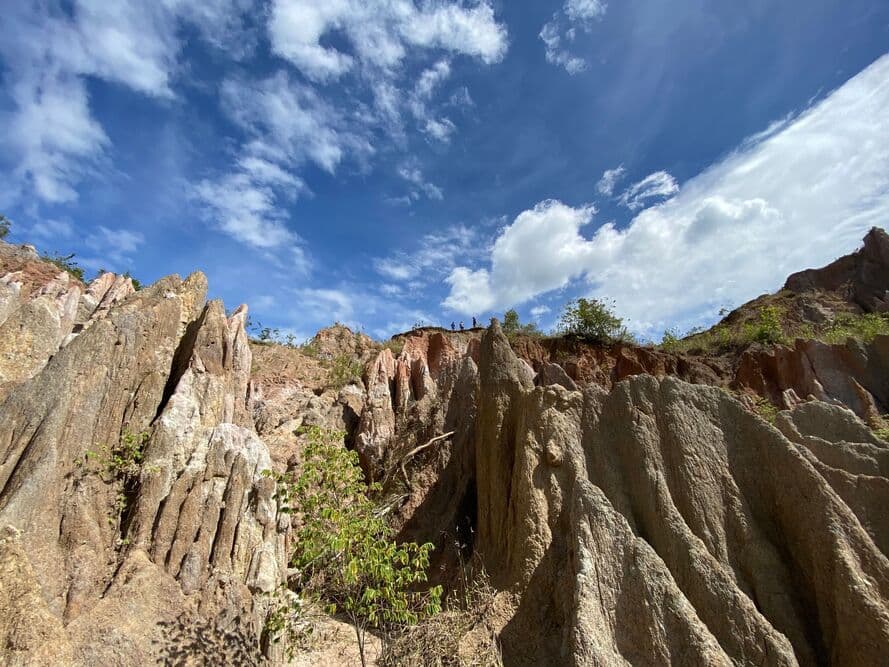
The Tatacoa Desert, near the village of Villavieja in Huila, spans 330 km² of tropical dry zones. It's not a sand desert but a labyrinth of clay ravines, with two distinct sectors: Cuzco with ochre and red hues, and Los Hoyos with more mineral grey formations. The dry air and distance from major cities make it a recognized site for astronomy: several local observatories host guided night sessions led by amateur astronomers who live on-site. Daytime temperatures exceed 32°C and drop to around 22°C at night.
Further south, at 1,730 meters altitude, San Agustín holds one of South America's largest concentrations of megalithic sculpture. Over 500 volcanic stone statues, dated between the first and eighth centuries, are scattered across the archaeological park and surrounding hills, along the young Magdalena River, which springs from the nearby páramo de las Papas. The site has been a UNESCO World Heritage site since 1995. Local coffee farmers in the region cultivate recognized high-altitude coffee, and we work with several fincas around Obando and Pitalito for production visits.
Tierradentro, about five hours by rough road from San Agustín via the Inzá route, is less frequented but equally singular. You descend—sometimes by narrow rock-cut stairs—into hypogea carved between the sixth and tenth centuries, whose walls are painted with geometric motifs in red, black and white. Four main sectors, Alto del Aguacate, Segovia, El Duende and El Tablón, are accessible on foot over a full day's walk, provided you're in good shape: cumulative elevation gain exceeds 600 meters.
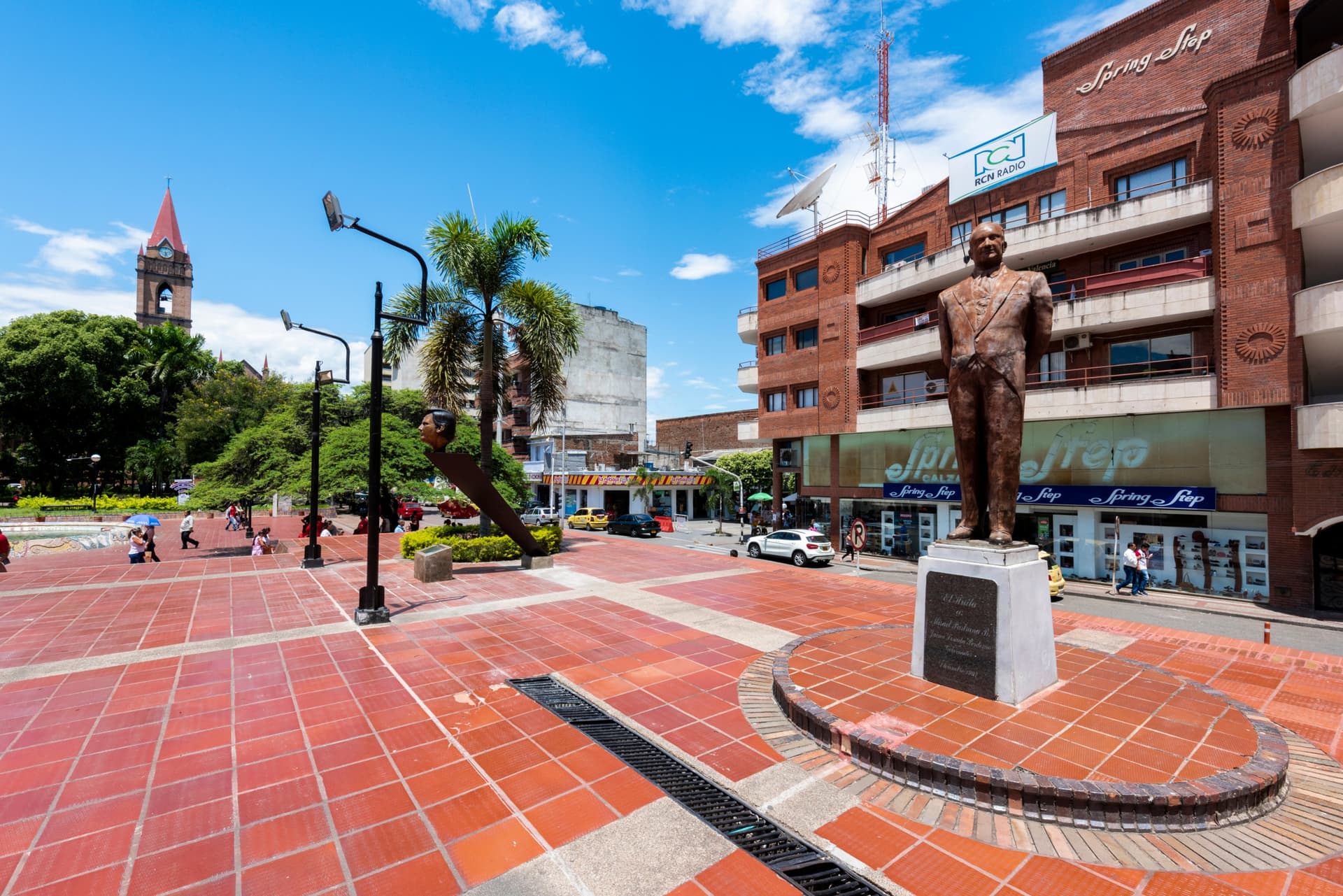
The loop typically ends in Popayán, capital of Cauca, founded in 1537 and rebuilt after the 1983 earthquake in Andalusian colonial style. Its lime-washed facades give the city its nickname. Holy Week is inscribed on UNESCO's Intangible Cultural Heritage list since 2009: nighttime processions mobilize the entire population. Local gastronomy, recognized by UNESCO as a creative food city, deserves lingering, notably for pipián empanadas, pipián tamales and chicken sancocho. Popayán has a small airport connected to Bogotá, allowing you to close the circuit without retracing the road.
For us, this region remains a destination for travelers curious about archaeology and living Andean cultures, away from the major tourist flows of the Caribbean coast or the coffee corridor. The Nasa and Misak communities, present in Cauca, maintain their languages and traditional political systems, giving the Andean south a human and historical density that few other Colombian regions offer.
Discoveries
Starry night at Tatacoa. Stargazing from Villavieja with a local astronomer, under one of the country's least light-polluted skies. Camping possible among the ochre ravines of the Cuzco sector.
San Agustín Archaeological Park. Two days on foot or horseback between mesitas A, B and C, the Bosque de las Estatuas and the remote Alto de los Ídolos site, to understand a pre-Columbian culture still largely enigmatic.
Painted hypogea of Tierradentro. Descent into the underground burial chambers of Alto del Aguacate and Segovia, some preserving their original wall paintings. One-day hike between the four sectors.
Holy Week in Popayán. If traveling between late March and mid-April, nighttime processions from Tuesday through Holy Saturday traverse the colonial center in near-total silence, carried by cargueros for four centuries.
Silvia market, Misak day. Tuesday mornings, the Misak descend from their mountains in blue ruanas and bowler hats for the weekly market at 2,600 meters altitude, two hours from Popayán.
When to go
The dry season, December to March and to a lesser extent July to August, remains most comfortable for this loop. Mountain roads between San Agustín, Tierradentro and Popayán are then passable without interruption, and Tatacoa's sky offers its best observation nights. In Villavieja, expect 30 to 34°C by day year-round, with nights around 22°C. At San Agustín and Tierradentro, set between 1,700 and 1,800 meters, temperatures remain stable between 16°C at night and 24°C in the afternoon. Popayán, at 1,760 meters, fluctuates within similar ranges.
April, May, October and November concentrate the heaviest rains, with real risk of landslides on the Tierradentro road and temporary closure of some archaeological access points. We advise against this period except for Popayán's Holy Week, whose dates vary but typically fall between late March and mid-April: the city fills then, accommodation must be booked three to four months ahead.
Practical tips
Seven to eight days on the ground constitute the minimum for this loop, departing and returning by air from Bogotá (flights to Neiva to enter via Tatacoa, return from Popayán). Below that, driving hours eclipse visits. Ten days allow you to add Silvia market, a coffee day around Pitalito and a more contemplative pace at San Agustín, where we recommend at least two nights. Roads are sometimes narrow and winding: we work with drivers familiar with the terrain, and advise against self-driving on the Tierradentro-Popayán stretches.
The region combines well with the Andes and Bogotá upstream, since that's the logical starting point, and with the coffee corridor downstream, descending from Popayán toward Cali then Salento. Hotel comfort remains modest at San Agustín and Tierradentro: family fincas and charming inns, no large chains. Popayán offers a few upper-category hotels in the colonial center. This loop suits travelers interested in archaeology, pre-Columbian history and contemporary Andean cultures, as well as walkers capable of tackling several days of moderate elevation gain. Less suitable for very young children due to transport times.