Palomino
Palomino
Palomino is a coastal village in La Guajira where the river meets the Caribbean Sea at the foot of the Sierra Nevada. A preserved beach, tubing, and access to Kogi indigenous communities make it an authentic stop in northern Colombie.
Palomino is a coastal village situated in the department of La Guajira, bordering Magdalena, at the foot of the Sierra Nevada de Santa Marta. The Caribbean Sea meets jungle and Andean foothills here. This village remains human-scaled, frequented by travelers seeking a less touristy alternative to Santa Marta or Cartagena. The Palomino River, which flows into the ocean, is the heart of the local experience.
Quick practical info
- Access: Palomino lies on the national Troncal del Caribe route, between Santa Marta and Riohacha. Buses and minibuses serve the village from both cities.
- Recommended stay: 2 to 4 days to enjoy the beach, river, and an excursion into the Sierra.
- What to wear: Swimsuit for the river and sea; lightweight clothing. Cover up if you visit indigenous communities.
- Accessibility: Limited — beaches and trails are not developed for reduced mobility.
What to see
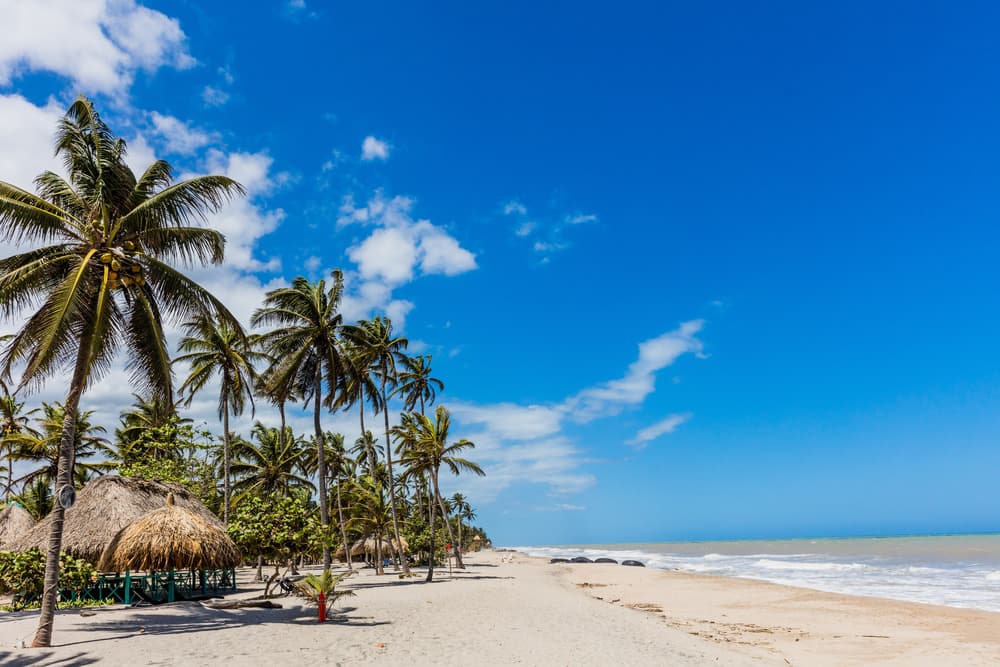
Palomino beach stretches for several kilometers, lined with coconut palms. The Palomino River winds through dense forest before reaching the sea: you can ride it down on a tube (tubing), the village's iconic activity. Following the river upstream, waterfalls and natural pools emerge within the vegetation. The Sierra Nevada de Santa Marta, visible from the coast, offers hikes to Kogi indigenous communities.
History and context
Palomino is ancestral territory of the Sierra Nevada's indigenous peoples — Kogis, Arhuacos, and Wiwas — who consider this region sacred. The current village developed around artisanal fishing. Tourism's arrival is recent and gradual, which partly preserves the local atmosphere. Its proximity to Tayrona National Natural Park, to the west, places Palomino within a major natural and cultural corridor in northern Colombie.
Highlights of your visit
Tubing down the Palomino River
Floating downstream on a tube between wooded banks and gentle current is the village's most popular activity. Local guides arrange transport upstream and the ride down to the mouth, where the river meets the Caribbean Sea.
The beach and river mouth
The river mouth forms a shallow lagoon, ideal for swimming in fresh water facing the ocean. The beach is minimally developed: no plastic umbrellas or pushy vendors, just a few hammocks beneath palm trees.
Hiking to Kogi communities
Local guides offer day treks or longer journeys to Kogi villages in the Sierra Nevada foothills. These visits require strict respect for community rules — photography often prohibited, sober conduct expected.
Sunset over the Caribbean
The coast faces northwest: late afternoons offer golden light across the sea. Quiet beaches let you experience this moment undisturbed.
Etiquette and visiting rules
- When visiting indigenous communities, follow your guide's instructions precisely — certain areas are off-limits to visitors.
- Do not photograph Kogi community members without explicit permission.
- Avoid bringing alcohol or drugs into indigenous territories.
- Respect marked swimming areas: some river or sea stretches may be dangerous depending on the season.
Photography tips
Morning light is ideal on the beach, before heat haze sets in. The river mouth, with its fresh water and sea contrast, offers striking natural framing. For the Sierra Nevada backdrop, golden hours (early morning or late afternoon) provide the best conditions. Refrain from photographing Kogis without prior consent.
Location and access
Palomino sits roughly 80 km east of Santa Marta and about 70 km west of Riohacha, on the coastal route. Buses and minibuses (busetas) run regularly from both cities. From Santa Marta, the journey takes about 1.5 to 2 hours depending on transport. There's no local airport — the nearest is Santa Marta (Simón Bolívar). Local agencies in Palomino offer guided excursions to the Sierra Nevada and Tayrona Park.
Nearby attractions
- Tayrona National Natural Park — emblematic nature reserve in northern Colombie, west of Palomino, with secluded beaches and dense tropical forest.
- Santa Marta — historic coastal city, logistical hub for the Colombian Caribbean region.
- Ciudad Perdida (Teyuna) — pre-Columbian archaeological site in the Sierra Nevada, accessible from Santa Marta via a multi-day trek.
- Riohacha — capital of La Guajira, gateway to the peninsula and the flamingos of Laguna de la Cocha.
Frequently asked questions
The dry season, December through April, offers the best conditions: calm sea, clear skies, and navigable river. The rainy season (May to November) can make the river dangerous for tubing and trails slippery.
In the dry season, with a local guide and life jacket, the activity is accessible to most travelers. During heavy rains, the current can become hazardous — check with local operators before setting out.
Yes, both sites are on the same coastal route. Many travelers spend 2 to 3 days in each location during a single trip to the Santa Marta region.
Modest, covering clothing is recommended. Avoid beach attire. Follow your guide's instructions — they know the specific rules of each community.
The beach and river mouth lagoon are family-friendly. Tubing and Sierra Nevada hikes suit older children in good physical condition.
Banking services are very limited in the village. Bring sufficient cash from Santa Marta or Riohacha before arriving.
Want to discover this destination?
Our local advisors design your tailor-made trip.