The Llanos
The Llanos
Savanna stretching to the horizon, spectacular wildlife and cowboy culture: the Colombian Llanos offer one of South America's last great safaris.
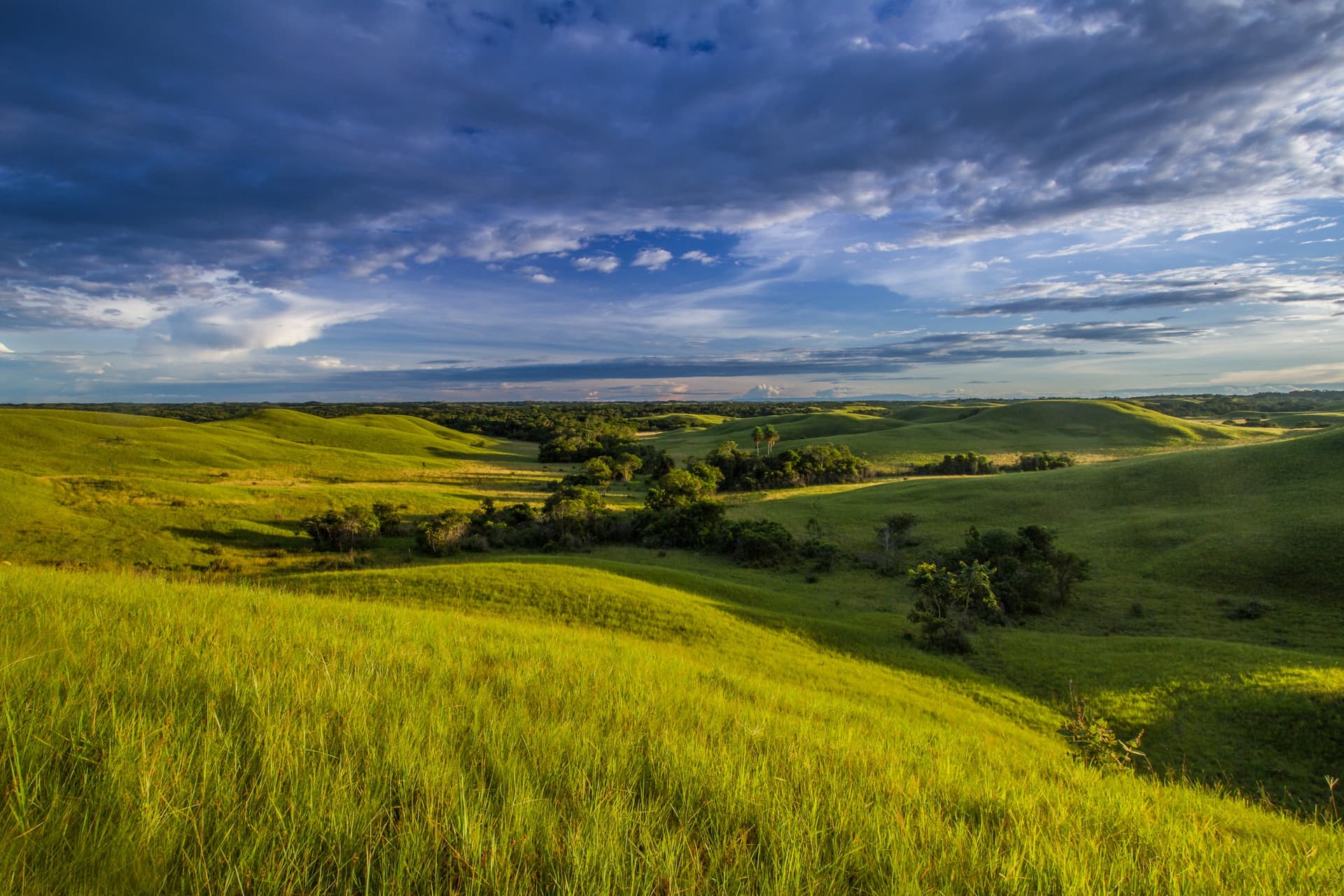
The Llanos, which means "the plains" in Spanish, is a vast plain spanning 375,787 km² that extends east of the Andes and is shared by Colombia and Venezuela. This ecoregion, covered in grasslands, savannas, and shrubby areas, is home to a remarkable array of animals, including the capybara—the world's largest living rodent. It offers a truly unique experience for visitors during a stay in Colombia.
The Llanos, an extraordinary plain
The Llanos are bordered to the west and northwest by the Andes, to the north by Venezuela's coastal range, and to the southeast by the Guyana highlands. The greatest river flowing through it is the Orinoco, which runs from west to east.
The vegetation of the Llanos consists of grasslands, savannas dotted with scattered trees or copses, and small forested areas. Trees also line certain sections of streams and rivers.
The grasses and shrubs of the Llanos measure between 30 and 100 cm in height. During the rainy season, parts of the plain are covered with water, reaching maximum depths of around 100 cm. They thus become wetlands comparable to the Pantanal of central Latin America, attracting numerous bird species and other wildlife.
The Llanos are home to a multitude of mammal species, including:
- collared peccary,
- South American tapir,
- capybara,
- giant otter,
- puma,
- jaguar,
- ocelot, and more.
Endemic animals include the long-nosed armadillo of the Llanos (Dasypus sabanicola) and the short-tailed opossum (Monodelphis).
Permanent wetlands are home to 70 species of aquatic birds and crocodiles, spectacled caimans, anacondas, turtles, and more. Two indigenous peoples also inhabit the ecoregion: the Guahibo and the Yaruro.
Millions of cattle are raised in the Llanos. This livestock farming has been the region's primary economic activity since colonial times. Some areas also host oil and gas operations. Protected areas within the ecoregion cover approximately 105,323 km².
What to do in the Colombian Llanos?
Safari
The plain lends itself perfectly to safari. Your adventure will lead you to discover its diverse animal species, the most famous being the capybara.
Horseback riding
The horse is one of the best ways to explore the llanos. It allows you to venture deeper into the plain and cross rivers without getting wet.
Witness a magnificent sunset
The Llanos offer exceptional sunrises and sunsets. During these times of day, the horizon is painted with bands of orange, yellow, and pink.
Take a boat excursion
The flora and fauna of the Llanos can also be discovered by boat. You'll enjoy the gentle breeze caressing the rivers throughout your visit.
Stay at a hato
By choosing to stay at a traditional ranch or hato, you'll discover the lifestyle of Colombian cowboys and cowgirls. It's also an opportunity to listen to Joropo, the region's popular music, or join a nighttime barbecue.
What to see in the Colombian Llanos?
Tuparro National Park
Tuparro National Park covers an area of 548,000 hectares and was declared a national monument in 1982. Its lush savanna, rivers, forests, and mountains are home to numerous animal species. You may encounter monkeys, pink river dolphins, snakes, and more.
La Macarena National Park
This park's fame largely comes from its seven-colored river, Caño Cristales. Mosses and algae in this waterway create charming colors during the period from July to November. The park is also traversed by hiking trails and features fascinating jagged rock formations.
Los Ocarros Biopark
Los Ocarros Biopark covers 5.5 hectares, where lush vegetation thrives. It also features a natural lake, estuaries, savannas, moriche palms, gallery forests, and fluvial forests. Animals roam freely throughout.
Las Malocas Park
Las Malocas Park is located in the city of Villavicencio. It introduces you to the region's customs and traditions. You'll also find sculptures depicting the myths and legends of local folklore.
Merecure Agroecological Park
This park is home to a zoo that brings together the region's various endemic species. Numerous activities await you here, including fishing in Lake Tucunare, horseback riding, and jet skiing.
Practical information
When to visit the Llanos?
The best time to visit the Llanos is from December to March, when animals gather near water sources and are therefore easily observable.
This ecoregion experiences two types of seasons. The rainy season begins in April and ends in November, while the dry season starts in December and ends in March.
You can use Yopal, the capital of Casanare, as your starting point to explore the Llanos. This city is accessible by car, bus, and plane from Bogotá.
Want to discover this destination?
Our local advisors design your tailor-made trip.