Cerro Azul
Cerro Azul
An archaeological site in the Serranía de la Lindosa, Cerro Azul combines ancient rock art with Amazonian wilderness, 47 km from San José del Guaviare.
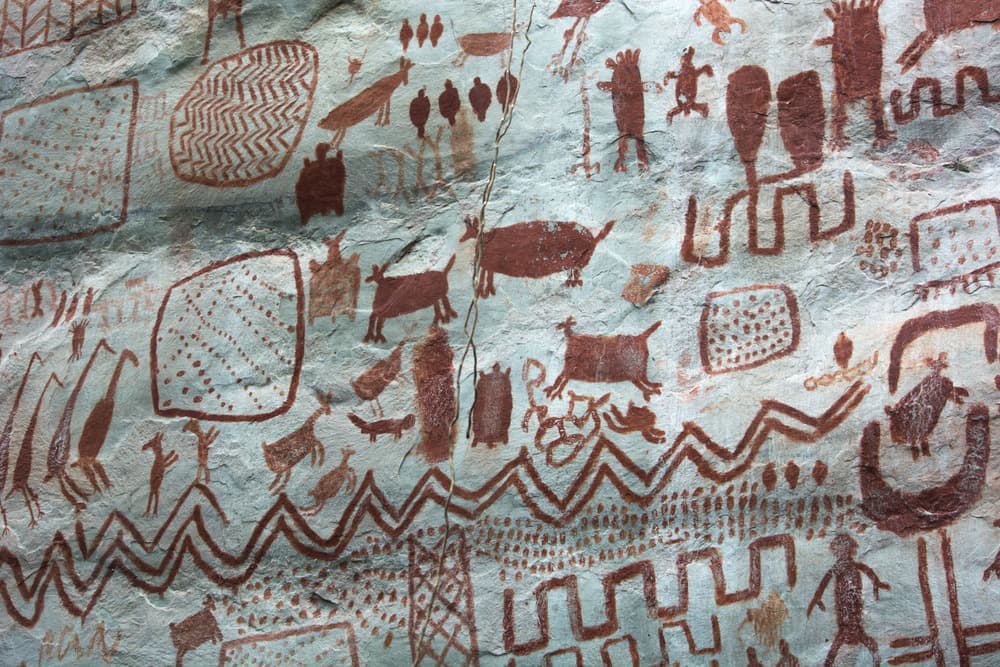
The archaeological site of Cerro Azul, also known as Cerro Pinturas, houses one of Colombia's most significant collections of rock paintings. Located in the Serranía de la Lindosa, in the Guaviare department, this rock shelter preserves hundreds of red pictograms on its whitewashed walls, depicting hunting scenes, dances, and ceremonies dedicated to the jaguar. Long inaccessible due to Colombia's armed conflict, the site opened to tourism from 2014 onwards.
Why visit Cerro Azul
Cerro Azul combines two complementary interests on a single site:
- Exceptional archaeological heritage, with rock frescoes considered among the most extensive in Amazonia.
- A pristine natural environment, at the edge of Colombian Amazonia, rich in endemic fauna and flora.
- An area that remained largely unexplored for security reasons, retaining a discreet character compared to major Colombian sites such as La Candelaria in Bogotá.
History and archaeological context
For millennia, indigenous populations left traces of their daily life on the rock walls of the Serranía de la Lindosa. The Carijonas are considered the primary authors of these pictograms, though several layers of engravings suggest that other groups contributed to this ensemble over a long period.
The first archaeological missions were conducted in the 1980s-1990s, but were quickly suspended due to armed conflicts affecting the region. Only from 2014 onwards, as part of the peace accord process with the Revolutionary Armed Forces of Colombia (FARC), were researchers able to resume excavations. Since then, several international teams have been documenting the extent of the site and the scenes depicted.
The geology of the Serranía dates back several hundred million years: the rock formations that emerge from the jungle are among the oldest in South America, contributing to the singular character of the landscape.
What you will see on site
The site presents itself as a long rock shelter located approximately 5 km south of the right bank of the Guayabero River. The paintings, executed in red ochre on whitish walls, span several tens of meters and depict:
- Hunting and fishing scenes.
- Human figures in groups, sometimes in dancing postures.
- Ceremonies honoring the jaguar, an emblematic animal in Amazonian cosmologies.
- Local animals and geometric motifs.
Around the shelter, the forest is home to wildlife accessible to attentive visitors: the Tití monkey, fire ants, wild orchids, butterflies, and numerous insects. Some natural galleries open onto panoramic viewpoints above the canopy.
The site is protected but remains vulnerable to erosion and climatic conditions. Respecting guidelines (not touching the walls, staying on marked trails) is essential to preserving the pictograms.
Practical information
- Access: only with an authorized local guide, mandatory for all sites in the Serranía de la Lindosa.
- Hiking: approximately 40 minutes of walking, including an uphill section of around 200 m. Accessible level but requiring a minimum level of fitness.
- Equipment: closed hiking shoes, lightweight long-sleeved clothing, water, sunscreen, insect repellent.
- Rates: entrance fee and guide to be paid on-site, within a moderate range. Plan for a half-day visit.
When to visit
The region is open to visitors year-round, but accessibility varies significantly depending on the season:
- Mid-June to mid-November: rainy season. River flooding can block trails and make some access points impassable.
- Mid-December to May: dry season, more favorable for hiking and overland travel.
The average temperature in the Serranía de la Lindosa hovers around 23 °C, with high humidity throughout the year. Check local weather conditions before departing from San José del Guaviare.
How to get there
Cerro Azul is located approximately 47 km from San José del Guaviare, the departmental capital. The route typically combines:
- A 4x4 or pick-up journey from San José del Guaviare, over partly unpaved tracks (1.5 to 2 hours depending on road conditions).
- An approach walk of approximately 40 minutes to the rock shelter.
San José del Guaviare is connected to Bogotá by regular domestic flights and by road. Most travelers pass through the Colombian capital before heading to Guaviare.
Nearby attractions
The Serranía de la Lindosa concentrates several complementary sites accessible from San José del Guaviare: Nuevo Tolima, Raudal del Guayabero, Ciudad de Piedra, or Pozos Naturales. To extend a cultural itinerary in Colombia, you can combine your visit with Bogotá and its historic neighborhoods like La Candelaria or Barrio Egipto, or plan a stopover in Medellín to discover Comuna 13 and the Botero Museum.
Planning your visit
Cerro Azul fits naturally into a larger circuit around Colombian Amazonia and the Andes. To build a tailor-made itinerary including the Serranía de la Lindosa, consult our trips to Colombia.
Interested in this visit?
We can include it in your personalised itinerary.