Laguna La Cocha
Laguna La Cocha
Colombia's second-largest lake, La Cocha stretches 23 km from Pasto and is home to La Corota island, the country's smallest national park.
Laguna La Cocha, also known as Lake Guamués, sits 23 km from Pasto in the department of Nariño, in southwestern Colombia. Colombia's second-largest lake after Lake Tota in Boyacá, this Andean wetland spanning 41.5 km² is registered on the RAMSAR list of internationally important wetlands. At its heart lies La Corota island, Colombia's smallest national park.
Why visit Laguna La Cocha
La Cocha combines several rare features found in Colombia: a high-altitude lake surrounded by Andean mountains, a small island national park with dense biodiversity, a charming access village with colorful waterfront houses, and deep spiritual significance for indigenous Quechua, Kamsá, Kofán and Quillacingas communities. The site appeals equally to travelers interested in ecotourism and birdwatching, and those seeking a peaceful stopover between Pasto and the Ecuadorian border.
At 2,280 meters elevation, the cool climate creates an atmosphere closer to the high Andean plateaus than to the tropical landscapes often associated with Colombia. Plan a full day for a comfortable visit from Pasto, or spend a night on location to fully enjoy the lake's serenity.
History and sacred dimension
In Quechua, the word cocha means "lake." For indigenous communities living in neighboring valleys, La Cocha is a sacred place, linked to narratives passed down from pre-Hispanic times.
The most famous legend tells the story of cacique Pucara, who married Princess Lluvia de Estrellas. From their union came three children: Lucero, Estrella and Viento. The couple watched over the Nariño Andes valley until the day the princess betrayed her husband with a dancer. A totuma—a gourd vessel—shared between the two lovers is said to have triggered, depending on the version, the formation of the lake and La Corota island. This mythological foundation remains alive in local culture and explains the reverence surrounding the site.
What to see and do
La Corota Island
The island rises at the northern edge of the lake, bordered by a ring of totora reeds. At roughly 15 hectares, it comprises Colombia's smallest national park. Its ecological density is remarkable: over 380 plant species recorded, including 38 orchid species, plus alders, myrtles and evergreen oaks. A short trail allows you to cross the island to a viewpoint.
For wildlife, over 73 bird species have been observed: hummingbirds, warblers, herons, golden-billed ducks, Andean gulls, among others. The island also shelters amphibians, small mammals and insects. Around the lake, frailejones—plants typical of páramo ecosystems—dot the landscape.
El Encano Dock
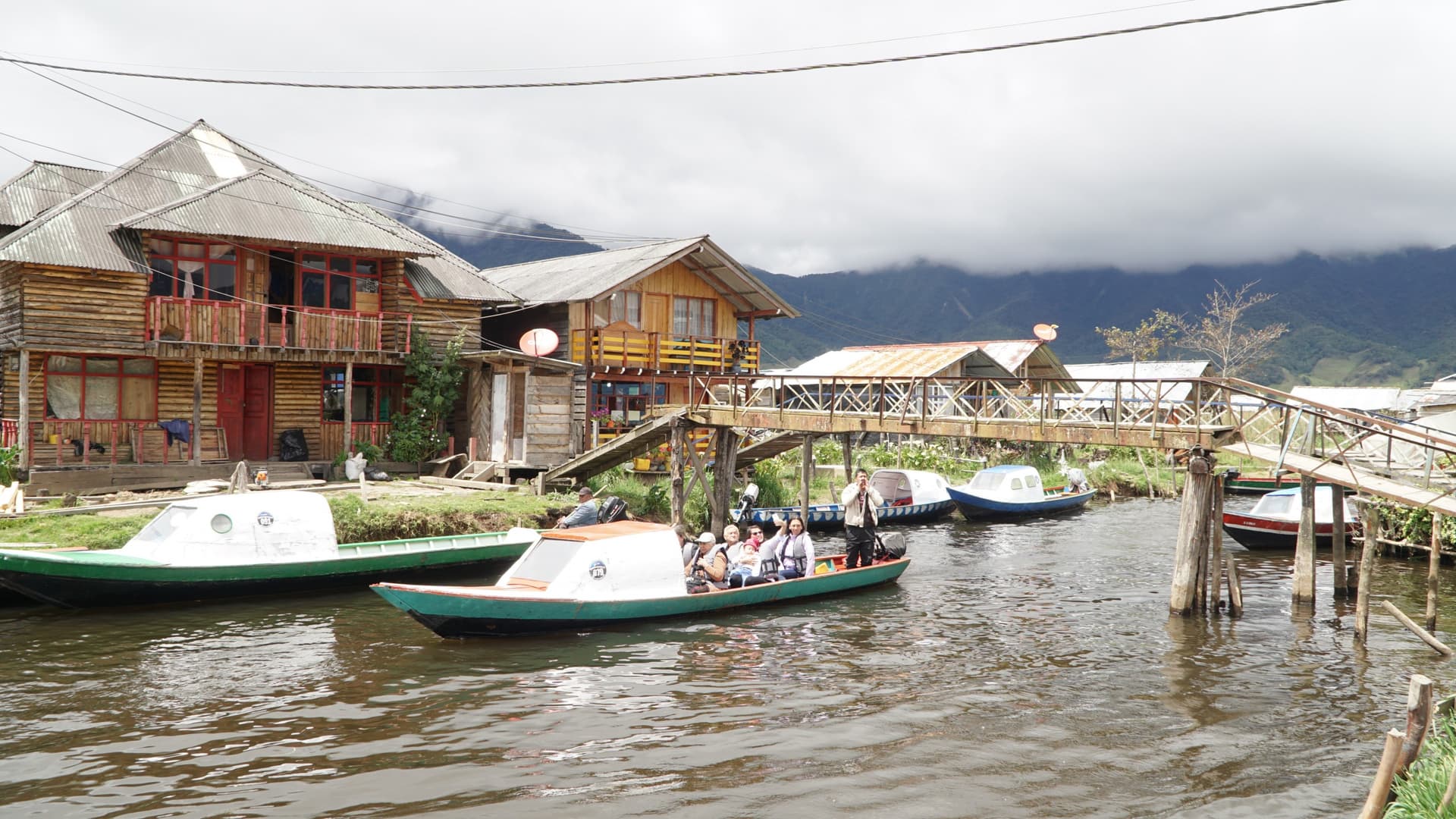
El Puerto, the dock in El Encano village, lines colorful wooden houses and waterways leading to the lake. It's the departure point for boats to La Corota and the area where restaurants and simple accommodations cluster.
Virgin of Lourdes Chapel and Totora Trail
The Virgin of Lourdes Chapel, a local pilgrimage site, adds to the spiritual dimension of the location. The Totora trail, along the lake's edge, reveals the aquatic ecosystem and the reed vegetation surrounding the island.
Activities
- Boat excursion to La Corota island
- Rainbow trout fishing
- Kayaking on the lake
- Hiking around the lagoon
- Birdwatching
- Camping and homestays
- Local cuisine: trout, guinea pig, rabbit
Practical information
The lagoon sits on the eastern slope of the Nudo de los Pastos and drains into the Putumayo river via the Guamués river. It's primarily fed by the Encano river. The altitude means cool evenings year-round: pack warm clothing even in the dry season, plus rain protection.
The boat journey between El Encano and La Corota island takes roughly 10 minutes. Excursion and restaurant rates remain modest. Visiting the island typically takes 1 to 2 hours, including the trail.
When to visit
The climate is cool year-round, with temperatures dropping at night. The dry season, most favorable for hiking and boating, extends mainly through July and August. Heavy rain periods fall in March-April and November-December, making trails slippery and boat outings sometimes compromised.
How to get there
By air
Antonio Nariño Airport is roughly 30 km from Pasto. Domestic flights connect Bogotá in about 1 hour 45 minutes, operated by major Colombian carriers. From the airport, arrange ground transfer to El Encano, then a boat to reach the island.
By bus from Pasto
Pasto's bus terminal runs regular services to major Colombian cities. As a guide: Popayán around 6 hours, Cali around 9 hours, Medellín around 16 hours, Bogotá around 20 hours. From Pasto, plan about 40 minutes by taxi or shared bus to El Encano via the Putumayo highway.
On-site
Once at El Encano, dock boats provide crossings to La Corota island. Several lakeside restaurants serve local trout before or after the crossing.
What to see in the region
Pasto, Nariño and southwestern Colombia form a region still little-visited by international tourism. To extend your itinerary, several Colombian sites merit a detour depending on your route:
- Cerro Azul, for its rock paintings in Colombian Amazonia.
- La Candelaria, Bogotá's historic center, a typical stop before or after a flight to Pasto.
- Comuna 13 in Medellín, an example of urban and cultural transformation.
- Guane, a colonial village in Santander.
Frequently asked questions
Frequently asked questions
In El Encano village, 23 km from Pasto, capital of the Nariño department, in southwestern Colombia. The lake covers 41.5 km² at 2,280 meters elevation.
A half-day to full day from Pasto is enough for El Encano dock, the crossing to La Corota island and the park trail. An overnight stay lets you enjoy the morning calm and birdwatching.
July and August, the driest season, offer the best conditions for hiking and boat outings. March-April and November-December see the heaviest rainfall.
Boats depart from El Encano dock (El Puerto) and reach the island in about ten minutes. The crossing is arranged on-site, individually or in groups.
The local specialty is rainbow trout, caught in the lake and served in El Encano restaurants. You'll also find guinea pig and rabbit, traditional dishes of southern Colombian Andes.
Planning the rest of your journey
Laguna La Cocha fits naturally into a southern Colombia itinerary, between Popayán, Pasto and the Ecuadorian border. To build a customized trip and combine this site with other stops across the country, check out our Colombia trips.
Interested in this visit?
We can include it in your personalised itinerary.