Amazon
Accessible only by plane from Bogotá, the Colombian Amazon is explored by canoe from Leticia, among Ticuna communities, Lake Tarapoto and the Amacayacu forest.
The Colombian Amazon covers nearly 40% of the national territory, yet remains accessible to travelers through a single practical gateway: Leticia, capital of the Amazonas department, positioned at the country's far south on the northern bank of the Amazon River. No road connects this city to the rest of Colombia. The flight from Bogotá takes two hours and crosses an unbroken canopy that stretches to the horizon. Upon arrival, the air shifts: an average 28°C, humidity above 85%, and the smell of wet earth that never leaves the traveler.
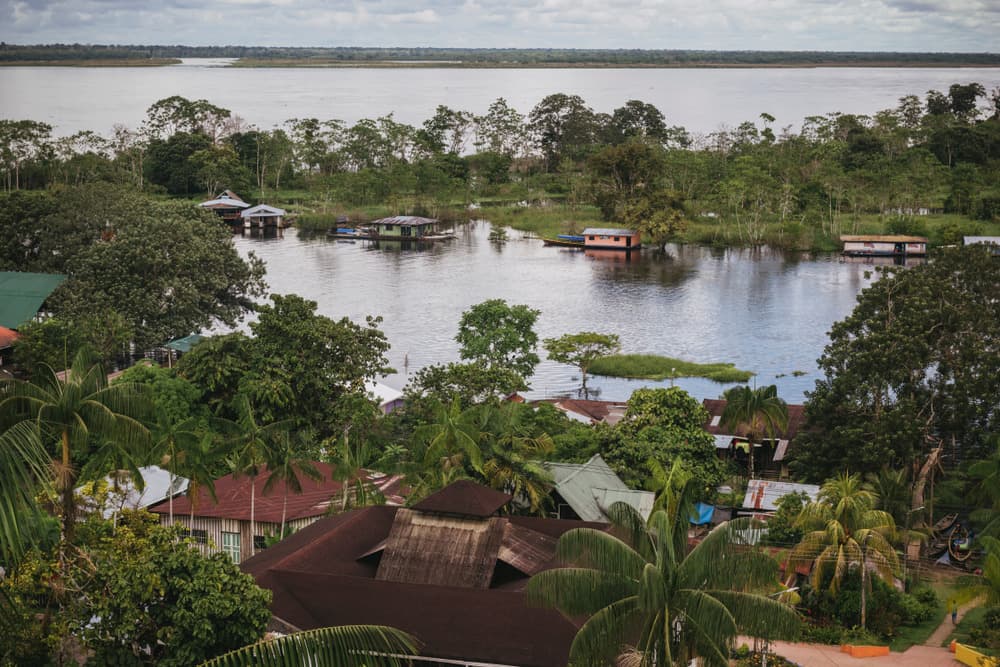
Leticia forms a triple border with Tabatinga (Brazil) and Santa Rosa (Peru), where one moves freely by motorboat from one country to another without immediate formalities. The city has 50,000 inhabitants, a covered fish market where five-kilogram pirarucus caught in the lagoons arrive each morning, and a few commercial streets. But the journey's true interest begins downstream or upstream. Westward, the Río Amazonas runs 75 kilometers upriver to Puerto Nariño, the department's second settlement, a pedestrian village of 7,000 where no motorized vehicles circulate except the communal generator and boats. Southeast, the Río Yavari marks the Peruvian border and provides access to isolated lodges deep in primary forest.
The Ticuna, Yagua and Cocama peoples have inhabited the region long before the arrival of Capuchin missions in the early twentieth century. The Ticuna, roughly 8,000 in Colombia, live in some thirty communities scattered along the river. Several of these communities, such as San Martín de Amacayacu or Macedonia, have developed community-run lodges managed collectively, with tourism revenue shared among families. Guests sleep in hammocks or in stilt cabins, dine on grilled river fish (gamitana, dorado), cassava flour, and casabe, a flat cassava bread cooked on a hot plate.
Amacayacu National Park, 60 kilometers upriver from Leticia, protects 293,000 hectares of flooded and upland forest. Entry is by canoe only, accompanied by an indigenous guide. Visible wildlife depends on river level: in high water (April-June), canoes navigate among tree trunks and one observes howler monkeys, sloths, toucans from the water; in low water (August-November), upland trails become passable and one hikes several hours through forest. Pink (boto) and gray (tucuxi) dolphins are observed year-round in Lake Tarapoto, across from Puerto Nariño.
The local economy rests on fishing, subsistence agriculture (cassava, plantain, açaí) and, for the past twenty years, small-scale tourism. There are neither large hotels nor roads, which naturally limits visitor flows. The relative dry season draws most visitors between July and September, yet the Amazon remains a niche destination: between 30,000 and 40,000 foreign travelers annually, compared to the two million who visit Cartagena. For our team based in Bogotá, it is precisely this scale that makes it compelling: one travels slowly, by canoe, without crowds, with hosts who know every river bend.
Highlights
Lake Tarapoto and pink dolphins. Morning canoe trip from Puerto Nariño on these black-water lakes where pink botos and gray tucuxi surface among giant water lilies, Victoria amazonica.
Night in a Ticuna community lodge. Stay with the San Martín or Macedonia communities, meals of grilled pirarcú shared with the host family, evening canoe ride spotting caimans by headlamp.
Primary forest hike in Amacayacu. 4 to 6-hour trek on upland trails with a Ticuna guide, identification of medicinal plants and observation of squirrel monkeys, sloths and poison dart frogs.
Leticia fish market. At dawn, unloading of the night's catch on the dock: pirarucus weighing several kilos, gamitana, piranhas, sold to restaurants in the three border countries.
Monkey Island and triple border. Day boat trip from Leticia to Santa Rosa (Peru) and Tabatinga (Brazil), with a stop on Isla de los Micos inhabited by small squirrel monkeys accustomed to humans.
When to go
The Colombian Amazon experiences two hydrological seasons rather than strictly rainy seasons, as rain falls year-round. High water season runs from December to May, peaking in April-May: the river rises 10 to 15 meters, floods the forest several kilometers wide and allows canoe travel between trees. This is the best period for observing wildlife from the water, but hiking trails are impassable. Low water season, June to November, uncovers white sand beaches on the riverbanks and opens upland trails for trekking. July to September is the window we recommend as priority to combine hiking and paddling, with less frequent rainfall, generally in late afternoon.
Temperatures vary little: between 24°C at night and 33°C in the afternoon, year-round. Humidity remains high (80 to 95%) and fatigues unaccustomed travelers the first two days. Mosquitoes are everywhere, dense at dusk, and antimalarial treatment and yellow fever vaccination are essential. We avoid scheduling the Amazon in April and May, when prolonged rains limit land activities.
Practical advice
We recommend a minimum of 4 days and 3 nights on site, ideally 5 days, to justify the flight from Bogotá and alternate two ecosystems: one night in Leticia or a nearby lodge for acclimatization, then 2 to 3 nights in a community lodge on the Yavari or around Puerto Nariño. Below that, canoe travel times (2 to 4 hours per leg) consume a disproportionate share of the stay. Leticia's Alfredo Vásquez Cobo airport receives 3 to 4 daily flights from Bogotá; no land connection exists with the rest of the country.
The Amazon logically combines with an Andean circuit via Bogotá, which serves as the mandatory air hub. Many of our travelers chain it with the Andes and Bogotá region early in their trip, then finish with the Caribbean Coast for climatic and cultural contrast. Community lodge comfort remains rustic: shared facilities, generator electricity for a few evening hours, hammocks or simple beds under mosquito netting. This destination suits travelers curious about indigenous cultures, contemplatives, amateur naturalists, and families with children from 8-10 years old. It is less suited to those seeking hotel comfort or densely scheduled activities.