Hato La Aurora Reserve
Hato La Aurora Reserve
A private 9,887-hectare reserve in the Casanare Llanos, Hato La Aurora offers one of Colombia's finest wildlife observation landscapes.
The Hato La Aurora reserve is a private property spanning 9,887 hectares located in the department of Casanare, at the heart of the Colombian Llanos. Between the Ariporo and Chire rivers, across the municipalities of Paz de Ariporo and Hato Corozal, this ranch-turned-conservation area is recognized as Colombie's largest nature reserve managed by civil society. It offers one of the country's finest observation grounds for tropical plains wildlife.
Why visit Hato La Aurora
The reserve combines three rarely found qualities on a single Colombian site: exceptional biodiversity inherent to the Orinoco ecosystem, immersive exploration methods—on horseback, canoe, and foot—inherited from the work of the Llaneros, and participatory tourism principles upheld by the families managing the ranch. Unlike more regulated national parks, you move through a private domain here where wildlife roams freely just meters from the trails.
The Llanos remain a region seldom visited by international travelers, making it an intriguing complement to classic Colombian stops such as Bogotá, Medellín, or the Caribbean coast.
What to see and do
Iconic Llanos fauna
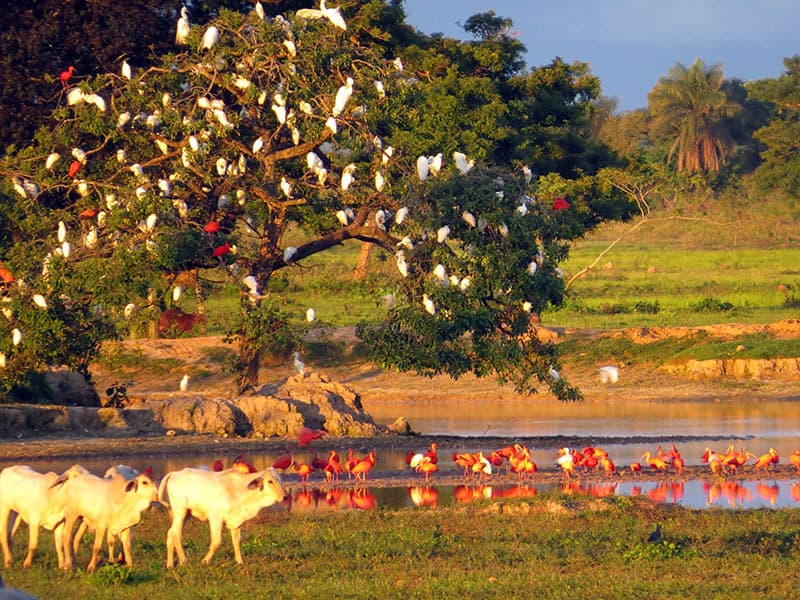
More than 300 bird species have been recorded within the reserve, establishing it as a reference site for ornithology across South America. Among the most frequently spotted species:
- the sunbittern (Syrigma sibilatrix),
- the scarlet ibis (Eudocimus ruber),
- the burrowing owl (Athene cunicularia),
- the roseate spoonbill (Platalea ajaja),
- horned screamers, caracaras, and jabirus.
Among mammals and reptiles, the reserve shelters the capybara (the world's largest living rodent), anacondas, jaguars, pumas, jaguarundis, white-tailed deer, caimans, and anteaters. Sightings of large felines remain uncommon but well-documented, with tracks regularly identified by the ranch guides.
Exploration on horseback and by canoe
Horsemanship is central to llanero culture and the primary means of travel throughout the reserve. Canoe outings on the Ariporo River and its tributaries allow silent approaches to riverside wildlife, and some trips include an introduction to piranha fishing. Expect multiple outings daily, alternating morning and late afternoon hours when animals are most active.
Encounters with the Llaneros
Your stay also offers the chance to engage with ranch inhabitants and surrounding communities. The Llaneros possess a distinct cultural identity: distinctive dress code (wide-brimmed hat, light shirt, leather sandals), cuisine centered on spit-roasted meat (mamona), and music featuring the harp, cuatro, and maracas. Your hosts willingly share daily life tied to extensive ranching and conservation efforts.
Accommodation: Juan Solito Ecolodge
The main on-site lodging is the Juan Solito Ecolodge, an eco-friendly hotel built with local materials. Palm-thatched roofs, open-air structures, traditional llanero architecture: everything blends into the landscape while encouraging natural ventilation. The lodge works with local communities and offers all-inclusive stays featuring guided excursions.
When to visit
The dry season, from mid-November through mid-April, provides the ideal visiting window. Roads remain passable, and more importantly, wildlife concentrates around residual water sources, greatly facilitating observations. Conversely, during the rainy season (May through October), trails become muddy, certain areas flood, and ground access can become impossible for consecutive days. January through March are often considered the sweet spot.
How to get there
The reserve lies approximately 180 km north of El Yopal, capital of Casanare department, a drive of roughly 5 hours given trail conditions. Yopal is served by El Alcaraván airport with flights from Bogotá and Bucaramanga.
By bus, several companies (Cootransbol, Macarena, Sugamuxi, Libertadores) operate service from Bogotá, Villavicencio, Tunja, Duitama, Cúcuta, and Sogamoso to Yopal. For the final leg to the ranch, a 4x4 vehicle is essential, particularly during early or late dry season. From Bogotá by car, two routes are available: the Marginal de la Selva road (Route 65) or a passage through Boyacá department. The Juan Solito Ecolodge team can arrange transfers from Yopal, which considerably streamlines logistics.
Practical information
- Recommended duration: 3 to 4 days on-site to maximize outings and offset travel time.
- Equipment: closed hiking boots, light and covering clothing, insect repellent, headlamp, binoculars.
- Booking: essential during peak season; the ranch intentionally limits visitor numbers.
- Site respect: follow guide instructions, do not feed wildlife, pack out all waste.
- Health: discuss malaria prevention treatment with a physician according to season.
Nearby attractions
Hato La Aurora fits into a broader Colombian itinerary. Before or after your stay, consider extending your experience with:
- the Gold Museum in Bogotá, an almost-essential cultural stop during your capital visit;
- the Botero Museum, in Bogotá's La Candelaria neighborhood;
- Communa 13 in Medellín, to grasp the country's recent history;
- the Guajira desert, another off-the-beaten-path nature destination in the country's north.
Frequently asked questions
Frequently asked questions
Three to four days on-site represent a solid compromise. Since the journey from Yopal takes roughly 5 hours, a shorter stay makes the logistical effort disproportionate. Four nights allow you to alternate horseback outings, canoe trips, and bird-watching at sunrise.
The dry season, from mid-November through mid-April, offers optimal conditions. Animals gather near residual water sources and trails remain passable. January through March typically yield the most rewarding sightings.
Yes. You can reach Yopal by air from Bogotá or Bucaramanga, or by bus from multiple cities across the country. Juan Solito Ecolodge then arranges 4x4 transfers to the ranch, eliminating the need to rent a specialized vehicle.
These species are well-represented in the reserve, but sightings remain rare and never guaranteed. However, chances of seeing capybaras, caimans, deer, scarlet ibis, and numerous other bird species are very high, particularly during the dry season.
The ranch welcomes families, though conditions remain rustic: heat, insects, lengthy 4x4 journeys, physically demanding outings. It generally suits children from 8–10 years onward, capable of managing horseback or canoe time over several hours.
Planning your trip
Hato La Aurora reserve particularly lends itself to a combined itinerary blending nature, culture, and major cities. To build a comprehensive route and receive advice on Llanos logistics, explore our travel ideas for Colombie.
Interested in this visit?
We can include it in your personalised itinerary.