Convent of the Discalced Carmelites
Convent of the Discalced Carmelites
Inaugurated in 1645 in Villa de Leyva, this convent of cloistered Carmelites ranks among the oldest Spanish colonial structures in Colombia.
The Convent of the Discalced Carmelites (Convento de las Carmelitas Descalzas) stands among the earliest Spanish constructions erected in Colombia. Inaugurated in 1645 in the city then called Santa Maria de Leyva, it has sheltered a cloistered community for nearly four centuries, dedicated to prayer, maintaining a centuries-old orchard, and crafting religious objects.
Why visit this convent
Three reasons justify the detour during a stay in Villa de Leyva:
- Significant historical value: the building ranks among Colombia's oldest surviving Spanish colonial structures.
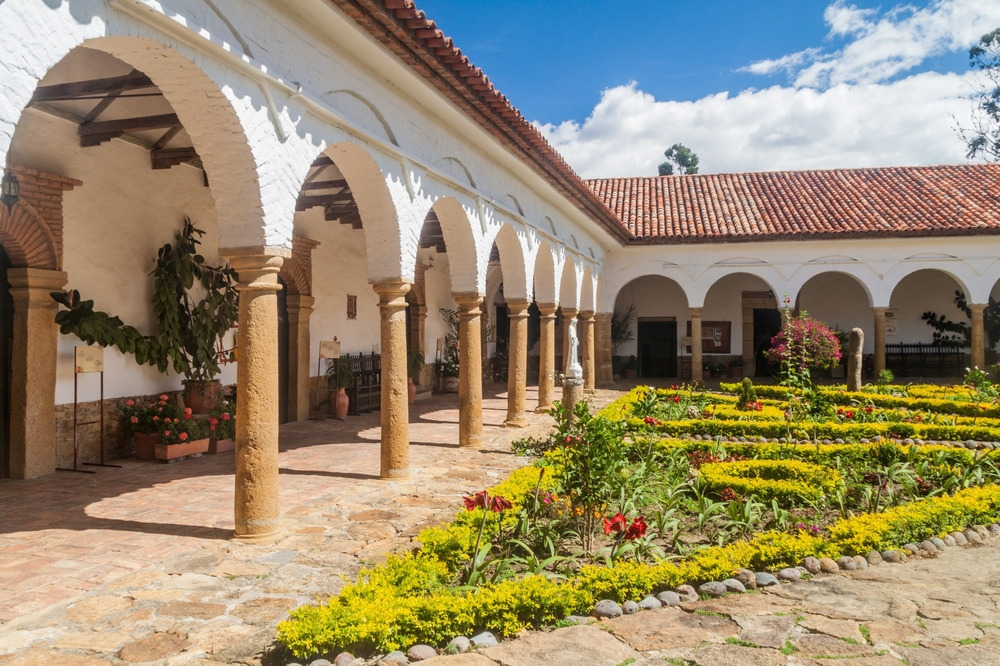
- Coherent architectural testimony: whitewashed walls, ceramic tile roofing, and restrained volumes characteristic of Andalusian colonial style.
- An active monastic life: the Discalced Carmelites have lived in strict enclosure since 1645, making it a rare place where the original function has never ceased.
History of the convent
The order of the Discalced Carmelites, founded in the 16th century by Saint Teresa of Ávila, established itself in New Granada in the early 17th century. After establishing a first cloister in Bogotá, the community decided to found a second monastery in the young city of Santa Maria de Leyva, then experiencing rapid growth.
The convent was inaugurated on April 8, 1645. The sisters arranged within it a church, a cloister, cells, and an orchard intended for self-sufficiency. From that date forward, the building has never changed its purpose: it has served as a refuge for the community for more than 375 years, making it one of the country's oldest continuously active convents.
What you can see
As the convent is a strictly cloistered monastery, public access is limited essentially to the conventual church, open during services. The cloister, cells, and orchard remain reserved for the religious sisters.
The church
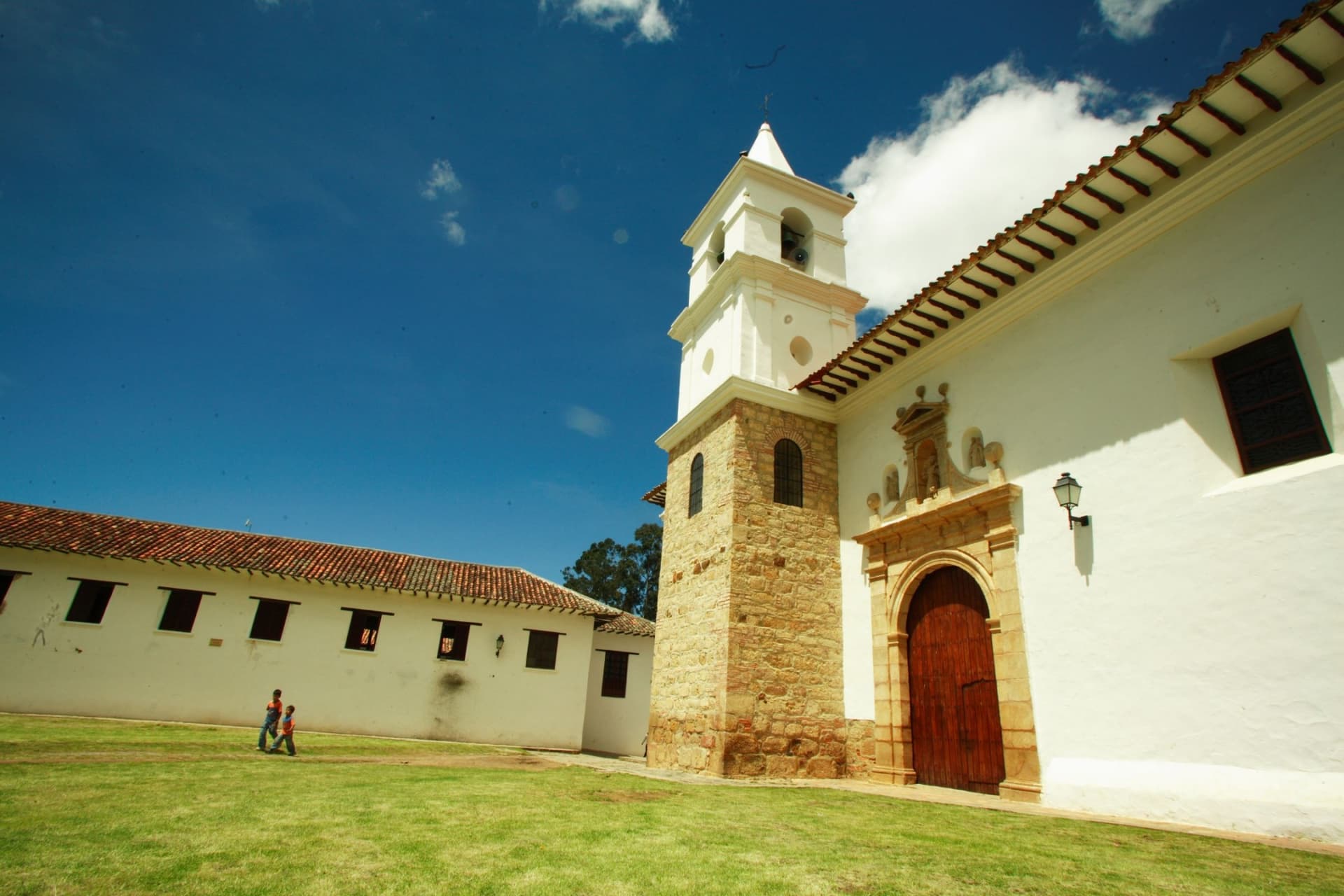
The façade, austere, features a massive wooden door and a discreet bell tower typical of Spanish colonial architecture. Inside, the décor remains restrained: central altar, wooden benches, religious portraits, and a few pieces of sacred art. From the nave, one sometimes hears the singing in Spanish performed by the sisters from the choir room, situated behind a grille that separates the cloistered space from the church.
The sisters' productions
The community finances its operations through the manufacture of scapulars, rosaries, and small religious objects, sold via a revolving door that permits exchange without direct contact. The centuries-old orchard, maintained by the sisters, provides part of their sustenance.
The exterior
The ensemble stands out for its whitewashed walls and ceramic tiles, perfectly integrated into the colonial fabric of the historic quarter. A walk around the building allows one to appreciate the volumes and the convent's position in the northern part of the city.
When to visit
The most significant date in the convent's calendar is July 16, the feast of the Virgen del Carmen, patroness of the order. A solemn mass is celebrated in the convent's church, followed by a procession through Villa de Leyva: the statue of the Virgin holding the Christ Child, crowned with a floral arch, is borne through the streets, accompanied by the faithful and priests singing Catholic hymns.
Beyond this celebration, the dry months (December to March) remain the most comfortable for visiting Villa de Leyva and its monuments on foot.
Practical information
- Location: north of Villa de Leyva, in the historic quarter, just a few streets from the Plaza Mayor.
- Access: on foot from the center (10 to 15 minutes) or by local taxi.
- Visiting: only the church is accessible to the public, primarily during service times. The cloister remains closed.
- Dress code: modest, covering clothing recommended, as in any active place of worship.
- Duration: allow 20 to 30 minutes for visiting the church and forecourt.
Nearby
Villa de Leyva concentrates numerous heritage sites within a compact radius. To extend your discovery of colonial Colombia and its historic cities, you can enrich your itinerary with:
- La Candelaria: the historic quarter of Bogotá, the logical starting point before heading to Villa de Leyva.
- The Botero Museum: also in Bogotá, for an artistic reading of Colombian culture.
- Ciudad Perdida: another emblematic site of Colombian heritage, in the Sierra Nevada.
Organizing your visit
The Convent of the Discalced Carmelites fits naturally into a stay in Villa de Leyva, a cultural step in any Colombian circuit. To build a tailor-made itinerary including this site and other colonial cities in the country, consult our Colombia journeys.
Interested in this visit?
We can include it in your personalised itinerary.