Humpback Whale Watching in the Nuquí Region
Humpback Whale Watching in the Nuquí Region
Between July and October, humpback whales travel from Antarctica to calve and mate in the warm waters of the Colombian Pacific. The Nuquí region, in Chocó department, is one of the continent's finest whale-watching zones, supported by committed community-based ecotourism.
Each year, between July and October, humpback whales migrate north from Antarctica to calve and mate in the warm waters of the Colombian Pacific. The Nuquí region, in Chocó department, ranks among the continent's premier whale-watching destinations: its fjords, protected bays, and relatively low tourism pressure create exceptional viewing conditions.
Quick Facts
- Season: July to October (peak in August–September)
- Access: Nuquí is reachable only by plane (flights from Medellín) or by boat from Buenaventura
- Recommended duration: sea excursions typically last 3 to 5 hours
- What to wear: waterproof clothing recommended; biodegradable sunscreen required on certain vessels
- Regulations: Colombian law mandates a minimum 200-meter distance between boats and whales; licensed operators strictly observe these rules
What You'll See
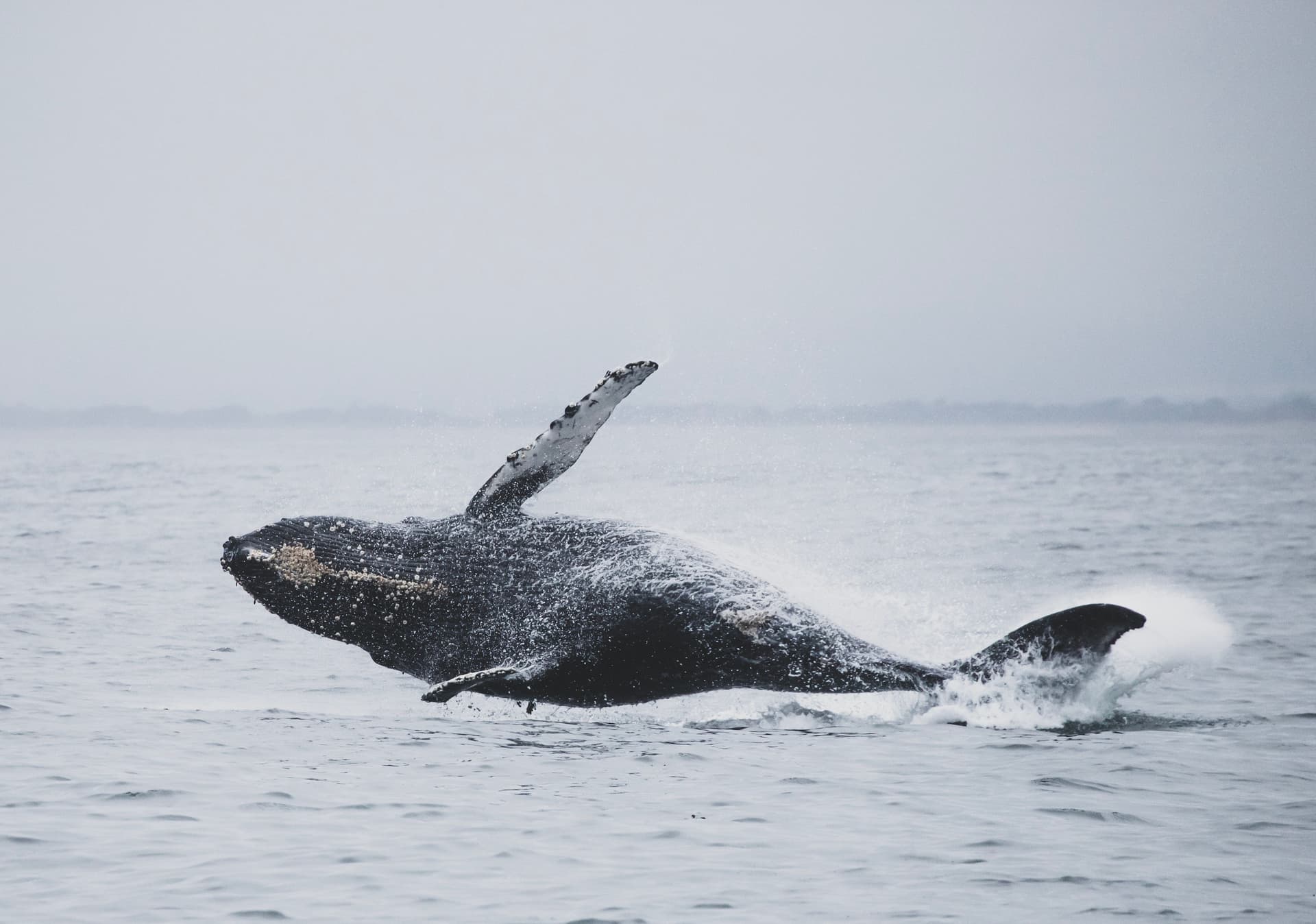
The humpback whale (Megaptera novaeangliae) is the dominant species. Observable behaviors include full breaches, tail slaps (lobtailing), and the songs of males—audible from the boat. Atlantic spotted dolphins frequently accompany excursions. Mothers and calves appear as early as July.
History and Context
The Colombian Pacific constitutes one of two breeding grounds for Southern Hemisphere humpback whales (the other being the Brazilian coast). The Nuquí region developed structured ecotourism from the 2000s onward, driven by Afro-Colombian and indigenous Emberá communities who manage part of the operations. The area is integrated into the Tropical Eastern Pacific Marine Corridor.
Highlights of Your Visit
The Breach
A full leap by an adult whale—weighing up to 40 tons—remains the most breathtaking spectacle. It happens without warning; experienced guides position the boat upstream of active zones to maximize chances of witnessing this display.
Mothers and Calves
Females come to protected bays around Nuquí to give birth. Observing a calf learning to swim alongside its mother, just dozens of meters from your boat, is a rare experience on the Pacific coast.
Underwater Songs
Some operators deploy hydrophones for real-time listening. The complex, repetitive songs of males are audible from the deck. This option depends on each operator's equipment.
Photography Tips
Use a telephoto lens (200 mm minimum equivalent) to account for regulatory distances. Set a fast shutter speed (1/1000 s or higher) to freeze breaches. Light is optimal in early morning, before Pacific haze builds. Protect your gear from humidity and spray with a waterproof bag.
Location and Access
Nuquí sits on the Pacific coast of Chocó department, roughly 500 km northwest of Bogotá as the crow flies. Air access from Medellín is the most common route (flights operated by regional carriers). Whale excursions depart from beaches and lodges in the surrounding area, particularly around the Joao zone and adjacent bays. Accessibility for travelers with reduced mobility is very limited due to the light vessels used.
Nearby Attractions
- Termales de Nuquí — natural hot springs accessible at low tide, right on the beach.
- Utría National Natural Park — a neighboring marine protected area, one of the Colombian Pacific's premier whale nesting and snorkeling sites.
- Bahía Solano — an alternative whale-watching base further north, with options for sport fishing and rainforest trekking.
Frequently asked questions
The season runs from July to October. Peak activity typically occurs in August and September, when whale numbers peak and surface behaviors are most frequent.
No reputable operator guarantees sightings. Pacific weather conditions can cancel an outing. In peak season, the odds of spotting at least one whale are excellent, but these remain wild animals.
The most practical route is by air from Medellín (Olaya Herrera airport). Regional flights serve Nuquí directly. Boat access from Buenaventura is also an option, though the journey is long and weather-dependent.
Colombian regulations prohibit entering the water within 200 meters of whales. "Swim with whales" activities are not legally permitted in this zone.
Yes. In peak season (August–September), lodges and boat spots fill quickly. Booking several weeks ahead is strongly recommended, especially for weekends.
Yes. Utría National Park, Nuquí's thermal springs, and Emberá villages are all accessible from the same bases. Most lodges offer multi-day combination programs.
Give it a go!
Our local experts arrange this activity for you.