Medellín
Medellín
From Comuna 13 to Plaza Botero, Medellín tells the story of a Colombian city's transformation into an open-air urban laboratory.
The great city of Medellín captivates with its numerous cultural centers. Located 400 kilometers north of Bogotá, its landscape depicts the major chapters of Colombia's history. The architecture of its Pueblito Paisa transports visitors to the colonial era, its Plazuela San Ignacio revives the day of its independence, Comuna 13 recounts the rise and fall of Pablo Escobar's cartel, the Plaza Botero immerses its visitors in contemporary art, and its grand modern buildings reflect the country's current economic progress.
History
Before Spanish conquest, the entire region was populated by several indigenous tribes. The Guayabales, Yanmesies, Niquiás, Nutabes, Karibes, and Aburraes lived off gathering and hunting in the Aburrá valley, the current location of Medellín. They traded with one another, exchanging cloth, salt, and gold. This large cluster of villages prospered for nearly 2,000 years.
Led by conquistador Francisco de Herrera Campuzano, the Spanish discovered the Valle de Aburrá on Sunday, August 24, 1541. Coveting the riches of the great valley, they waged war against the indigenous people. The Guayabales fiercely opposed the invaders. But the strangers from afar quickly gained the upper hand and conquered the entire region. The survivors of the massacre were enslaved. Inhumane treatment, hard labor in the gold mines, and various diseases caused the disappearance of all Indians from the valley.
The village of San Lorenzo de Aburrá was founded among the region's mountains on Wednesday, March 2, 1616. It grew over the years and became the great city of Nuestra Señora de la Candelaria de Medellín. On Saturday, August 21, 1813, it was renamed Medellín. Thanks to flourishing trade, it quickly became the new capital of the Antioquia department.
An economic and social crisis struck the city during the 1970s. Unemployment rose and insecurity took hold of the metropolis. Lacking jobs, part of the population turned to drug trafficking. In 1976, the famous Medellín cartel was born, with young Pablo Escobar at its head.
In the 1980s, the cartel established a true international empire. Medellín was its capital. Insecurity reigned throughout the city. Murders, kidnappings, and threats of all kinds terrorized residents. At that time, the megacity was the scene of countless bloody crimes. After a fierce war against the government, Pablo Escobar was finally shot dead on Friday, December 3, 1993.
Greatly weakened but still active, the cartel continued to spread terror throughout Medellín. The state then carried out several military interventions in the city, notably in the Comuna 13 neighborhood. One of them, Operation Orion, resulted in the arrest of many drug lords, but also the deaths of several civilians. Nowadays, Medellín enjoys peace and security. It has become an important economic and social center in Colombia.
Medellín Today
The urban landscape of Medellín is similar to that of Colombia's major cities. Walking through its streets, you feel the energy that reigns in a megacity where more than two million Medellinenses live. Among its buildings, modern structures, and streets congested with vehicles, certain spots attract travelers from around the world. Cerro Nutibara and Comuna 13 rank among the most popular.
Climbing Cerro Nutibara little by little, you discover a beautiful green space. Along its hiking trails, a paved path winds between trees across lush grass. At the very top, a lookout offers a splendid view of the hill and the city. Up there, you absolutely must visit Pueblito Paisa, a full-scale replica of the colonial town of Antioquia. Colonial-style houses have been built around a small public square paved in the traditional manner. Beautiful period furnishings are arranged inside each one, much to visitors' delight. Near the Cacique Nutibara fountain, a few wooden stalls allow you to purchase various souvenirs. Nearby, the Museo Ciudad houses a permanent exhibition centered on Medellín's history and culture. After viewing its maps, plans, and numerous photographs, you can admire a magnificent scale model reproducing the topography and buildings of the metropolis.
Comuna 13, meanwhile, is located further away, at the western edge of the city. Its fascinating history and culture unfold during a captivating visit to the Museo de la Memoria. This neighborhood was once a hub of drug trafficking and narcoterrorism. But thanks to the action of its residents, it has risen from the ashes and become a safe place for locals and tourists alike. The latter can moreover discover a true open-air museum dedicated to street art along the Escaleras Eléctricas, a grand public escalator. Through these incredible graffiti works, young people tell their past, present, and the future they hope to have.
In the heart of downtown, Plaza Botero is one of Medellín's main squares. Sculptures representing characters with swollen features adorn this beautiful public garden. The works of famous artist Fernando Botero lend a strange atmosphere to this place. This large public space is moreover surrounded by buildings with equally original architecture. With its black and white brick, the Palacio de la Cultura boasts a structure that stands out from others. This grand palace houses a beautiful museum, library, and magnificent interior courtyard. Not far away, the Museo Antioquia displays fascinating works by Fernando Botero. Other sculptures by the impressionist artist have also been placed on Parque San Antonio, the largest public square in downtown Medellín.
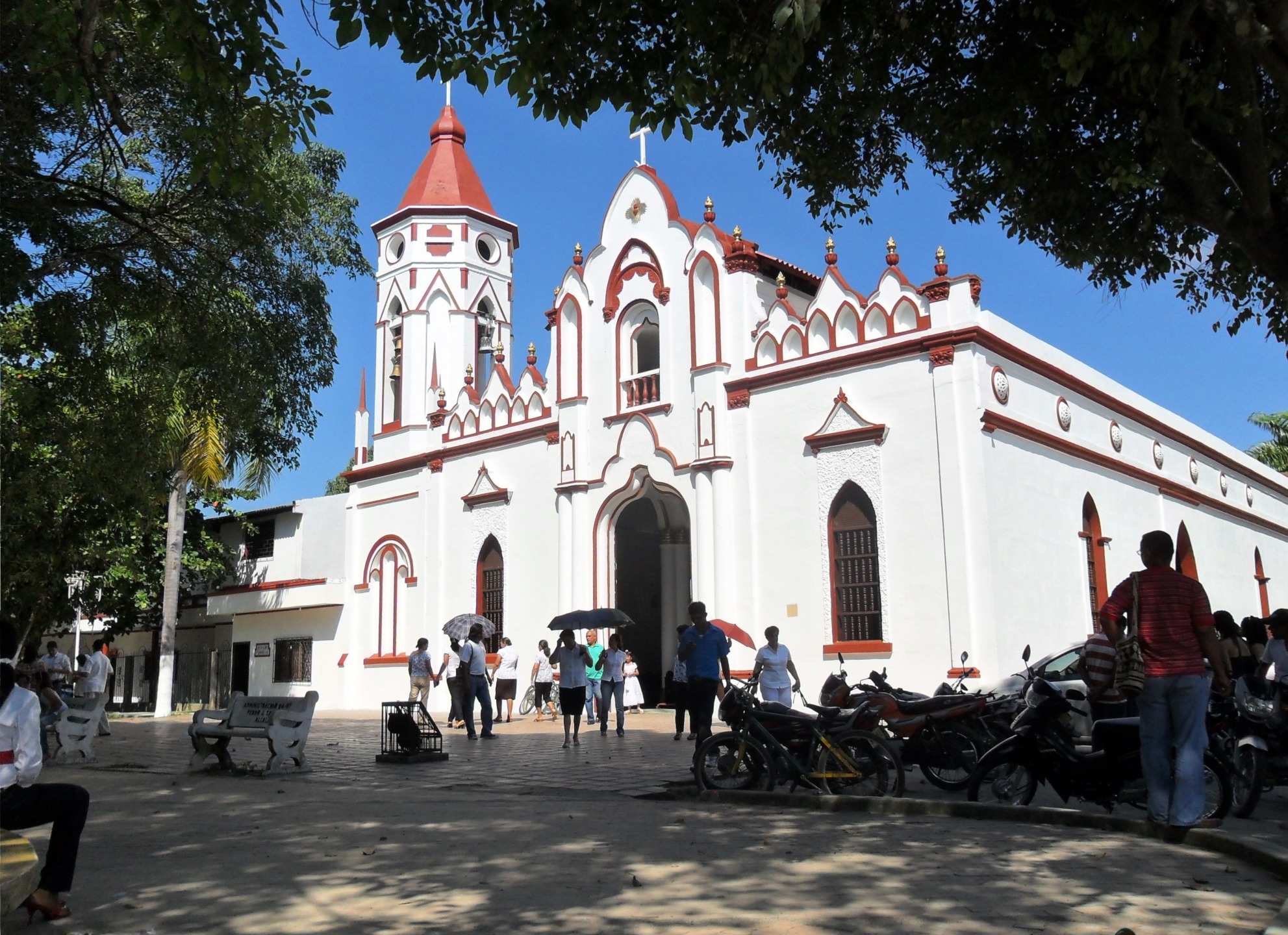
On the north side of Plaza Botero, the impressive facade of the Catedral Metropolitana fascinates both locals and tourists. Inside, its beautiful columns, sublime decoration, and hymns played on its grand organ are truly exceptional. A few streets away, many tourists also jostle for a photo in front of the famous Pasaje Peatonal Carabobo church, located on the Plazuela de La Veracruz square.
Plaza de Cisneros is also one of Medellín's iconic postcards. When night falls, its wonderful columns of light illuminate with a thousand colors. This place is simply magical.
For those who prefer to admire buildings from another era, beautiful historic structures have been erected on Plazuela San Ignacio. The statue of General Francisco de Paula Santander stands proudly at the heart of this mythical square. Its Edificio San Ignacio long served as the seat of the University of Antioquia. Its Iglesia San Ignacio boasts an impressive facade. And the gothic aspect of Claustro San Ignacio is truly sublime.
Feria de las Flores in Medellín
Medellín is full of exceptional celebrations. From late July to early August, it hosts its famous Feria de las Flores. During these festivities, the city's streets are filled with parades of flower growers. Each one vies for ingenuity in crafting their grand bouquet of flowers. Then come processions of vintage cars, exhibitions, and concerts of all kinds. This is undoubtedly the most important cultural event in the city of eternal spring.
Climate
The weather is often cloudy in Medellín. Yet it remains warm. There, temperatures oscillate between 16.5°C and 30°C throughout the year, with an average of 21.6°C. Showers occur fairly frequently, in both winter and summer. But they are less frequent between December and February as well as from June to July.
You can travel directly to Medellín from abroad by landing at the José-María-Córdova International Airport. The city also welcomes regional flights at Olaya Herrera Airport. From Bogotá, you can choose between taking a domestic flight or boarding a regional bus.
The North-South and Center-West lines of the Medellín metro can take you to all corners of the city. From the metro station, you can then choose between taking a bus to your chosen neighborhood or hailing a taxi and indicating your destination.
Want to discover this destination?
Our local advisors design your tailor-made trip.