San Agustín Archaeological Park
San Agustín Archaeological Park
Hundreds of stone statues stand guard over pre-Hispanic tombs in the highlands of Huila. San Agustín Archaeological Park, a UNESCO World Heritage Site, is South America's largest sculptured funerary complex.
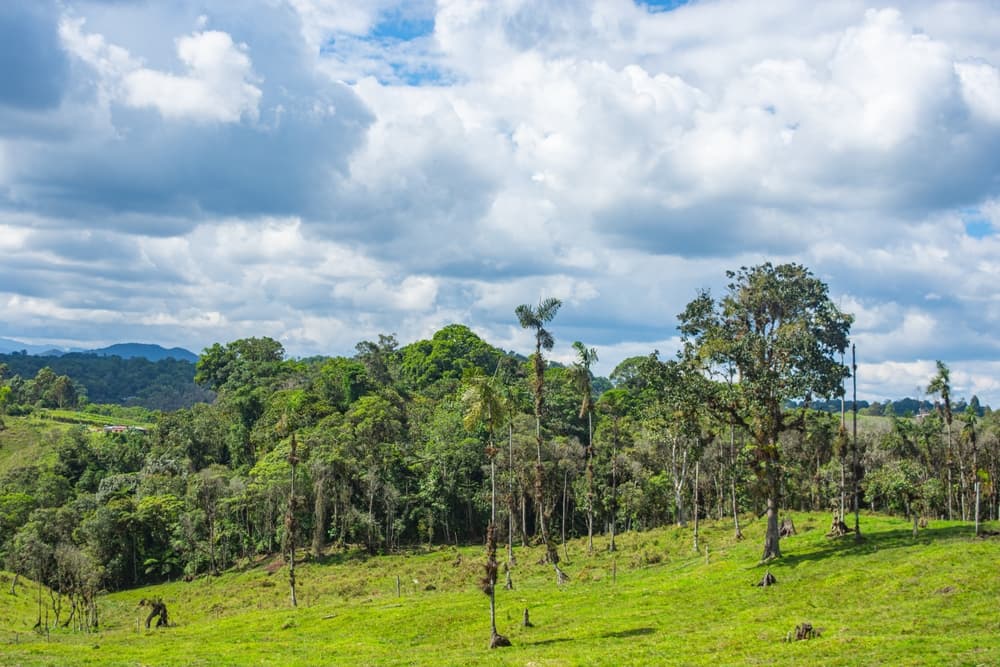
In southwestern Colombie, across the highland terrain of Huila department, San Agustín Archaeological Park shelters the greatest concentration of pre-Hispanic statues in South America. Hundreds of stone sculptures, guardians of monumental tombs, emerge from dense Andean forest. Designated a UNESCO World Heritage Site in 1995, this site bears witness to a still-mysterious civilization that sculpted and buried its dead between the 1st and 8th centuries CE.
Practical information at a glance
- Admission: paid entry (combined ticket with Alto de los Ídolos and Alto de las Piedras archaeological parks)
- Recommended duration: one full day for the main mesetas; two days to cover satellite sites
- Access: the park lies a few kilometers from San Agustín town, reachable by jeep or horseback from downtown
- Clothing: hiking boots essential — trails become muddy during the rainy season
- Dry season: December–February and June–August, ideal for pathways and lighting
What you'll see
The park comprises several mesetas (plateaus) dotted with funerary mounds. Each tomb is crowned or flanked by anthropomorphic statues bearing hybrid features — part-human, part-feline or part-jaguar. Sculptures range from a few tens of centimeters to over three meters tall. Some retain traces of red and black pigments. The Fuente de Lavapatas, a ritual channel carved into a riverbed, stands as one of the continent's rare examples of pre-Hispanic hydraulic art.
History and context
The San Agustín civilization left no written records. Its exact identity remains debated. Archaeologists place its peak between the 1st and 8th centuries, with funerary activity extending through the 14th century. The statues served as guardians—shamans or deities—to protect the high-ranking deceased. Excavations begun in the 19th century by European explorers revealed offerings of ceramics, gold, and stone at the bottom of tombs.
Highlights of the visit
Meseta A, B, and C
These three plateaus concentrate the best-preserved tombs and most imposing statues. Meseta A houses a double mound with guardian statues in position. Marked trails connect the three zones in under two hours of walking.
Fuente de Lavapatas
This ritual channel, carved into basalt from a stream, depicts serpents, lizards, and human faces. Running water once animated these reliefs during ceremonies. It ranks among the site's most singular features.
Alto de los Ídolos and Alto de las Piedras
These two satellite sites, situated across the río Magdalena, see fewer visitors. Alto de las Piedras preserves a polychrome statue whose original pigments remain partially visible—an absolute rarity for the region.
Photography tips
Morning light (before 10 a.m.) falls most gently on statues facing east across the mesetas. Overcast days, frequent in the rainy season, soften harsh shadows and reveal carved detail. Fuente de Lavapatas photographs best from a worm's-eye view along the canal's edge. Flashes and tripods are generally prohibited inside protective shelters.
Location and access
San Agustín lies roughly 220 kilometers south of Neiva, Huila's capital, via a mountain road. From Bogotá, bus travel takes between 10 and 12 hours; a flight to Neiva followed by bus cuts travel time substantially. The San Agustín town center offers lodging across all price ranges. Shared jeeps and horse rentals from town enable access to the various mesetas. PMR accessibility is limited on earthen trails.
In the surrounding area
- Bordones Waterfall — one of Colombie's tallest waterfalls, reachable from San Agustín by track.
- Magdalena Canyon — spectacular gorges where the río Magdalena originates, a few hours' drive away.
- Tierradentro Archaeological Park — another Colombie UNESCO site featuring painted underground hypogea, roughly 4 hours by road.
Frequently asked questions
The dry seasons (December–February and June–August) provide passable trails and superior lighting. During the rainy season, paths become slippery and some access routes may close.
One day covers the main mesetas and Fuente de Lavapatas. Plan a second day if you wish to visit Alto de los Ídolos and Alto de las Piedras, situated across the river.
Yes, the two UNESCO parks are often paired in a multi-day circuit. The road between the sites crosses remarkable Andean scenery, though it is long and sometimes challenging.
Photography for personal use is generally allowed. Flashes and professional equipment (tripods, drones) may face restrictions; inquire at the park entrance.
Mesetas A, B, and C are linked on foot in under two hours. For satellite sites (Alto de los Ídolos, Alto de las Piedras), a rented jeep or horse from town is recommended.
Licensed local guides offer their services at the park entrance and in town. A guided tour is strongly recommended to grasp the meaning of the statues and the archaeological context of the site.
Interested in this visit?
We can include it in your personalised itinerary.