Comuna 13
Comuna 13
Once among Medellín's most violent neighborhoods, Comuna 13 has become a place of memory and street art that tells the story of the city's transformation.
Comuna 13, a former San Javier neighborhood perched on the western slopes of Medellín, has transformed over two decades from one of Colombia's most violent zones into an emblematic neighborhood showcasing the city's urban renewal. Today, its alleys covered in murals, public escalators, and panoramic viewpoints make it one of Medellín's most visited attractions.
Why Visit Comuna 13
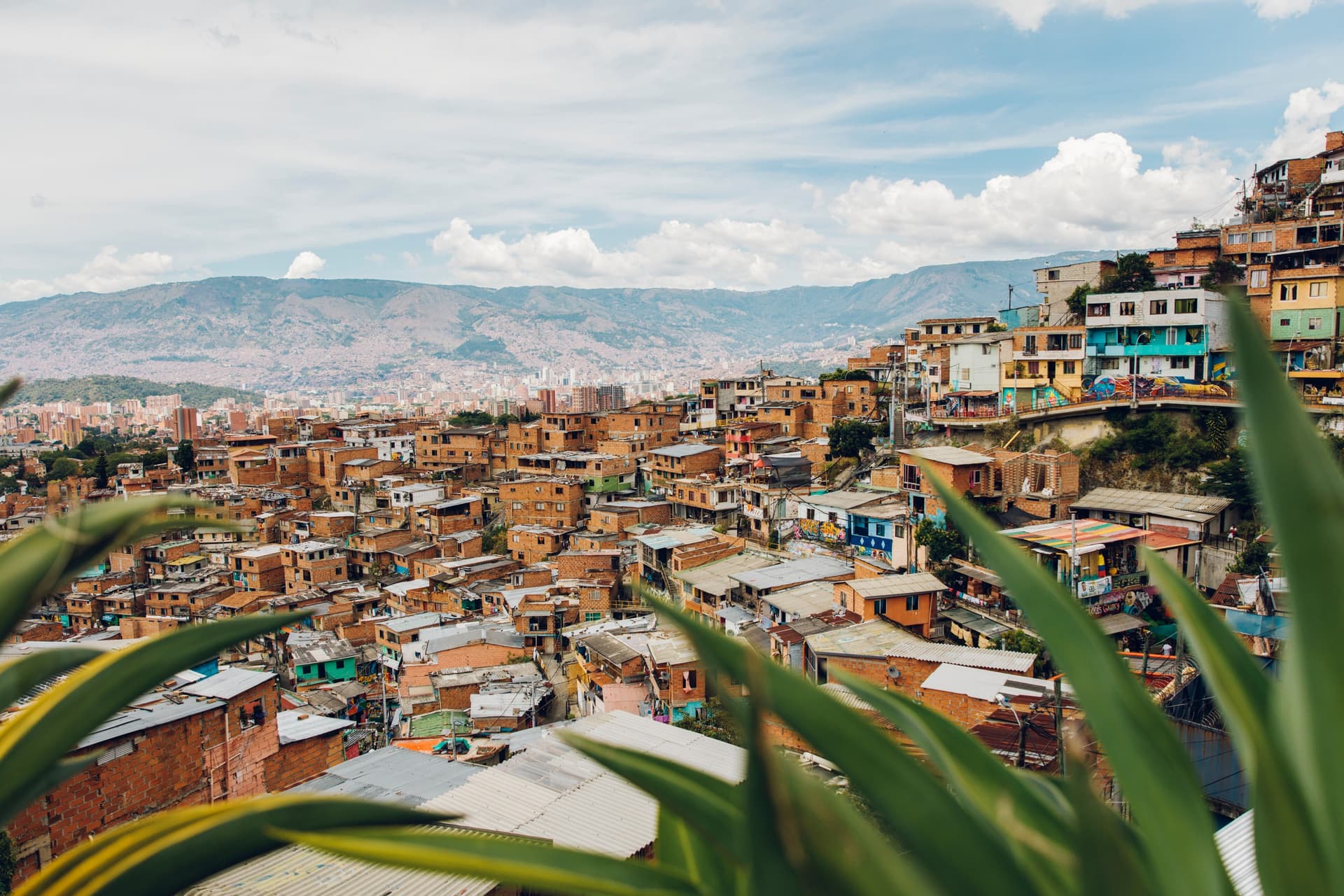
Comuna 13 brings together several rare points of interest for an urban neighborhood. Its recent history, marked by cartels, guerrillas, and the 2002 military operation, makes it a living memorial. Its artistic scene — street art, hip-hop, dance — emerged directly from residents' determination to tell their story and reclaim public space. Finally, its steep topography, with colorful houses scattered across the slopes, offers unique photographic perspectives of Medellín.
It is also an educational destination: the visit sheds light on the mechanisms of Colombian rural exodus, the security crisis of the 1990s-2000s, and the urban regeneration policies pursued since.
History of Comuna 13
Origins: Rural Exodus of the 1970s
During the 1970s, Colombia experienced massive migration to cities, driven by fleeing rural violence. In Medellín, newcomers settled on the western slopes of the city, in informal constructions. The San Javier neighborhood — today's Comuna 13 — densified rapidly, without planning and without adequate public services.
The Dark Years
In the 1980s and 1990s, a combination of unemployment, state absence, and the neighborhood's strategic position (corridor to the Pacific coast) made it one of Medellín's most contested zones. Cartels, militias, urban guerrillas (FARC, ELN), and paramilitary groups clashed there. Kidnappings, extortion, and homicides shaped residents' daily lives.
Operation Orión
On Sunday, October 6, 2002, the Colombian state launched Operation Orión, a vast military offensive to retake control of the neighborhood. For several days, Comuna 13 became a combat zone. This operation remains controversial: while it weakened armed groups, it also resulted in civilian casualties and forced disappearances still being documented today.
Reconstruction Through Culture
Beginning in the 2010s, the municipality invested in major infrastructure (cable car, public escalators, libraries), and local collectives took to the walls. Hip-hop and street art became the primary means of expression for a generation born during the conflict, telling the neighborhood's story differently.
What to See in Comuna 13
The Escaleras Eléctricas
Inaugurated in 2011, these covered public escalators climb nearly 400 meters of elevation gain across six sections. The walls bordering them are entirely covered with graffiti and murals tracing the neighborhood's history. This is the main route, punctuated by shops, street food stands, and breakdance performances.
The Mirador de la Comuna 13
Located at the top of the route, this panoramic viewpoint allows you to embrace the neighborhood as a whole: colorful houses tiered on the slope, the Aburrá valley, Medellín's silhouette in the distance.
The Museo de la Memoria
This museum documents, through photographs, objects, and projections, the rural exodus of the 1970s, the reign of organized crime in the commune, and the events of October 6, 2002. It is a recommended stop to contextualize what street visits sometimes leave implicit.
La Escombrera
A former landfill located uphill, La Escombrera is considered one of Latin America's largest urban mass graves. Each year, families of victims who disappeared during Operation Orión gather here to pay their respects. The site remains an active place of memory and an ongoing judicial matter.
Practical Information
- Recommended duration: allow 2 to 3 hours to traverse the escalators, viewpoint, and wander through the alleys. Add 1 hour if you include the Museo de la Memoria.
- Guided tour: highly recommended. Several resident collectives offer visits in English-speaking, Spanish, and other languages, at moderate rates. First-person narrative significantly enhances the visit's impact.
- Safety: tourist areas (escalators, viewpoint) are safe during the day. The situation has improved considerably, but some parts of the neighborhood remain sensitive: stay on marked routes and avoid solo exploration in the evening.
- What to bring: comfortable shoes (steep slopes), water, sun protection. Cash is useful for tips to artists and purchases on-site.
How to Get There
The simplest access from central Medellín is by metro: take Line B to the San Javier station, the western terminus. From there, local buses or a short taxi ride (5-10 minutes) will drop you at the base of the Escaleras Eléctricas.
The Line J Metrocable cable car, accessible from San Javier, also serves the neighborhood's upper reaches and offers a spectacular aerial view of the urban slopes.
Nearby Attractions
A visit to Comuna 13 naturally fits into a broader discovery of Medellín. To extend your exploration, several sites usefully complement your day:
- The Botero Museum, in the city center, for the collection devoted to the painter native to Medellín.
- The La Candelaria neighborhood, the historic heart of the city.
- Cerro Azul, for a different perspective on the region.
- The Convent of the Discalced Carmelites, for colonial religious heritage.
Frequently Asked Questions
Frequently asked questions
Yes, in busy tourist areas (escalators, viewpoint, main alleys) and during the day. Safety has improved dramatically since 2010. However, stay on marked routes and avoid evening visits or solo exploration far from the main circuits.
It is not mandatory, but highly recommended. Many guides are former or current residents of the neighborhood: their account adds depth that simply reading the murals does not provide.
Allow 2 to 3 hours for the main route. With the Museo de la Memoria and a lunch break, plan for a full half-day.
Morning and early afternoon offer the best light for murals and more moderate crowds. Weekends are more lively, with more street performances but also more people.
The murals, yes, without restriction. For residents, always ask permission — it is a basic mark of respect in a neighborhood that has long suffered from being reduced to its violent image.
Including Comuna 13 in Your Itinerary
Comuna 13 alone illustrates Medellín's contemporary transformation and naturally fits into any Colombia circuit. To build a journey combining Andean cities, Caribbean coast, and cultural heritage, consult our tailor-made itineraries in Colombia.
Interested in this visit?
We can include it in your personalised itinerary.