San Agustín
San Agustín
San Agustín, in Colombian Huila, is home to South America's largest collection of pre-Hispanic sculptures: funerary statues, necropoles, and the Fuente de Lavapatas, UNESCO-listed since 1995.
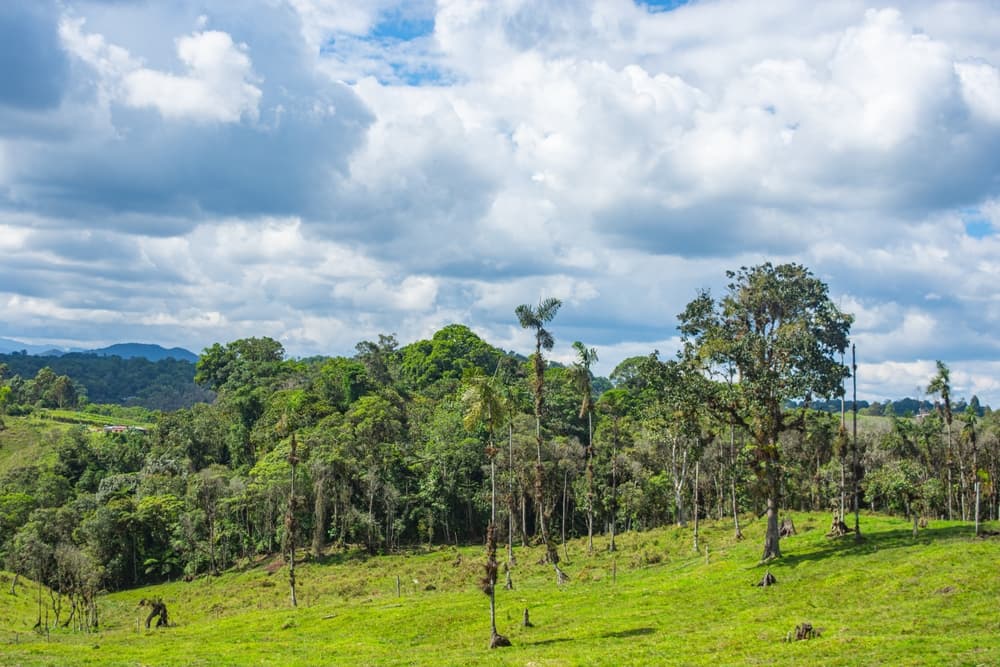
San Agustín is an Andean village in Huila department, nestled in the mountains of southern Colombie, at the source of the río Magdalena. It houses South America's largest collection of pre-Hispanic sculptures: hundreds of funerary statues carved from volcanic stone, scattered across hillside necropoles. The site has been listed as a UNESCO World Heritage site since 1995.
Quick Reference Guide
- Access: from Bogotá, fly or take a long-distance bus to Neiva, then a bus or shuttle to San Agustín (approximately 3 hours from Neiva).
- Entry: the Archaeological Park is paid; a single ticket covers multiple mesitas over several consecutive days.
- Recommended duration: 2 to 3 days to cover the main mesitas and satellite sites (Alto de los Ídolos, Alto de las Piedras).
- What to wear: hiking boots essential; trails between statues are dirt, sometimes muddy.
- Altitude: approximately 1,700 m — bring a warm layer for early mornings.
What to See
The Archaeological Park comprises several mesitas (plateaus) dotted with funerary mounds. Each mound contains an underground chamber guarded by an anthropomorphic or zoomorphic statue. The figures blend human and animal traits—jaguar, serpent, eagle—in a style that is both raw and expressive. Some statues reach several meters in height.
The Fuente de Lavapatas, carved into a riverbed, is a network of channels, basins, and faces sculpted directly into volcanic rock, crossed by flowing water. It is one of the rare examples of pre-Hispanic ritual hydraulics preserved in situ.
History and Context
San Agustín culture developed between the 1st and 8th centuries CE, without any known writing system. It left behind more than 500 statues spread across an area several tens of kilometers square. Archaeologists interpret the mounds as tombs of chiefs or shamans, with statues serving as guardians of the afterlife. The civilization disappeared before Spanish arrival; its ethnic identity remains debated.
The first scientific surveys were conducted in the 19th century by German explorer Konrad Theodor Preuss. Systematic excavations began in the 20th century under the direction of Colombian archaeologist Luis Duque Gómez.
Highlights of Your Visit
Mesita A and Mesita B
The two plateaus closest to the village concentrate the best-preserved and largest statues. Some are protected under wooden shelters that preserve the original pigments still visible on a few sculptures.
Fuente de Lavapatas
This hydraulic sanctuary carved into a riverbed is unique. Visit during the dry season to see the sculptures without the water level drowning them, yet with enough water for the channels to be active.
Alto de los Ídolos and Alto de las Piedras
These two sites, located on the other side of the Magdalena (Isnos municipality), are less crowded. Alto de las Piedras houses a polychrome statue whose traces of red, black, and yellow paint are remarkably legible.
Estrecho del Magdalena
A few kilometers away, the río Magdalena—one of Colombie's major rivers—narrows into a rocky gorge less than two meters wide. The contrast between the river's power and the narrowness of the passage is striking.
Photography Tips
Morning light (before 10 a.m.) is ideal: its low angle brings out the carved reliefs without flattening them. Avoid midday under overcast skies, which erases contrast. No photography restrictions are posted in the park, but flash is discouraged near pigments. For Fuente de Lavapatas, a low-angle shot from the canal's edge reveals the depth of the sculptures.
Location and Access
San Agustín is located in the Huila department, in the central Andes of southern Colombie. The nearest city with an airport is Neiva (Benito Salas airport), connected to Bogotá by several daily flights. From Neiva, buses and shuttles serve San Agustín. The road crosses spectacular mountain scenery but can be slow during the rainy season.
From San Agustín, the main archaeological park is accessible on foot or by tuk-tuk. The Isnos sites require a vehicle or moto-taxi. Local agencies offer guided circuits on horseback, a traditional mode of transport in the region.
Nearby Attractions
- Tierradentro — another Colombian UNESCO site, famous for its painted underground hypogea; allow one day of travel from San Agustín.
- Popayán — the colonial "white city," a natural starting or ending point for a circuit through the southern Andes.
- Laguna de la Magdalena — a high-altitude lake where the río Magdalena originates, accessible by hiking from San Agustín.
Frequently asked questions
The driest months are December–January and June–August. Outside these windows, frequent rains make trails muddy and can complicate access to satellite sites. The region is visited year-round, but pack a raincoat in all seasons.
A minimum of two days to cover the main mesitas and Fuente de Lavapatas. A third day allows you to add the Isnos sites (Alto de los Ídolos, Alto de las Piedras) and Estrecho del Magdalena.
Yes, it's a classic circuit in southern Colombie. The route between the two sites is long and winding; allow one day of travel, often via La Plata. Some travelers pass through Popayán to connect the two.
Self-guided visits are possible with signage in place. A local guide provides valuable archaeological context and helps spot less obvious sculpted details. Certified guides are available at the park entrance.
No. The heritage is scattered across a vast area. The Isnos sites (Alto de los Ídolos, Alto de las Piedras) are separate, on the other side of the Magdalena. The San Agustín Archaeological Museum also conserves pieces and offers valuable context before your site visit.
Trails between statues are manageable for children in good physical condition. The expressive sculptures generally spark their curiosity. Bring water, sunscreen, and closed-toe shoes suitable for uneven terrain.
Want to discover this destination?
Our local advisors design your tailor-made trip.