Cali's Historic Center
Cali's Historic Center
Plaza de Cayzedo, Ermita, La Merced (1545), Puente Ortíz: all the essentials of Cali's historic center, declared a national monument, to discover on foot.
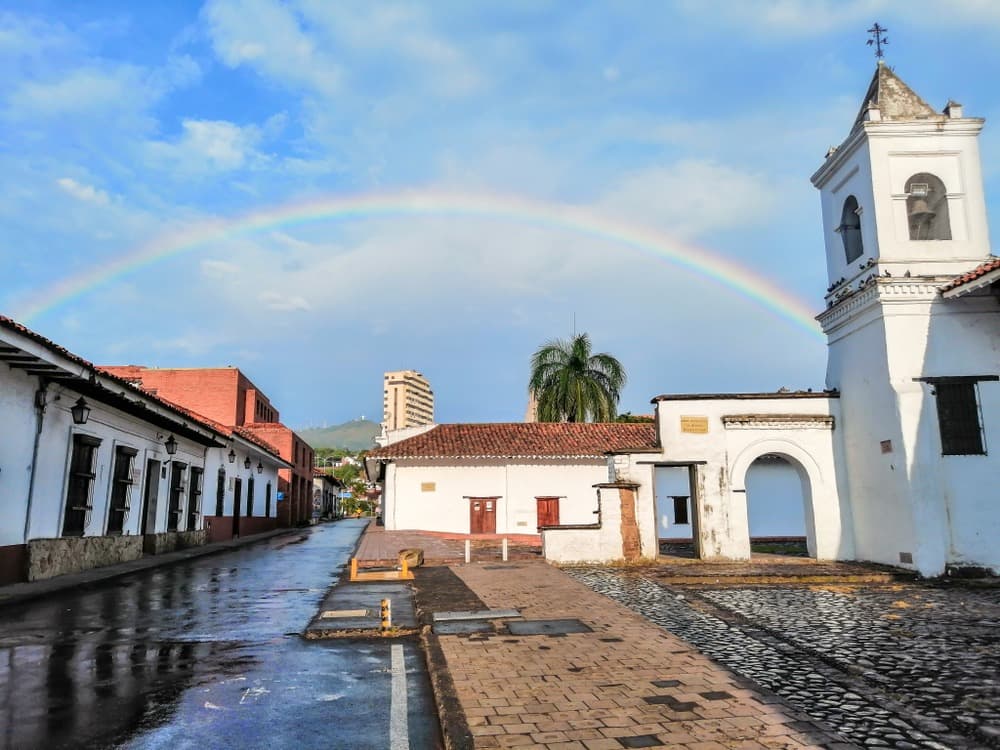
Cali's historic center gathers, within a few city blocks, the essential architectural and religious heritage of Colombia's third-largest city. Shaded plazas, colonial churches, a neoclassical theater, and a 19th-century bridge reveal themselves on foot, in half a day. Declared a national monument in 1959, the district tells the story of Santiago de Cali's founding, its role in the independence of Valle del Cauca, and the identity of a city nicknamed the capital of salsa.
Why visit Cali's historic center
Unlike Cartagena, Cali's old center is not merely a colonial postcard. It is a living neighborhood, walked by residents, where 16th-century buildings stand alongside 1930s theaters and contemporary pedestrian plazas. The concentration of sites allows for a visit on foot or by bicycle, without intermediate transport.
- A church founded in 1545, among the oldest in Colombia
- An urban ensemble declared a national monument since 1959
- An ideal starting point for exploring the city of salsa
- A compact center, walkable in 2 to 4 hours
History of the district
Santiago de Cali was founded in 1536 by Sebastián de Belalcázar. The historic center corresponds to the original colonial core, organized around the main plaza. It was here that decisions leading to the independence of Valle del Cauca were made, under the impetus of figures like Joaquín de Caycedo y Cuero, leader of regional independence, to whom the central plaza owes its name today.
Before 1913, this plaza was called Plaza de la Constitución, before being renamed Plaza de Cayzedo. The district underwent several phases of transformation, notably after earthquakes that regularly struck the region and forced reconstructions, as in the case of Ermita Church. In 1959, Cali's historic center was declared a national monument, ensuring the preservation of its urban fabric.
What to see in the historic center
Plaza de Cayzedo
Heart of the old city, the plaza is shaded by towering palms and structured around the monument to Joaquín de Caycedo y Cuero. Three major buildings frame it: the Otero building, San Pedro Cathedral, and the National Palace. It is the traditional meeting point for Caleños and the best starting point for your visit.
Ermita Church
Located at the corner of Carrera 1 and Carrera 13, Ermita is Cali's most reproduced image. Originally, it bore the name Ermita de Nuestra Señora de la Soledad del Río. Damaged by an earthquake, it was entirely rebuilt in the 20th century in neo-Gothic style inspired by Ulm Cathedral, with its characteristic clock tower. Inside, several religious images are venerated: Virgen de los Dolores, San Roque, San José, Cristo de la Caña, Cristo del Río, San Francisco Javier, La Magdalena, San Antonio, and Ecce Homo.
Poets' Park
Inaugurated in 1995, this park is located between streets 1 and 3 and streets 12 and 13, across from the Jorge Isaacs Theater. It honors the poetry of Valle del Cauca through five statues by sculptor José Antonio Moreno, dedicated to Jorge Isaacs, Carlos Villafañe, Ricardo Nieto, Octavio Gamboa, and Octavio Llanos. It is a peaceful space, ideal for a break between visits.
Jorge Isaacs Theater
Built in 1931 by engineer Hermann S. Bohmer, the theater honors writer Jorge Isaacs, author of the novel María. Its French neoclassical façade contrasts with neighboring colonial buildings. It continues to host regular programming (theater, concerts, dance) and remains a vibrant hub of the center.
Puente Ortíz
This footbridge spans the Cali River at the edge of the historic center. Built between 1835 and 1845, it replaced an earlier bridge made of guadua (local bamboo) and bears the name of Franciscan friar José Ignacio Ortiz, who supervised the works. It is one of the few surviving 19th-century civil structures in the city.
La Merced Church
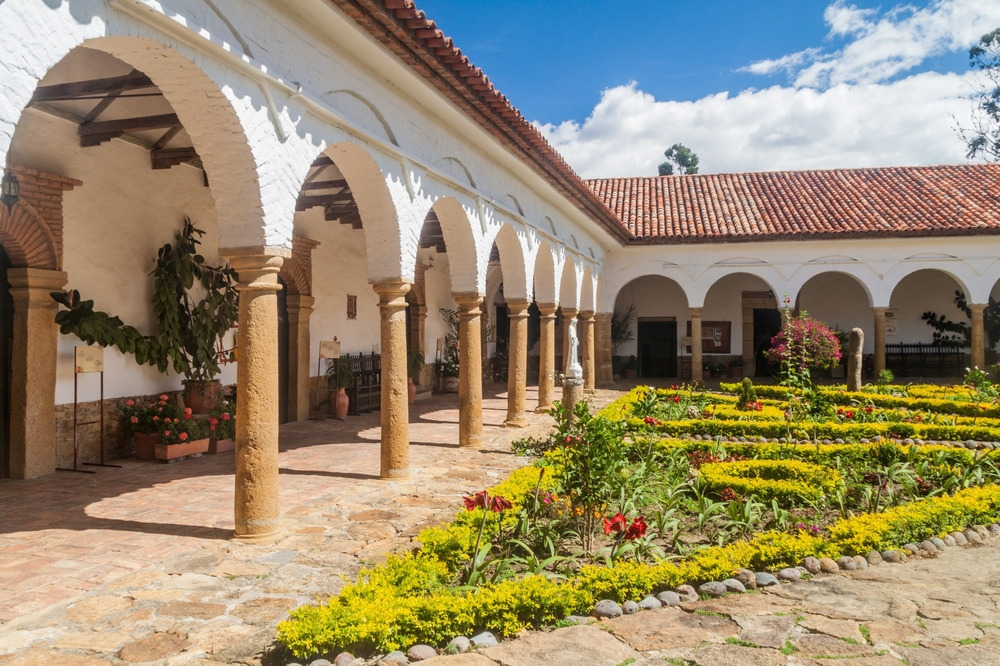
Built in 1545, La Merced is considered Cali's oldest church. Its white, austere façade conceals a remarkable interior: a gilded Baroque high altar housing the statue of Virgen de las Mercedes. The complex also includes a museum of religious and archaeological art featuring pre-Columbian and colonial pieces.
Practical information
The historic center is explored on foot, in 2 to 4 hours depending on your pace. The neighborhood is flat and compact, making it equally accessible by bicycle. Churches are generally open in the morning and late afternoon; check hours on-site or with your guide. Budget modestly for museum entries (La Merced in particular).
As in any major Colombian city, remain vigilant with your belongings and favor daylight hours. The center comes alive especially in the late afternoon.
When to visit
Cali enjoys a warm tropical climate year-round, with temperatures between 24 and 30 °C. Two rainy seasons mark the calendar: April-May and October-November. The driest months (December to March, July-August) are most pleasant for a walking visit.
The highlight of the year remains the Feria de Cali, late December: six days of salsa, parades, and concerts that transform the entire center. To fully enjoy the neighborhood in a festive atmosphere, this is the period to target — but reserve accommodations well in advance.
How to get there
The historic center sits at the heart of Santiago de Cali. Several options depending on your starting point:
- On foot from most hotels in the center and Granada district (15-25 min)
- By MIO, Cali's rapid bus system, Ermita station or nearby stops
- By taxi or app-based ride (Uber, DiDi), simplest option in the evening
- By bike, several providers offer rental or guided circuits of the center
From Alfonso Bonilla Aragón Airport, allow approximately 30-45 minutes by taxi or shuttle to reach the center.
What to see nearby
Once the center is explored, several extensions deserve a detour in Cali or elsewhere in Colombia:
- The San Antonio district, bohemian hillside with panoramic views, 10 minutes on foot
- Cerro de las Tres Cruces, viewpoint over the city (by taxi)
- Communa 13 in Medellín, another emblematic transformed neighborhood
- The Botero Museum in Bogotá, to extend your artistic exploration
- The La Candelaria district, Bogotá's colonial equivalent
Frequently asked questions
Frequently asked questions
Extend your journey
Cali's historic center is a natural stage in a Colombian circuit linking Bogotá, the coffee region, and the Caribbean coast. To build a custom itinerary incorporating Cali and its must-sees, consult our Colombia travels designed with local partners.
Interested in this visit?
We can include it in your personalised itinerary.