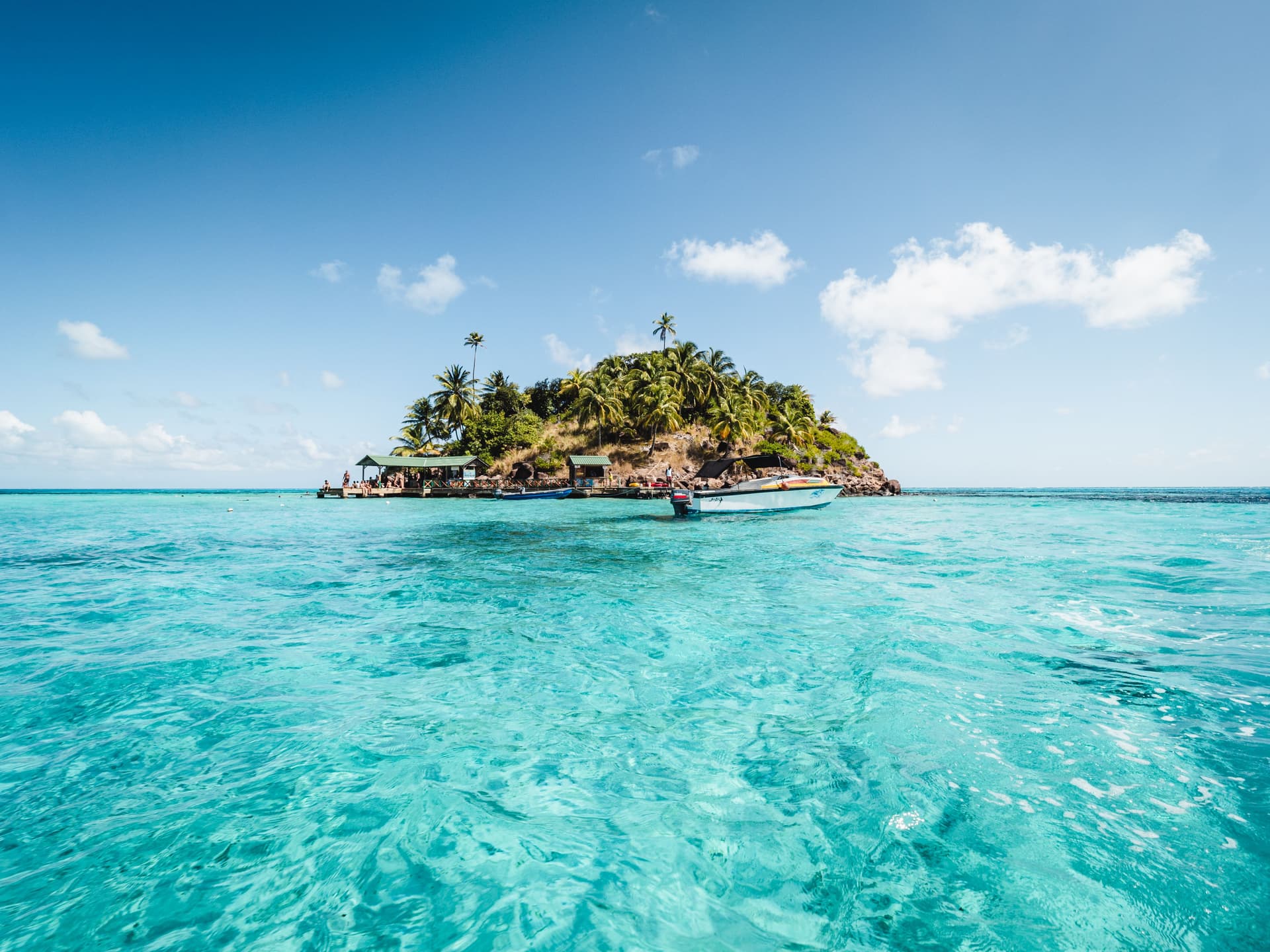
Rosario Islands Archipelago
Rosario Islands Archipelago
About forty kilometers from Cartagena, the Rosario Islands Archipelago comprises some thirty coral islands designated as a national park. Snorkeling, diving and mangroves in translucent Caribbean waters.
About forty kilometers southwest of Cartagena, the Rosario Islands Archipelago groups together some thirty islands and coral islets in the Caribbean Sea. Designated a natural national park, it harbors one of the best-preserved coral reefs on Colombia's Caribbean coast. The shallow waters, a translucent blue-green, make it a sought-after destination for diving, snorkeling and relaxation for both travelers and Colombians alike.
Practical info at a glance
- Access : boat departure from Muelle Turístico de la Bodeguita or Muelle de la Mulata in Cartagena — crossing of approximately 1 hour 30 minutes.
- Park entrance fee : entrance tax to Parque Nacional Natural Corales del Rosario is mandatory, payable at the dock.
- Recommended duration : full day; one or two-night stays possible on certain islands.
- What to bring : swimsuit, biodegradable sunscreen recommended (chemical creams damage coral).
- Accessibility : limited — beach access depends on each island's docks.
What you'll see
The archipelago has two main inhabited islands, Isla Grande and Isla del Rosario, surrounded by deserted islets. Beneath the surface, coral reefs shelter rays, parrotfish, barracudas and sea turtles. On Isla Grande, dense mangroves line the inner channels, accessible by kayak or glass-bottom boat.
History and context
The archipelago is part of the Parque Nacional Natural Corales del Rosario y de San Bernardo, created in 1977 to protect the coral ecosystems of Colombia's Caribbean coast. Historically, these islands served as a refuge for fishermen from the Cartagena region. Today, tourism pressure and coral bleaching linked to climate change are the main conservation challenges.
Highlights of your visit
Snorkeling on the reefs
The depths between 1 and 10 meters offer excellent visibility on calm days. The fringing reefs around uninhabited islets are the least disturbed. Prefer early morning outings, before the influx of day boats.
Isla Grande and its mangroves
The archipelago's largest island has walking trails and navigable mangrove channels. A few simple accommodations allow you to spend the night and enjoy the beaches after the excursion boats depart.
Scuba diving
Several operators offer guided dives to discover coral drop-offs and nearby wrecks. Beginner level is accessible; PADI training is available from Cartagena.
Acuario de Isla Tesoro
The aquarium on Isla Tesoro, managed by the Fundación Oceanario, features local marine species and turtle rehabilitation programs. Its educational value is genuine, though the infrastructure remains modest.
Photography tips
Light is optimal in the morning, before the sun reaches its zenith and washes out colors. For underwater photography, a waterproof housing or camera case is essential — turbidity increases in the afternoon. From the boat, the contrasts between the white of the islets, the green of the mangroves and the blue of the waters are sharpest in clear skies.
Location and access
The archipelago is located in Barbacoas Bay, approximately 35-45 km from Cartagena depending on which island. Shared boats and organized excursions depart each morning from the historic center's docks. Local agencies offer packages combining snorkeling, seafood lunch and aquarium visits. For a quieter stay, private transfers to Isla Grande are available.
Nearby places in Cartagena : Old Town Cartagena, San Felipe de Barajas Castle, Getsemaní Neighborhood.
Around the area
- Old Town Cartagena — colonial historic center listed as Unesco World Heritage, natural starting point before or after the archipelago.
- San Felipe de Barajas Castle — 17th-century Spanish fortress overlooking Cartagena Bay.
- Playa Blanca (Barú) — long white sand beach on the Barú peninsula, often combined with an archipelago excursion.
- Getsemaní Neighborhood — popular neighborhood in Cartagena, known for its murals and nightlife.
Frequently asked questions
The dry season, from December to April, offers the calmest seas and best underwater visibility. The July-August period is also favorable. Avoid months with heavy swell (October-November) if you are prone to seasickness.
In high season (December-January, July-August), booking your boat and accommodation on Isla Grande a few days in advance is recommended. In low season, spots are generally available on the morning of departure at the dock.
Yes, many excursions include a stop at Playa Blanca on the Barú peninsula before heading to the islands. The day is long but doable; bring plenty of sunscreen and water.
The park recommends mineral sunscreens (containing zinc oxide or titanium dioxide) and advises against chemical filters like oxybenzone, which are harmful to coral. Some operators explicitly require them.
Isla Grande has several accommodations ranging from rustic camping to small hotels. Spending the night allows you to enjoy the beaches early in the morning, before the arrival of tour boats.
Yes, underwater photography is permitted. However, it is forbidden to touch or break coral, including for stability while taking photos.
Interested in this visit?
We can include it in your personalised itinerary.