Cocora Valley
Cocora Valley
Located 10 km from Salento, Cocora Valley is home to the Quindío wax palms, Colombia's national tree, and two hiking loops through the Andean cloud forest.
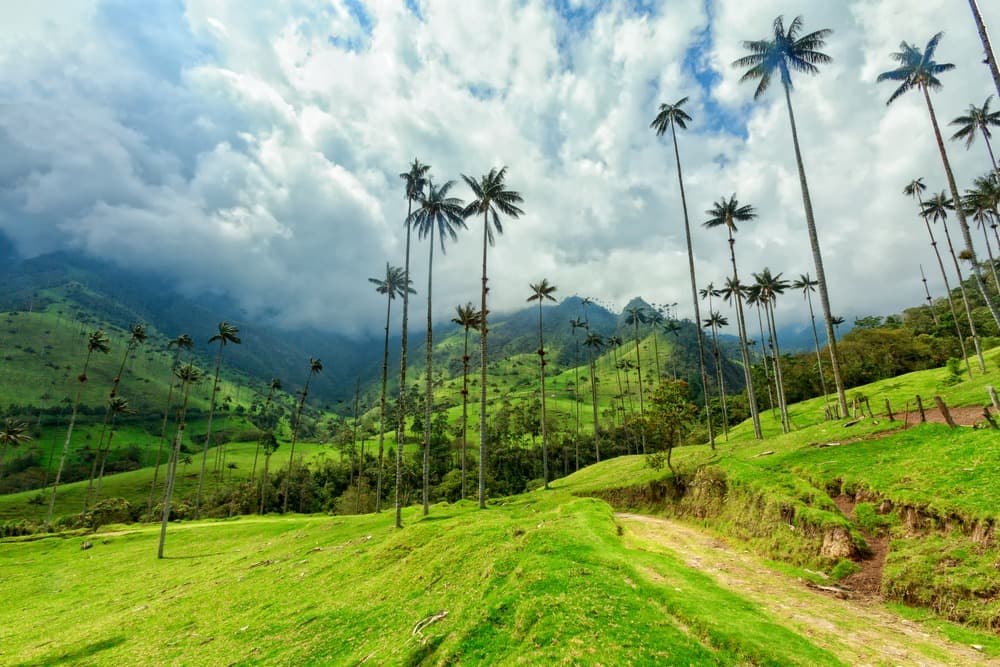
Cocora Valley, situated about ten kilometers from Salento in the Quindío department, is home to the wax palms that are symbols of Colombia. This protected area, part of Los Nevados National Natural Park, combines Andean cloud forest, endemic wildlife, and plant silhouettes reaching 60 meters in height.
Why visit Cocora Valley
The valley brings together several reasons to include this stop in an itinerary through the coffee region:
- The Quindío wax palms (Ceroxylon quindiuense), among the world's tallest palms and Colombia's national tree.
- A cloud forest ecosystem with mosses, ferns, streams, and suspended walkways.
- Discreet but documented wildlife: spectacled bears, mountain tapirs, blue toucans, golden-cheeked conures.
- Two marked trails adapted to different fitness levels, accessible from Salento.
History and site protection
Several centuries before Spanish conquest, the region was inhabited by approximately 60,000 Quimbaya people, according to historical estimates. This culture was famous for their goldwork, part of which is now visible at the Gold Museum in Bogota. Local legend tells that Cocora, meaning "water star," was the name of a Quimbaya princess.
After colonization, the wood and wax from the Quindío palms became the subject of intensive exploitation that threatened the species. On September 16, 1985, President Belisario Betancur declared Cocora Valley a protected area by decree. The valley was integrated the same year into Los Nevados National Natural Park, which stabilized the conservation of the wax palm, now protected as the national tree.
What to see and do in the valley
The Quindío wax palms
Endemic to the Colombian Andes, the wax palm averages 60 meters in height and can reach 80 meters. Many individuals visible in the valley are over a hundred years old. Its distinctive feature lies in its ability to thrive at altitude, in a humid and misty climate. The sector where they concentrate, a vast rolling meadow dotted with vertical trunks, constitutes the signature landscape of the site.
The two hiking routes
From the valley entrance, two marked loops allow you to explore the reserve:
- Short loop (approximately 5 km, 2 h): direct access to the palm field and a few viewpoints. Suited to families and casual walkers.
- Long loop (approximately 12 km, 5 to 6 h): passage through the cloud forest, stream crossings on wooden walkways, climb to Casa de Los Colibries then descent toward Finca la Esperanza and viewpoints.
Horseback excursions are also offered from the entrance. The clockwise route (ascending through the forest) is generally recommended to finish among the palms.
Casa de Los Colibries
This small arranged reserve along the long route presents several hummingbird species attracted by red feeders and flowers. Entry is subject to a modest fee, to be paid on-site in cash.
Andean forest and fincas
Vegetation associated with the palms includes pino romerón, encenillos, and a cloud forest where moss covers the trunks. Several fincas line the trails: Finca la Esperanza serves as a classic stopping point. Some offer hot beverages, snacks, and shelter in case of rain.
When to visit
The climate is temperate year-round, with temperatures ranging from 10°C to 20°C. Mist and showers are frequent regardless of the month, which is part of the site's character. The wettest periods, best avoided if possible, correspond to April-May and October-November. Early morning departures generally offer the best visibility windows before clouds rise.
How to get there
The valley is reached from Salento, about ten kilometers away. Willys, converted former military jeeps used as collective transport, depart from Salento's Plaza de Bolívar. Routes are frequent during peak season; the fare is modest and paid directly to the driver.
To reach Salento from Bogota, take a long-distance bus to Armenia or Pereira (approximately 7 to 9 hours), then a connection to Salento. From Medellín, allow a full day of travel via Pereira.
Practical information
- Access: main entrance open daily during daylight hours. Site access is free; certain private sections (Finca la Esperanza, Casa de Los Colibries) require a modest entry fee payable in cash.
- Equipment: waterproof hiking shoes, windproof jacket, rain poncho, water, and snacks. Trails can be muddy.
- Duration of visit: allow a half-day for the short loop, a full day for the long loop.
- Money: no ATM on-site, bring cash from Salento.
- Site respect: stay on trails, do not touch palms, take your trash with you.
To combine in the region
- Salento: colorful village in Quindío, logistical base for the valley and gateway to the coffee region.
- Filandia: neighboring village, quieter alternative to Salento, with its wooden viewpoint.
- The rest of Los Nevados National Natural Park, accessible via other entrances for experienced hikers.
- The coffee fincas of Quindío, to understand Colombian coffee culture.
Frequently asked questions
Frequently asked questions
Preparing your stay in the coffee region
Cocora Valley naturally fits into an itinerary combining Bogota, the coffee region, and the Caribbean coast. To build a custom itinerary including Salento and the wax palm hike, explore our trips to Colombia.
Interested in this visit?
We can include it in your personalised itinerary.