Chingaza National Natural Park
Chingaza National Natural Park
Just an hour from Bogotá, the Chingaza páramo reveals its frailejones, 40 sacred Muisca lakes and rare Andean wildlife. Our tips for visiting.
The Parque Nacional Natural Chingaza is one of the most beautiful places in Colombie. Located just one hour's drive from Bogotá, this 76,000-hectare park of lush green landscapes holds a true natural treasure.
This nature reserve is home to numerous protected species such as the spectacled bear, Andean deer and Andean condor. A dive into this jewel of the Andes Cordillera.
A bit of history
The Muisca indigenous peoples had settled in the region long before colonization. For them, Chingaza was a sacred place where they paid homage to the gods. The name of the territory comes from "Chim-gua-za," which means "the mountains of the god of the night."
Legend has it that they perpetrated the famous El Dorado ritual there. During this religious ceremony, the tribal chief would navigate in the middle of Lake Siecha, while the people gathered around him threw gold into the water as an offering to the gods.
After colonization, several villages were established in the region for land exploitation and agriculture.
In 1977, the Colombian authorities became aware of the site's value and the need to create a protected area.
Chingaza Park today
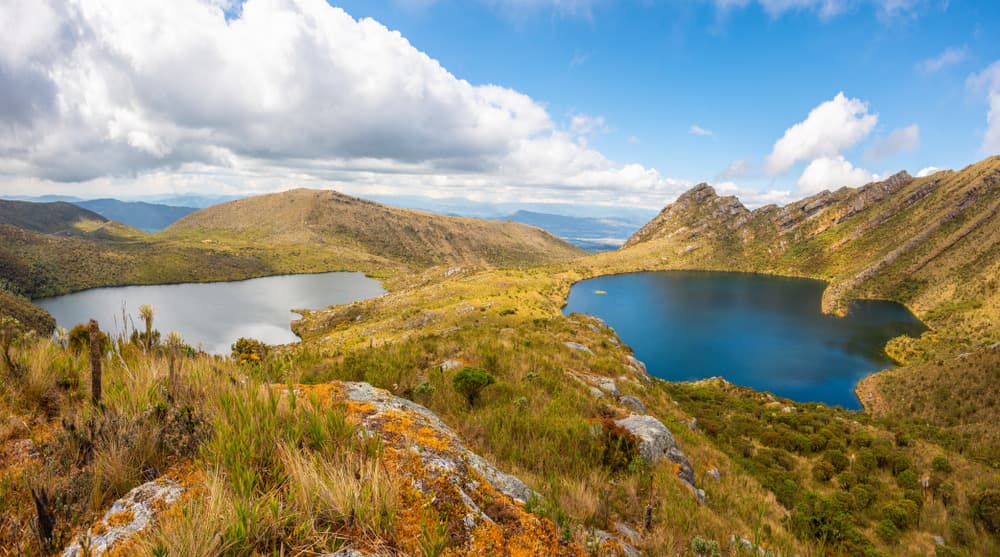
The Parque Nacional Natural Chingaza is a place that is both magnificent and mysterious. Its landscape consists of a vast expanse of terrain adorned with mountains, valleys and lagoons. The gray, rocky soil is carpeted with tall grasses that are sometimes brown, sometimes green.
Everywhere you look, you discover fields of Espeletia grandiflora displaying their yellow flowers. A small stream with clear, pure water reveals beautiful stone pebbles. The mist that often covers the park gives it a solemn and secretive appearance.
Thick Andean forests dominate certain areas of the park. There, tall trees are covered in green, damp moss. Among the weinmannia with delicate branches, the clusia minutiflora with white flowers and small escallonia myrtilloides, a few deer roam. You may also encounter spectacled bears or Andean condors.
The approximately 40 lakes add color to this beautiful landscape. Breathing in this fresh air, charged with humidity, the scent of wood and earth is simply wonderful.
The park is so vast that it would take several days to traverse it from end to end. It is moreover divided into three main sectors and six hiking trails are laid out within it.
The Siecha sector
The Siecha sector, in the far north of the park, is located near the town of Siecha Gasca. It is best known for the trail "Sendero Lagunas de Siecha" which leads to three lakes nestled in the mountains. Some say the Muiscas celebrated El Dorado there. Other natural paths also allow you to go hiking, such as the "Sendero Cichillas de Siecha" or the "Sendero de las Lagunas de Buitrago."
The "Piedras Gordas" sector
The "Piedras Gordas" sector is located near the town of La Calera. Its "Suasie" trail is particularly popular with hikers. At 2.4 kilometers long, it crosses a beautiful Andean forest, traverses the moorlands, passes before a multitude of orchids before ending at a lovely viewpoint. From there, the view of the region is simply magnificent. The "Sendero Laguna Seca" hike also reveals the moorlands and beautiful streams.
The La Paila sector
The La Paila-Laguna Chingazae area has been developed at the southern tip of the park, near the town of Fómeque. Its trail "Sendero Las Plantas des Camino" leads to the viewpoint of "La Ye". From this site, you enjoy a panoramic view of the surroundings as well as the "Laguna Chingaza", the largest lake in the entire park.
The climate
The region enjoys a rather temperate climate. The temperature varies between 4°C and 21.5°C. Showers are recorded throughout the year, but they are less frequent and milder between December and March. The park's trails are difficult to navigate between April and November due to heavy rain. This period should therefore be avoided.
The park is so vast that you'll need a car to get from one sector to another. You can then explore the various trails of the Parque Nacional Natural Chingaza on foot. Bicycles and motorcycles are not permitted on its hiking trails.
To visit the reserve, you will need to rent a car or board a tour bus from the surrounding towns. The park has two entrances, north and south. To reach the Siecha sector or the "Piedras Gordas" sector, you must enter the park from the town of La Calera or Guasca. To visit the La Paila sector, you will need to depart from San Juanito or Fómeque. All these municipalities are located one to two hours' drive from Bogotá.
Rates and hours
Chingaza National Natural Park is open Monday through Saturday from 7 a.m. to 4 p.m. The current entrance fee is 53,500 Colombian pesos per person for foreign tourists and 16,500 Colombian pesos for locals.
Additional fees of 14,000 Colombian pesos are required for each vehicle. They amount to 78,000 Colombian pesos for tour buses.
To visit the park, a reservation two weeks in advance is generally necessary, especially during peak season.
Want to discover this destination?
Our local advisors design your tailor-made trip.