Morro del Tulcán
A volcanic hill and pre-Hispanic mound at the heart of Popayán, Morro del Tulcán offers sweeping views of the "Ciudad Blanca" and stands crowned by an equestrian statue of the city's founder.
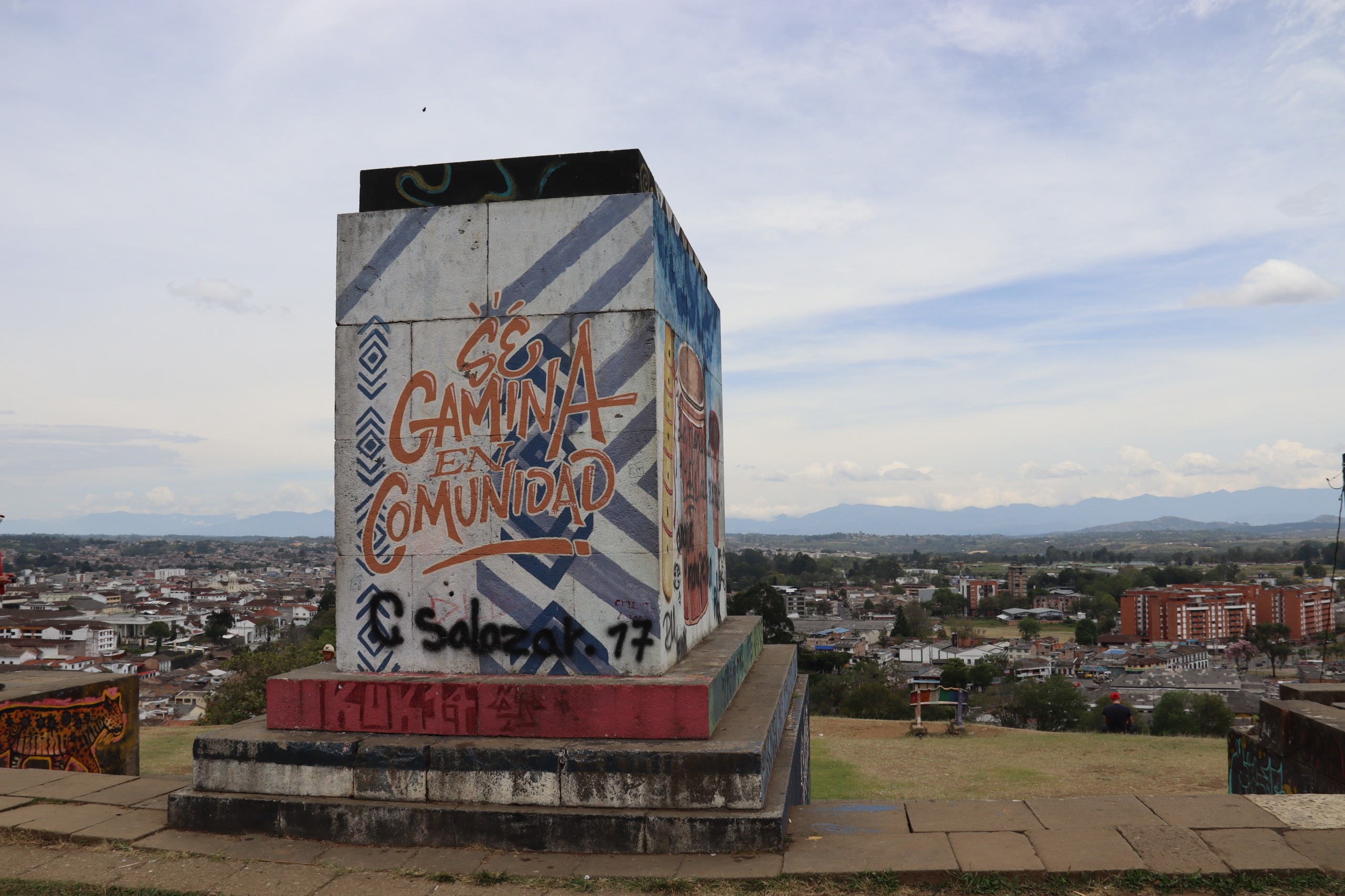
Morro del Tulcán is a volcanic hill that rises above Popayán's historic center, in the Cauca department. At its summit stands an equestrian statue of Sebastián de Belalcázar, the city's founder. The site commands an expansive panorama of the white-roofed cityscape of the "Ciudad Blanca" and the surrounding volcanoes. It ranks among Popayán's most recognizable visual landmarks and is easily accessible on foot from downtown.
Quick practical information
- Access: pedestrian stairway from the historic quarter, northwest of downtown.
- Admission: free.
- Recommended duration: 30 to 45 minutes for the ascent, views, and descent.
- Attire: comfortable, sturdy footwear recommended for the stone steps.
What you'll see
At the summit, the equestrian statue of Belalcázar—erected in 1937—commands the hilltop. The panorama encompasses Popayán's signature white roofs, the cathedral spire, and on clear days, the Puracé and Sotará volcanoes. The hill itself is an ancient pre-Hispanic funerary mound, lending it dual significance: archaeological and scenic.
History and context
Morro del Tulcán is an artificial mound built by the indigenous Pubenza peoples before Spanish colonization. Archaeologists have identified pre-Hispanic burials within it. The Spanish subsequently chose this promontory for Belalcázar's statue, thus layering two historical narratives upon the same ground. This duality—indigenous memory and colonial memory—makes the site a point of reflection on the region's complex past.
Highlights of your visit
The panorama over Popayán
The view from the summit is the primary reason to climb. The colonial city's white roofs spread below, framed by Andean peaks. On clear days, the Puracé and Sotará volcanoes appear on the horizon.
The Belalcázar statue
The bronze equestrian sculpture depicts conquistador Sebastián de Belalcázar, who founded Popayán in 1537. It serves as a visual landmark visible from nearly every corner of the historic center.
The pre-Hispanic mound
The hill itself is an archaeological remnant. Its regular shape—unusual for a natural formation—betrays its anthropogenic origin. This pre-Hispanic context is often overlooked by visitors.
Photography tips
Morning light is most favorable for photographing the city below, before Andean mist settles in. The golden hour at day's end casts warm tones across the white roofs. To frame the statue with volcanoes in the background, position yourself slightly back from the pedestal, facing east.
Location and access
Morro del Tulcán stands northwest of Popayán's historic center, a short walk from the Popayán Cathedral and Parque Caldas. Access is via a pedestrian stairway. The site is not wheelchair accessible due to the steps.
Nearby attractions
- Popayán Cathedral — an 18th-century white edifice at the heart of the historic center.
- Parque Caldas — the animated central plaza, surrounded by colonial buildings.
- Guillermo León Valencia Museum — a former presidential residence converted into a history museum.
- San Francisco Church — one of Popayán's finest baroque façades.
Frequently asked questions
No, admission is free. Simply take the pedestrian stairway from the historic quarter.
Plan for 30 to 45 minutes covering the ascent, viewing the panorama, and the descent. The hill combines easily with a stroll through the historic center.
Popayán enjoys relatively stable weather year-round. Mornings are generally clearer, favoring views of the surrounding volcanoes.
No. Access to the summit is by stone steps only, which makes it difficult for wheelchair users or those with mobility challenges.
No restrictions are posted. The site is outdoors and open to the public, so you are free to photograph.
It is an equestrian statue of Sebastián de Belalcázar, the Spanish conquistador who founded Popayán in 1537. The statue was erected in 1937.
Interested in this visit?
We can include it in your personalised itinerary.