El Infiernito Archaeological Park near Villa de Leyva
El Infiernito Archaeological Park near Villa de Leyva
Known as El Infiernito, the archaeological park near Villa de Leyva houses monoliths from a Muisca astronomical observatory over 2,000 years old.
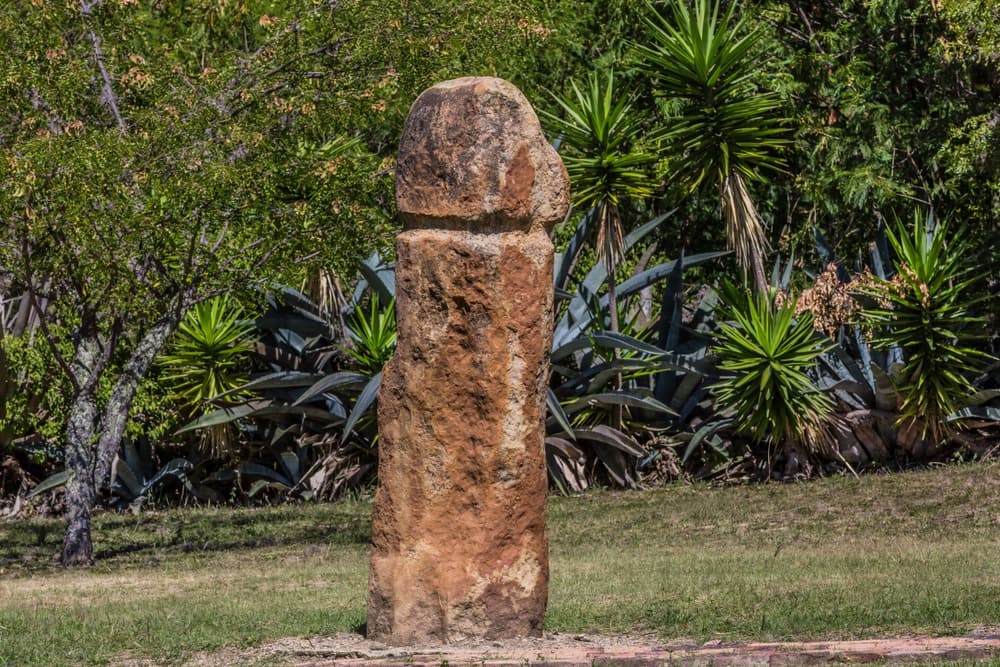
The archaeological park near Villa de Leyva, nicknamed El Infiernito, encompasses across several hectares a collection of phallic monoliths erected by the pre-Hispanic peoples of the region. Considered a Muisca astronomical observatory, this rural site on the Cundiboyacense highlands is sometimes called the Colombian Stonehenge for its stone alignments, though without matching its scale.
Why visit El Infiernito
This archaeological site represents one of the rare tangible testimonies of pre-Hispanic cultures on the eastern highlands. Three elements make it compelling:
- A functional solar observatory, designed to track winter and summer solstices through shadows cast by the columns.
- A ceremonial center dedicated to the god Sué (the sun) and agricultural fertility, the foundation of Muisca life.
- A necropolis recently excavated, still yielding insights into the social hierarchy of its inhabitants.
The visit remains accessible to any traveler, though it gains fuller meaning when accompanied by interpretive panels or an English-speaking guide booked in advance from Villa de Leyva.
History of the site
The site dates to approximately 2,000 to 2,400 years before our era. It was first occupied by the Herrera culture, whose agrarian communities lived in small villages and cultivated the fertile lands of the valley. Several centuries later, the Muiscas inherited the place and extended the existing ritual practices.
For these populations, the agricultural calendar depended directly on observing solar cycles. Identifying the onset of winter and summer solstices allowed them to plan sowing, the lean season, and harvests. The Muiscas thus erected phallic columns whose shadows served as seasonal markers, while honoring Sué, the solar deity believed to fertilize the earth each day.
The arrival of Spanish colonists in the 16th century transformed the interpretation of the site. Seeing in the phallic monoliths a diabolic cult, the Spanish named it "El Infiernito," the little hell, a nickname that has endured to this day.
Since the 20th century, archaeologists and geographers have documented the site, yet have not fully solved all its mysteries: the technique of quarrying, transporting, and erecting the monoliths by the Muiscas remains poorly understood.
What to see on site
The Phallic Monoliths
The first sector, accessible from the entrance and administrative area, displays columns standing in apparently random fashion across the lawn. Their height ranges from 50 cm to over 1.80 meters. These stones honored the sun and the fertility of agricultural soils.
The Muisca Solar Observatory
Further along, the alignment becomes ordered. Two rows of 56 columns oriented east to west follow the sun's path throughout the day. The number 56 refers to the lunar cycle, and observing shadows allowed them to mark the rainy season and dry season. Several columns still bear notches or pictograms indicating the onset of summer or the arrival of winter.
The Dolmenic Tomb
Discovered in 2006, this stone tomb contained the mummy of a two-year-old child, accompanied by small vessels and shell necklaces. Researchers hypothesize it was reserved for high-ranking Native Americans, suggesting a stratified social organization among the site's inhabitants.
Practical information
- Duration of visit: plan for 1 to 1.5 hours on site.
- Admission: moderate entrance fee, with discounts for students.
- Hours: open Tuesday through Sunday, morning and afternoon (verify current hours before visiting).
- Equipment: hat, water, and sunscreen essential—the site is entirely outdoors with minimal shade.
- Guide: a Spanish-speaking guide is generally available at the entrance.
When to go
El Infiernito can be visited year-round, but the dry season (from December to March, with a shorter window around July-August) remains most comfortable: clear skies, stable ground, and better visibility of the shadows cast by monoliths. The rainy season makes the lawn muddy and limits visibility. To observe the observatory function firsthand, plan your visit around the solstices (June and December) in mid-morning or late afternoon.
How to get there
The site is located about 8 km from Villa de Leyva, heading toward Sutamarchán. Several options:
- Taxi from Villa de Leyva: the most direct solution, about 15 minutes' travel. Agree on a round-trip fare with waiting time.
- Bicycle: the road is passable if equipped. Allow 30 to 45 minutes from the center.
- Organized excursion: many local agencies offer a circuit combining El Infiernito, the Santo Ecce Homo convent, and the El Fósil museum.
Nearby attractions
Villa de Leyva concentrates several complementary sites within a few kilometers:
- Villa de Leyva: a designated colonial center, best explored on foot around the Plaza Mayor.
- The El Fósil paleontological museum and the Santo Ecce Homo convent, typically combined with a visit to El Infiernito.
- Guane, another pre-Hispanic village in the neighboring department of Santander.
Frequently asked questions
Frequently asked questions
Like the British site, El Infiernito is a megalithic alignment serving as an astronomical observatory. The comparison ends at function: the Muisca monoliths are smaller, more numerous, and phallic in shape.
In the 16th century, Spanish colonists discovered the phallic monoliths and saw in them a diabolic cult. They named the place "little hell," a nickname that has persisted to this day.
One to one-and-a-half hours is sufficient to explore the entire site, read the panels, and observe the Dolmenic Tomb.
Yes, the path is flat and short. The presence of phallic monoliths may prompt some questions, but the archaeological context lends itself well to a family visit.
Yes, interpretive panels line the path. A guide, however, provides useful insight into recent excavations and archaeological hypotheses.
Preparing your visit
El Infiernito combines easily with a stay in Villa de Leyva and nearby paleontological sites. To integrate this archaeological park into a broader itinerary including Bogotá, the Tatacoa desert, or the Caribbean coast, consult our custom journeys in Colombie.
Interested in this visit?
We can include it in your personalised itinerary.