Bahia Honda Bay
Bahia Honda Bay
In the north of the Guajira Peninsula, Bahia Honda is an isolated bay in Wayuu territory, accessible from Riohacha with a local guide.
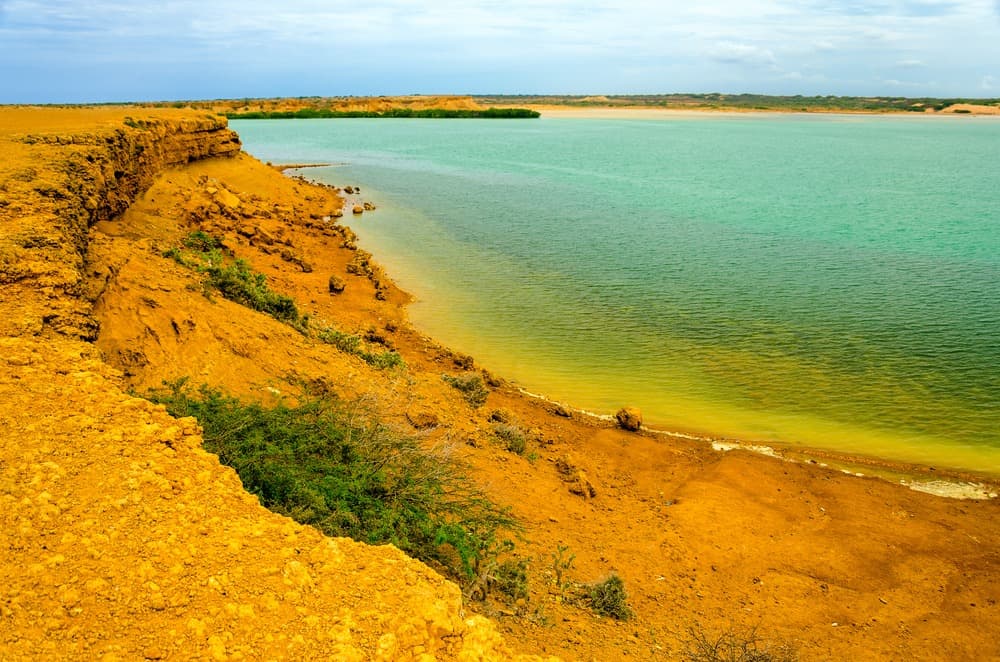
In the north of the Guajira Peninsula, Bahia Honda is a remote bay where the Caribbean Sea cuts into a desert landscape. Access requires effort: long dirt tracks, harsh climate conditions, and virtually non-existent infrastructure. This is Wayuu territory, with no tourist development, visited with a local guide from Riohacha.
Why visit Bahia Honda
Bahia Honda offers a unique geographical setting in Colombia: a bay stretching more than 10 km long, opening onto the Caribbean Sea through a 5 km-wide entrance, framed by Punta Soldado cape to the east and Punta Canon (or Kaguares) to the west. Cliffs, mangroves and small mountains structure the shoreline, while the peninsula extends into arid desert.
Three main reasons justify the journey:
- a rare coastal desert landscape in South America, with striking contrasts between ocean and dunes;
- the possibility of meeting Wayuu communities, an indigenous people inhabiting the peninsula;
- kitesurfing opportunities, favored by the region's regular winds.
Historical overview
Bahia Honda is associated with the Santa-Cruz settlement, founded on May 3, 1502 under conquistador Alonso de Ojeda's orders. According to Colombian sources, this site is claimed as one of the first European settlements on the American continent (distinct from earlier trading posts on the island of Hispaniola). The Spanish abandoned the colony just months after its founding, due to difficult conditions and local resistance.
The region has remained the territory of the Wayuu people, whose social organization and language (wayuunaiki) have endured to this day. Their economy relies on fishing, goat herding and traditional weaving, particularly of mochila bags.
What to see and do
Bay landscapes
The bay alternates between deserted beaches, mangroves and rocky outcrops. Depending on the season, colonies of pink flamingos can be observed in the peninsula's wetlands. Late afternoon light highlights the contrasts between sand, water and rock.
Wayuu villages
The rancherías (hamlets) are scattered across the peninsula. With a guide, it's possible to visit certain communities, observe weaving work and purchase pieces directly from the artisans. Respect for local customs (asking before photographing, not handing out sweets to children, negotiating thoughtfully) is expected.
Water activities
Regular trade winds make the coastline a recognized terrain for kitesurfing. Equipment is not available locally: you must bring your own or work with an operator based in Cabo de la Vela or Riohacha.
When to go
The dry season, roughly extending from December to April, is the only recommended period. During the rainy season, the dirt tracks become impassable: mud can extend journeys by several hours, even days.
Temperature swings are dramatic. The hottest days can reach close to 45°C, while nights sometimes drop to 3°C in the cool season. Pack light clothing for daytime and warm layers for evening.
How to get there
The standard route passes through Riohacha, capital of La Guajira department and the peninsula's main transport hub.
- Santa Marta → Riohacha: direct bus, approximately 3 to 4 hours.
- Riohacha → Uribia: regular bus service, approximately 1.5 to 2 hours depending on traffic.
- Uribia → Nazareth (near Bahia Honda): shared 4x4 jeep over desert tracks, plan for a full day (often 7 to 9 hours), with no settlements for long stretches.
This final leg cannot be improvised: a local guide familiar with the terrain is essential to avoid getting lost.
Practical advice
- Water: no reliable drinking water source on site. Bring several liters per person.
- Cash: no ATM beyond Uribia. Bring Colombian pesos in small denominations.
- Equipment: flashlight, insect repellent, sunscreen, first aid kit, warm clothing for night.
- Accommodation: rancherías offering hammock or chinchorro rentals. Basic comfort, no continuous electricity.
- Safety: the peninsula is an isolated area. Travel with a recognized operator or guide, report your itinerary.
- Respect: you are in Wayuu territory, follow your guide's instructions regarding village visits.
Nearby attractions
Upper Guajira encompasses several sites accessible as part of the same circuit: Cabo de la Vela and its lighthouse, Punta Gallinas (the northernmost point of South America), the Taroa dunes that plunge into the sea. Further south, Riohacha serves as a base camp. To extend your exploration of the country, you can combine this stay with a stop in Cartagena, Santa Marta or the Lost City.
Frequently asked questions
Frequently asked questions
Plan your trip
Bahia Honda fits into a broader itinerary in northern Colombia. To build a coherent stay, consult our tailor-made trips in Colombia.
Interested in this visit?
We can include it in your personalised itinerary.