Villa de Leyva
Villa de Leyva
A village declared a National Monument, Villa de Leyva combines cobblestone streets, dinosaur fossils and turquoise lagoons just 170 km from Bogotá.
Nestled a few hours from Bogotá in the Boyacá region, Villa de Leyva is a charming colonial village well worth discovering during your travels in Colombie.
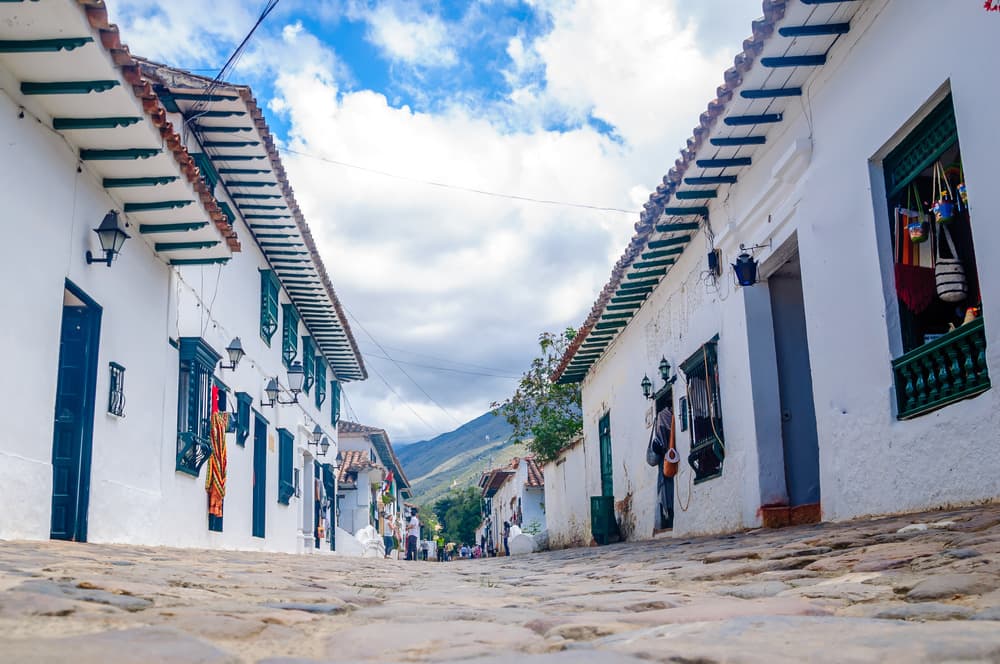
Perched among the mountains, this small "white town" reveals itself through cobblestone streets lined with whitewashed houses featuring wooden balconies. Here, everything feels peaceful, and you'll quickly understand why it's considered one of the most beautiful villages in the region. It comes as no surprise, then, that Villa de Leyva was declared a National Monument of Colombie in 1954.
The History of Villa de Leyva
Numerous discoveries suggest that Villa de Leyva's history stretches back to prehistoric times, roughly 12,000 years before the Christian era.
Then came the era of the Muiscas, a kingdom that was overthrown by Spanish colonizers in the 16th century.
The village of Villa de Leyva was officially founded in 1572 under the orders of Andrés Diaz Venero de Leyva. Its original name was Villa de Nuestra Señora Santa Maria de Leyva.
Originally situated on a sacred site, the Spanish decided to relocate it. A large plaza was constructed to accommodate all the soldiers. With an area of 14,000m², this esplanade is considered the largest in Colombie.
Villa de Leyva gained its independence on June 5, 1811. In 1812, the small town became the capital of the United Provinces.
Villa de Leyva Today
Villa de Leyva has become a truly beautiful village. It's a place that works hard to preserve and showcase its culture and heritage. Still largely spared from mass tourism, a pleasant calm pervades this charming settlement.
Villa de Leyva is home to 19,000 residents. The Villa leyvan people are mostly artisans. Many women spend their time weaving woolen textiles. Agriculture and livestock raising are also major activities for villagers. The town is particularly renowned for its wheat and olive oil production.
As you wander through its streets, you'll encounter countless artisan shops and art galleries.
Today, tourism has become an important source of income for this Boyacá village, explaining the proliferation of restaurants, hotels and inns. Every July, visitors flock here to attend the Feast of the Virgen del Carmen. The village also hosts several annual festivals: International Jazz Festival, Astronomy Festival (February), Film Festival, Kite Festival (August 17-19), Festival of Lights (December 7-9).
What to Do in Villa de Leyva?
When you arrive in Villa de Leyva, you can't miss the main plaza. Surrounded by old whitewashed houses, this square features a small stone fountain at its center. This Plaza Mayor is the perfect place to relax after a busy day.
To make the most of your stay, you can walk to the Colina El Santo viewpoint, where a striking Christ sculpture stands. This spot on the Andes cordillera offers magnificent views over the village.
Villa de Leyva boasts several fascinating buildings: the El Carmen church and museum, the Antonio Nariño Museum, the Acuña Museum, the Ricaurte Museum, the Casa del Cabildo, the Maloca, and more.
For a stay in Villa de Leyva, there's no shortage of nearby attractions:
- Spend some time visiting the "Monument to Silence," better known as the Convento Ecce Homo. Belonging to the Dominican order, this monastery features a magnificent garden. The convent preserves objects used by Spanish evangelists during the colonial period.
- Los Pozos Azules, a park formed by seven artificial turquoise lagoons located 3 km from the village
- El Fossil: This museum showcases the impressive fossil of a prehistoric marine dinosaur (the kronosaurus). (Admission: 8,000 pesos)
- Gondava, the dinosaur park, a Jurassic Park adapted for children
- The Paleontological Research Centre to discover numerous fossils and deepen your knowledge of prehistoric animals. (Admission: 10,000 pesos)
- Iguaque National Park: Spend a few hours hiking to see the sacred lake of the Muisca civilization and its biodiversity. (Admission: 44,500 pesos)
- El Infiernito: a Muisca astronomical observatory where you can spot menhirs and ancient burial sites. (Admission: 8,000 pesos)
- Casa Terracota: a delightful, entirely unique house made of terracotta, with a lovely garden (Admission: 10,000 pesos for adults, 5,000 for children)
- Ráquira: the pottery town
- The Marquis de Villa de Leyva vineyard
- The Salt Cathedral at Zipaquirá
Climate
Villa de Leyva enjoys a warm, temperate oceanic climate. The average temperature recorded in the village is 16.9°C. March is the warmest month in the area. The winter season sees significant rainfall, while the summer season is relatively dry. If you want to avoid a rainy stay, October is not particularly recommended.
To reach Villa de Leyva, you can fly into Bogotá. The small town sits 169.8 km by road from the capital. From there, the bus is the most affordable way to reach the village. Buses depart from Bogotá's Portal Norte station and arrive at Villa de Leyva's station. If you're in a hurry, a taxi is more convenient.
Alternatively, you can reach the village via the Bucaramanga–Villa de Leyva route (268.7 km). You can travel by taxi or bus.
In Villa de Leyva, most people get around on foot. Few people drive through the village streets, especially not on the main plaza. Cars, motorcycles, and bicycles are mainly used for visiting surrounding sites. Horse lovers can also enjoy horseback riding excursions.
Want to discover this destination?
Our local advisors design your tailor-made trip.