Isla de Providencia
Isla de Providencia
A Caribbean volcanic island 90 km from San Andrés, Providencia captivates with protected coral reefs, tropical forest, and authentic English-speaking Creole culture, far from mass tourism.
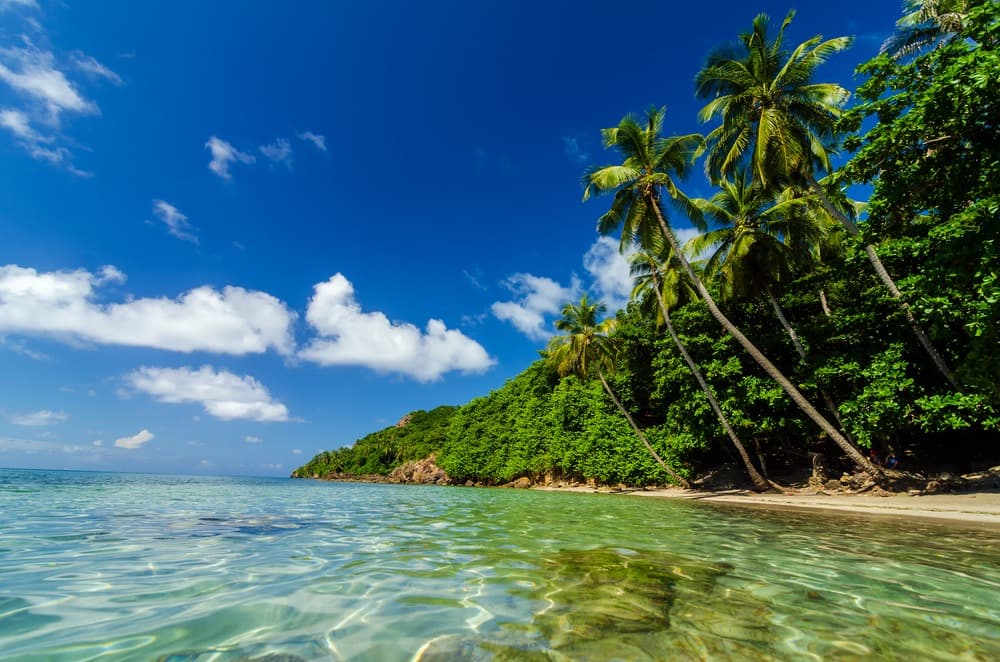
Providencia is a Colombian volcanic island in the Caribbean Sea, approximately 90 km north of San Andrés. Less frequented than its neighbor, it retains dense tropical vegetation, some of the region's best-preserved coral reefs, and an entrenched English-speaking Creole culture. Limited access — no direct flights from the mainland — makes it a distinct destination, prized by travelers seeking authentic Caribbean beauty without overdevelopment.
Quick Practical Overview
- Access from San Andrés: daily catamaran (approximately 3 hours) or short flight by air-taxi — the only way to reach the island.
- Recommended duration: 3 to 5 days to explore the island, dive, and hike.
- Dress code: casual; cover up when visiting the Baptist and Catholic churches in the village.
- Currency: Colombian peso; ATMs are rare, bring cash.
- Local language: English Creole and Spanish.
What to See
The island is organized around several villages connected by a coastal road: Santa Isabel (capital), Aguadulce, Freshwater Bay, and Bottom House. The inner lagoon, protected by a coral barrier, displays characteristic turquoise gradients. The central hill — El Pico — rises to 360 m and offers panoramic views across the entire archipelago. The small neighboring island of Santa Catalina, linked by a wooden bridge, rounds out the experience.
History and Context
Providencia was colonized in the 17th century by English Puritans from Barbados, then contested between England, Spain, and pirates — Henry Morgan established a base here. Colombia assumed definitive control in the 19th century. The Raizal population, descended from these settlers and African slaves, preserves a distinct culture and Creole language from the rest of the country. In 2020, Hurricane Iota struck the island hard; reconstruction is ongoing.
Highlights of Your Visit
The Old Providence Coral Reef
The Old Providence McBean Lagoon National Park protects one of the Western Caribbean's most extensive coral reefs. Scuba diving and snorkeling reveal exceptional marine biodiversity: rays, sea turtles, barracudas, and healthy coral formations.
El Pico
The hike to the summit winds through humid tropical forest populated by land crabs and endemic birds. The trail typically starts from the Bottom House neighborhood. Allow approximately 2 hours round-trip depending on your pace.
Santa Catalina and Pirate's Head
The wooden bridge connecting Providencia to Santa Catalina is one of the archipelago's iconic symbols. On this small island, the rock formation known as Pirate's Head (pirate profile visible from the sea) and ruins of colonial fortifications evoke the area's corsair past.
Beaches and Lagoons
Manzanillo and Freshwater Bay are the most popular beaches for swimming. The inner lagoon, shallow and calm, is ideal for kayaking and paddleboarding.
Photography Tips
Morning light is ideal over the lagoon from the coastal road at Aguadulce. For panoramas from El Pico, aim for early morning before heat haze obscures the horizon. The Santa Catalina bridge photographs beautifully in late afternoon, facing the western sunset. For underwater shots, a waterproof case or GoPro suffices for snorkelers.
Location and Access
Providencia sits in the Caribbean Sea, approximately 90 km north of San Andrés. The island is accessible only by sea (catamaran from San Andrés) or by air-taxi. No direct flights from Bogotá or other Colombian cities. The coastal road circles the island and connects all villages via moto-taxi or rental scooter — the most practical transportation on the island. Accessibility for travelers with reduced mobility is limited due to terrain and basic infrastructure.
Nearby
- San Andrés — The main archipelago island, more lively, with nightlife and busy beaches.
- Santa Catalina Island — Connected by wooden bridge, ideal for a half-day of hiking and snorkeling.
- Old Providence McBean Lagoon National Park — The marine reserve protecting the reef and inner lagoon.
Frequently asked questions
The dry season, December to April, offers the best conditions for diving and hiking. The rainy season (May-November) coincides with hurricane season; the island was severely impacted by Hurricane Iota in November 2020.
A daily catamaran connects the two islands in approximately 3 hours. Air-taxis make the crossing in about twenty minutes. Book in advance during high season, as spaces are limited.
Foreign nationals must hold a valid Colombian visa. The archipelago is a free-trade zone, but access to Providencia is regulated to limit mass tourism; check with local authorities before departure.
Yes. Several dive centers offer introductory courses and snorkeling trips accessible to all. PADI certification or equivalent is required for autonomous reef dives.
Renting a scooter or motorcycle is most convenient for touring the island. Moto-taxis are available in villages. There is no organized bus network.
Reconstruction is ongoing and most accommodations and tourist services have reopened. Some infrastructure remains partially damaged; verify the condition of sites before your visit through your local agency.
Want to discover this destination?
Our local advisors design your tailor-made trip.