Bogotá
Bogotá
Perched at 2,640 m in the Andes, Bogotá blends colonial heritage, world-class museums and a vibrant urban scene. Your complete guide to Colombia's capital.
Time-worn remnants tell the story of Bogotá's history, while museums preserve its rich cultural legacy. Green spaces punctuate the urban landscape, all within a thriving metropolitan ecosystem. Bogotá, capital of Colombie, is simply the perfect destination for an immersive getaway in Latin America.
With a growing reputation as a tourist hub, Bogotá is also a major meeting destination. The city notably hosted the 16th World Summit of Nobel Peace Prize Laureates, the 2017 One Young World Summit, and the international Young Peacebuilders forum in 2019.
History
In 1533, rumors spread through the city of Santa Marta on Colombia's coast that the Magdalena River would lead to the legendary city of gold, El Dorado in Peru. Driven by these tales, conquistador Gonzalo Jiménez de Quesada set out to find the mythical place by sailing up the river. With the blessing of Spanish King Charles V, he left Santa Marta on April 6, 1536 with a garrison of 800 soldiers.
Running short of supplies along the way, Jiménez de Quesada sought out indigenous settlements rumored to be abundant in food and gold. The conquistadors advanced from village to village through the Colombian jungle, ultimately reaching the territory of the Muisca people on March 9, 1537. By then, only 162 soldiers remained. They discovered several hamlets, each containing about a hundred huts. They also saw maize fields and markets overflowing with gold. From that point on, they systematically massacred the indigenous inhabitants, including the great chief Tisquesusa, killed in his own dwelling, Bacatá. When the conquistadors arrived, the region was home to 500,000 Muisca; more than half the population perished during the Spanish invasion.
Jiménez de Quesada established a camp at Chorro de Quevedo plaza in 1538. On August 6 that same year, he placed his right foot on the ground and declared: "I take possession of this land in the name of the greatest of emperors, Charles V". This moment is inscribed in history as the city's founding date. Jiménez de Quesada baptized the city "Nuestra Señora de la Esperanza". Later, Spanish King Charles V changed the name to "Santa Fe".
The city eventually became the capital of the Viceroyalty of Nueva Granada, which encompassed present-day Colombie, Ecuador and Venezuela. As such, it was endowed with numerous colonial administrative infrastructure. In 1819, a military campaign led by the celebrated general Simón Bolívar led to Colombie's independence. It culminated in the capture of Santa Fe on August 10, 1819. The city was renamed Bogotá to honor the Muisca people massacred during colonization.
The Destination Today
This sprawling metropolis unfolds across a verdant plateau in the Eastern Range of the Andes. Bogotá's urban landscape offers a window into Colombie's past, exemplified by its historic center, which houses numerous buildings from the Spanish colonial period. The downtown area, by contrast, presents a modern tableau with its impressive international-class high-rises. On the periphery, the landscape is more traditional: green spaces, amusement parks, residential areas, and more.
Bogotá's Historic Center
The celebrated neighborhood of La Candelaria attracts hundreds of thousands of domestic and international tourists each year. A stroll through this picturesque quarter transports you to the Spanish colonial period in Colombie. History enthusiasts can admire restored colonial-style infrastructure. The historic center's buildings typically feature two stories with occasional courtyards, gable roofs with ceramic tiles, and period balconies.
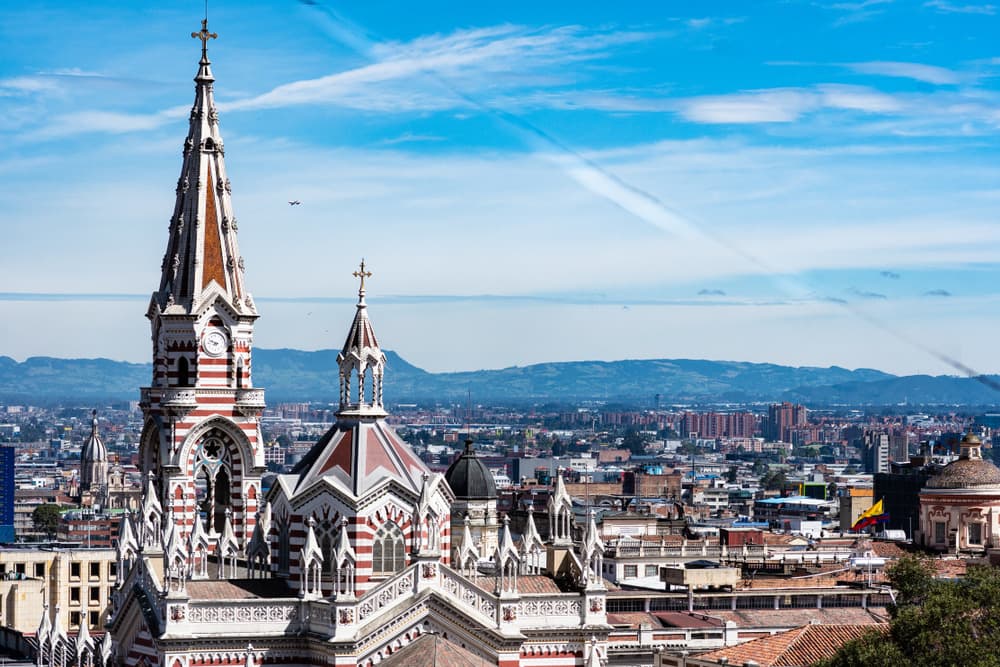
Near the presidential palace, discover the grand Church of Our Lady of Carmelites, recognizable by its brown and cream stripes. This Florentine Gothic-inspired structure boasts magnificent interiors in Carmelite colors. Further downtown, Simón Bolívar Plaza, the beating heart of Bogotá, houses iconic national monuments such as the statue of Colombie's liberator, the Catedral Primada, and the Palacio de Justicia. As a site of historic protest, it remains where citizens voice their demands to government.
A few blocks further, the @Botero Museum contains the largest art collection in all of Latin America. It draws no fewer than 500,000 visitors annually. Through 128 paintings, the museum showcases the impressionist world. The soothing interplay of light in Monet's works, the hypnotic movement of Boudin's masterpieces, the passion radiating from Degas's paintings, along with the curious rounded figures of Fernando Botero, are simply astounding. Further north, the Museo del Oro houses the world's largest collection of gold artifacts. Its thick-glassed displays contain masks, discs, and statues inherited from Muisca culture.
A visit to Bogotá's historic center would be incomplete without a stop at Museo Quinta de Bolívar. Its beautiful gardens and residence with sumptuous furnishings tell the story of the hero who freed Colombie from Spanish rule, Simón Bolívar.
Downtown Green Spaces
Close to La Candelaria, Cerro Monserrate offers sweeping views of the entire city. Fresh air, lush vegetation, and the distant panorama of the capital make this hill a highly cherished site in Bogotá. At the summit stands an impressive basilica housing the statue of Señor de Monserrate dating from 1656. The site is accessible via funicular and cable car, as well as a hiking trail that begins at the base of the escarpment.
The José Celestino Mutis Botanical Garden, further west, connects you with the ecosystem of the Andes Range. It brings together virtually all of the country's plants. You'll quickly become aware of Colombie's remarkable ecological wealth as you wander through magnificent palm-lined avenues, admire ponds, and explore spacious greenhouses.
Other places in Bogotá are equally captivating. The planetarium and Maloka Museum celebrate science, while the Cristóbal Colón Theater showcases the wonders of classical music through concerts by the National Symphonic Orchestra of Colombie. The Usaquén neighborhood also boasts beautiful colonial architecture. The attractions at Salitre Mágico and Mundo Aventura parks will delight children. If you enjoy hiking, try the circuit through the Chapinero neighborhood toward Quebrada La Vieja. And most importantly, don't leave Bogotá without a short trip to La Calera and El Infernito to admire the precious remains of the Muisca people.
Climate
Bogotá enjoys a tropical climate. In the region, temperatures generally range between 6°C and 19°C, with an average of 14.5°C. Weather is often cloudy and showers fairly frequent between April and May, as well as from September to November. The most suitable periods for vacations in Colombie's capital stretch from December to mid-February and July to August.
Colombiae's capital is served by El Dorado International Airport. Located in the city center, it welcomes flights from around the world and throughout the country. The flight from Paris to Bogotá typically takes about twelve hours.
Bogotá has an extensive bus network and numerous taxis. Its metro and trams make it easy to travel from one neighborhood to another, or to other parts of the capital.
Attractions in Bogotá
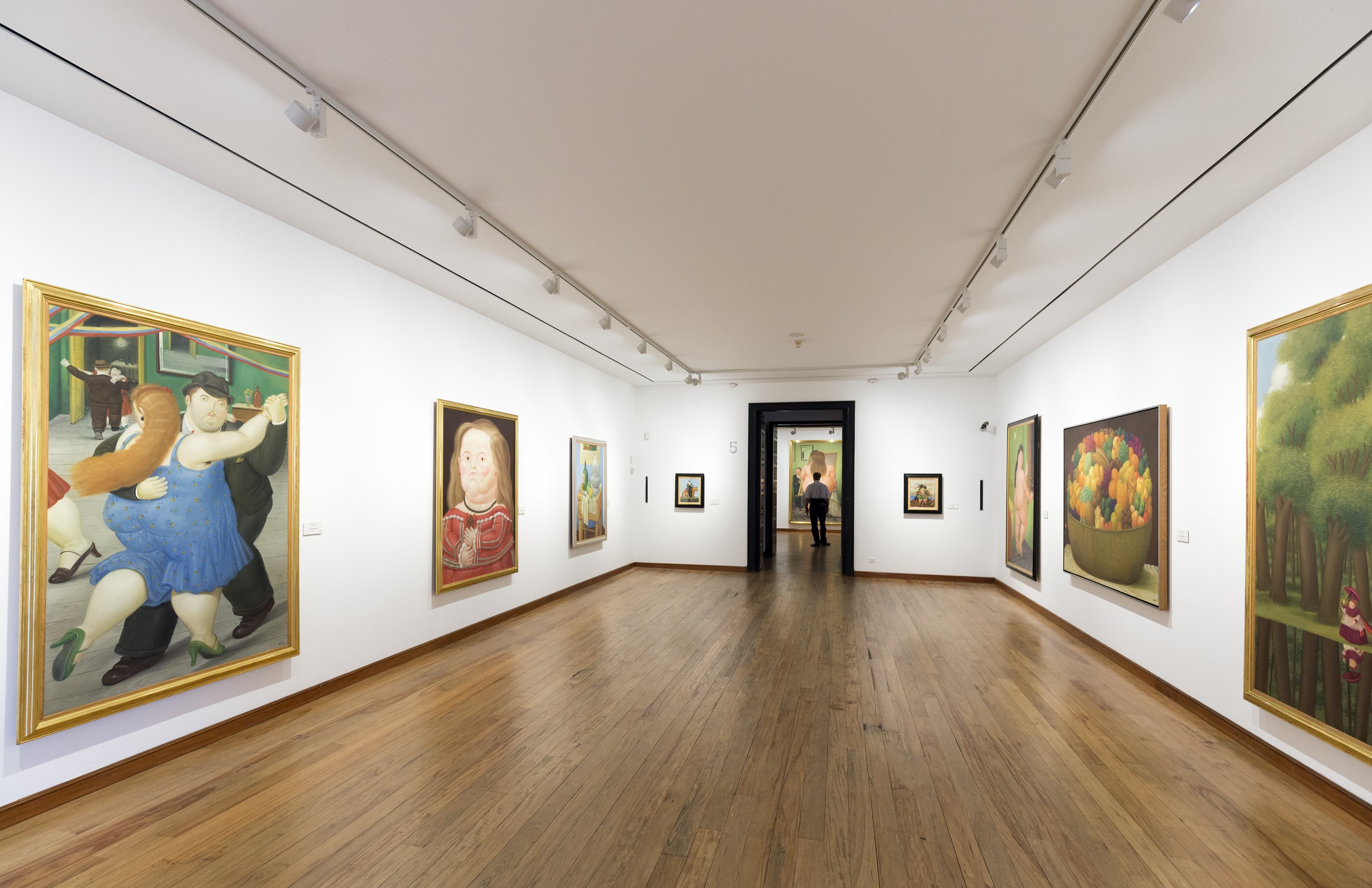
Musée Botero
Dans une maison coloniale de La Candelaria, le Musée Botero expose la collection donnée par Fernando Botero : ses propres œuvres et des maîtres internationaux, en accès libre.
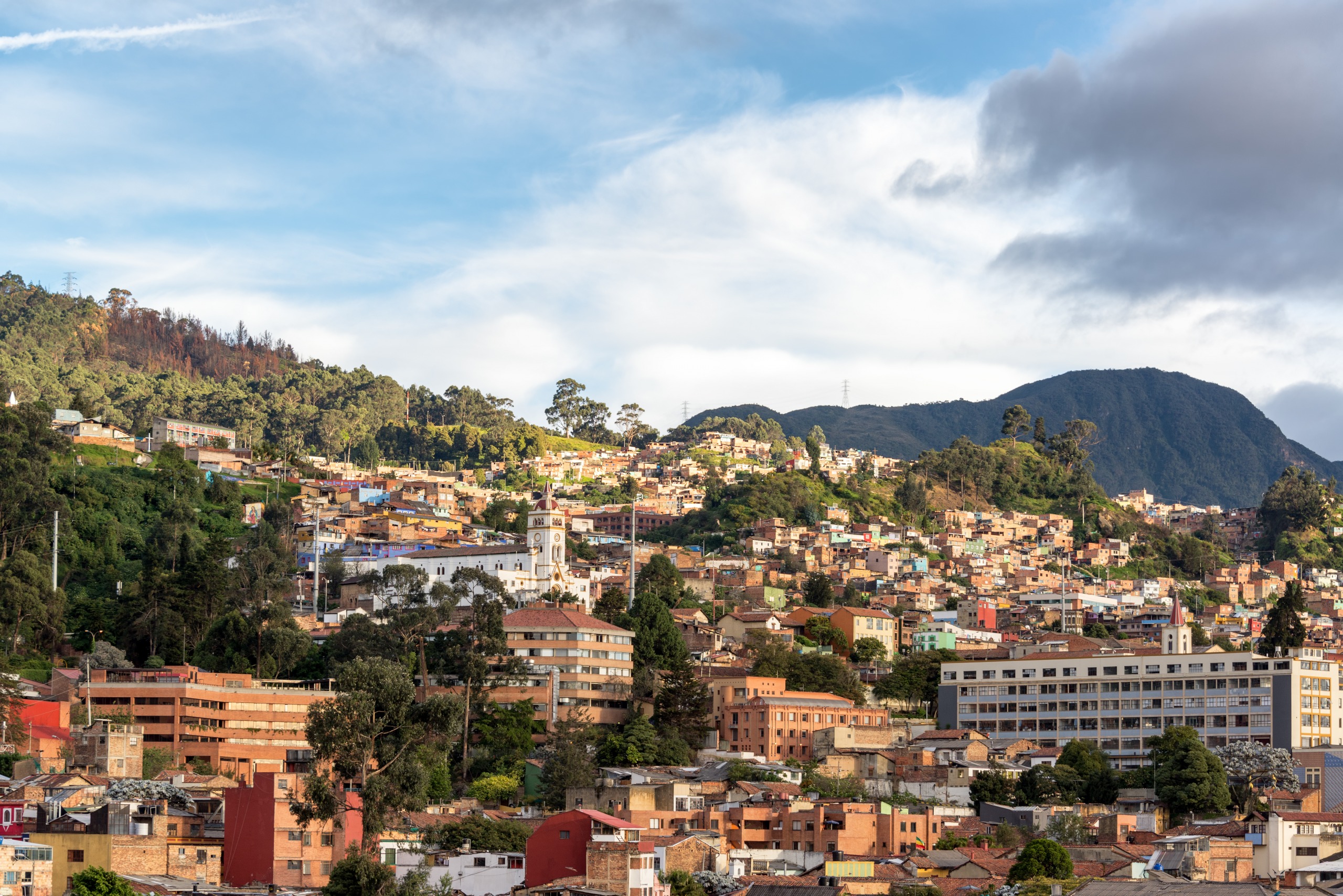
Le Barrio Egipto, ancien quartier chaud de Bogotá
Ancien quartier marqué par les gangs adossé aux collines de Bogota, Egipto se visite aujourd'hui avec ses habitants, entre histoire sociale et traditions religieuses.
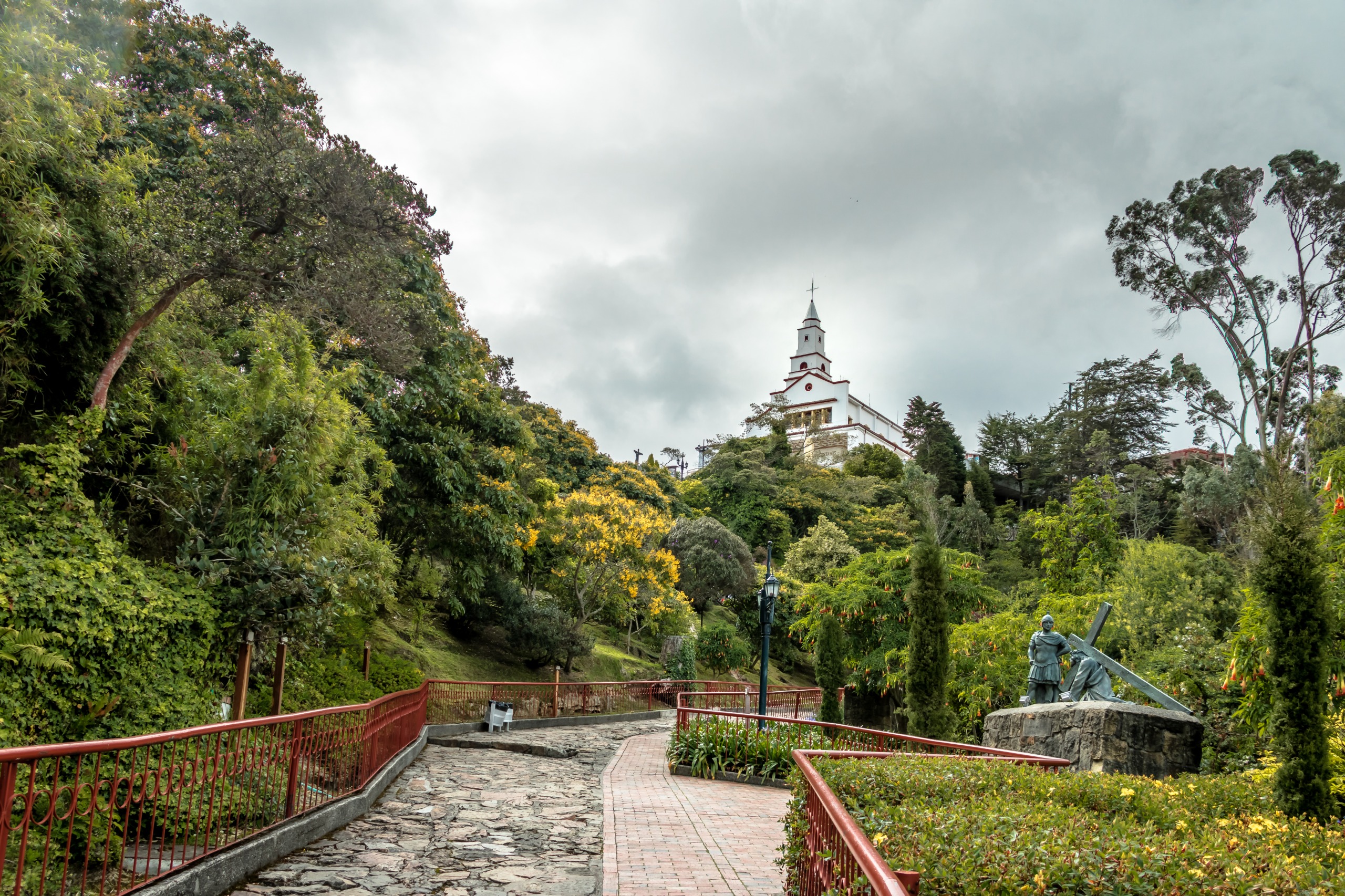
Monserrate
À 3 152 m d'altitude, le Monserrate surplombe Bogota. Sanctuaire de pèlerinage, vue panoramique et héritage muisca : tout pour préparer la visite.
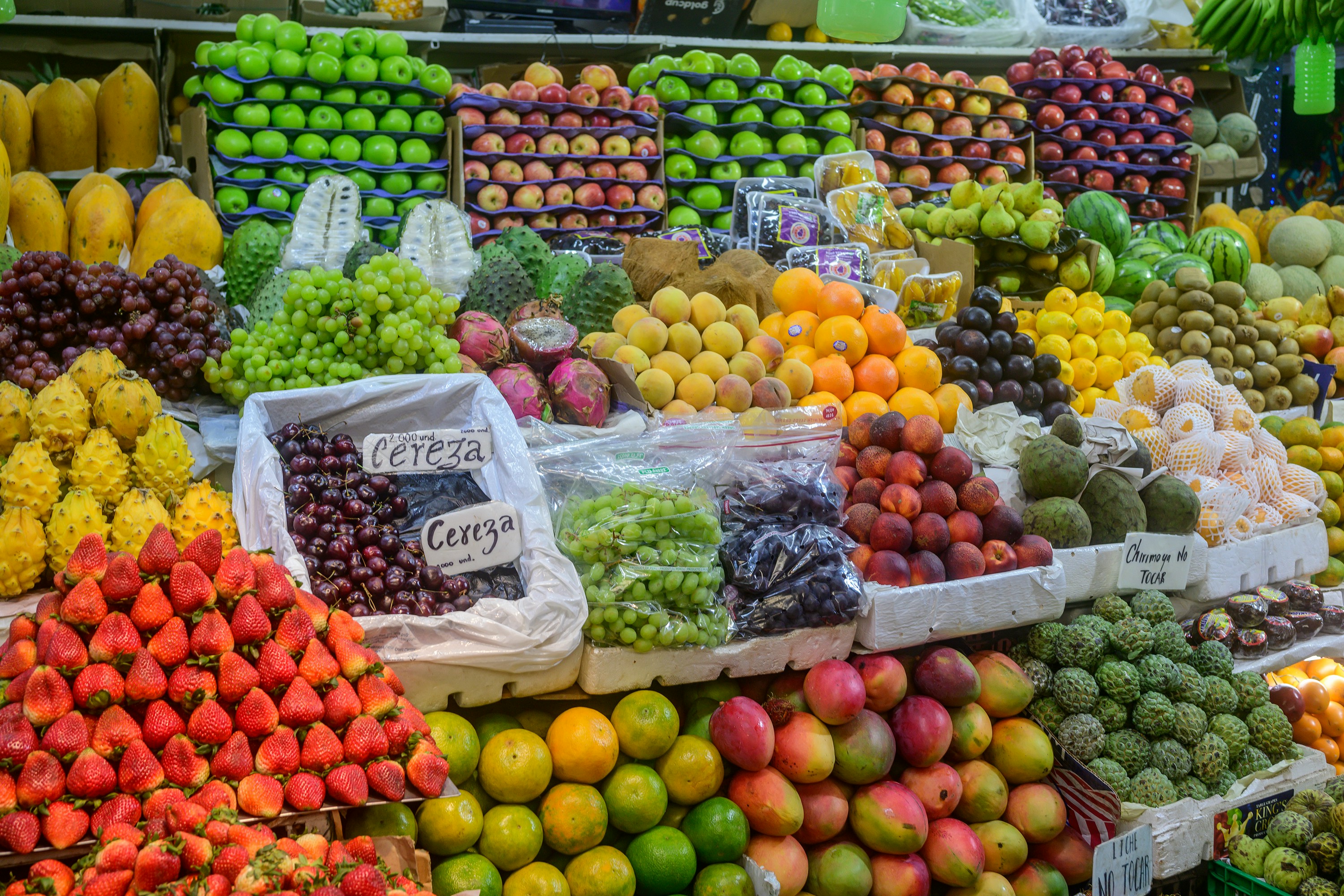
Mercado de Paloquemao
Le marché de Paloquemao est le grand marché populaire de Bogotá : halles aux fleurs, fruits andins et exotiques, comedores authentiques. Une immersion dans la vie quotidienne de la capitale colombienne.
Want to discover this destination?
Our local advisors design your tailor-made trip.