Barrancabermeja
Barrancabermeja
Capital of Magdalena Medio, Barrancabermeja brings together indigenous history, a mythical river, and vallenata culture, far from the classic circuits of Colombia.
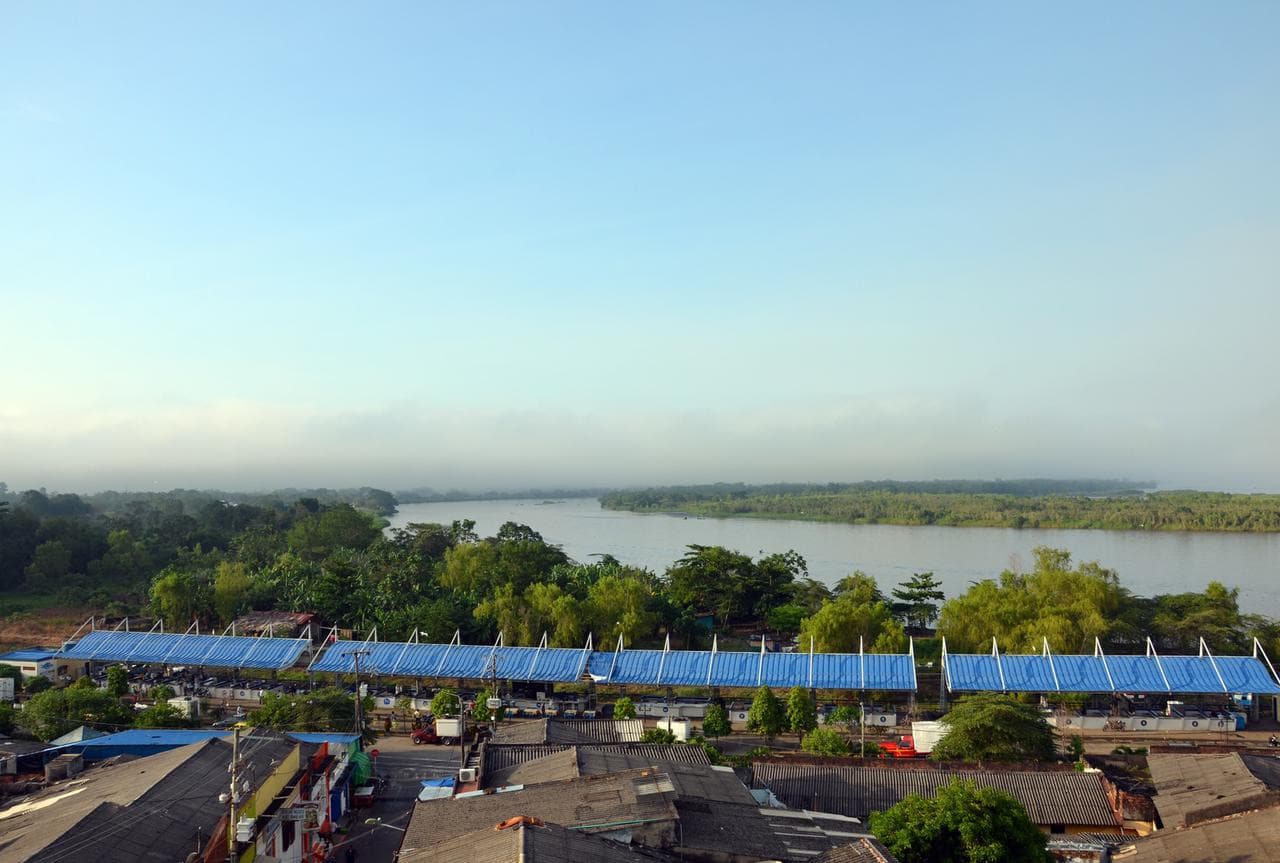
Barrancabermeja is one of Colombia's most recent cities. It is located in the department of Santander. A true economic hub of the country, its northern part is home to the largest oil refinery throughout the territory. With a history worthy of a Hollywood film, it also conceals attractive sites and benefits from an urban landscape blending modernity and simplicity.
History
At the very beginning of our era, Barrancabermeja was a small hamlet of 30 huts built by the Yariguíes indigenous people. They called it La Tora. Each dwelling was made of straw and twigs found in the surroundings. Founded near a great river, the village was surrounded by a corn plantation and dense forest.
The Spanish, led by the famous conquistador Gonzalo Jiménez de Quesada, came to conquer it in 1536 and drove out the Yariguíes. Then, they founded the garrison of Barrancabermeja on February 2, 1601.
The indigenous people did not surrender their lands. Under the leadership of chief Pipatón, they continually opposed the looting, massacre, and enslavement of their brothers. Armed with arrows, they attacked the convoys that supplied Barrancabermeja.
The Spanish retaliated with a major expedition during which they routed nearly 2,000 indigenous people and captured their chief along with his entire family. With their ankle tendons severed, Pipatón managed to escape nonetheless, during his transfer to the city of Pamplona. He reunited his entire tribe and waged a fierce war against the invaders. Together, they succeeded in driving the Spanish out of Barrancabermeja and held their territory until the end of colonization.
Shortly after Colombia's decolonization, Barrancabermeja became a hamlet again where only a few dozen people lived. Nearly a century later, the small village became a city. Its strategic position and the region's oil reserves prompted authorities to improve its infrastructure. In 1917, the Tropical Oil Company obtained permission to exploit the black gold of the city. On April 26, 1922, the municipality of Barrancabermeja was finally officially recognized by the government.
The destination today
Overall, Barrancabermeja resembles a country village suddenly transformed into a large city. The immense buildings of the downtown area stand out against the landscape of small houses built along its roads.
A tour on the outskirts of the locality reveals some pleasant attractions. The mythical Marcela, a large red boat, offers short trips on the Magdalena River. The Centro Recreacional Cafaba provides a beautiful setting for a small family picnic. The Paseo Yuma allows you to discover the region's history as well as a statue of the legendary chief Pipatón and his wife, the beautiful Yarima. Parque de la Vida is the largest public space in the entire city. Its playgrounds are very popular with children. And the Paseo de la Cultura, on 60th Avenue, features numerous artworks that are absolutely worth discovering.
Each year, around the end of November, Barrancabermeja hosts the famous Festival de Río Grande de La Magdalena. The accordion is given prominence during this grand festival. All talents and professionals in the field gather at the Estadio de Sóftbol for a great performance of vallenata, an indigenous musical genre of the region mixed with Spanish culture.
The climate
In Barrancabermeja, temperatures often fluctuate between 24°C and 31°C. The best time to visit the city is between late November and mid-February. During this period, temperatures are milder and rainfall less frequent.
Barrancabermeja is served by Yariguíes Airport. It welcomes regional flights from Bogotá. You can also take a regional bus from Colombia's capital. By coach, you arrive at your destination after nearly nine hours of travel.
Taxis are the best way to get around the city. The city also has several bus lines. If you opt for this means of transport, be sure to check the itinerary carefully beforehand and ask a Barranqueño to point you toward the correct stop.
Want to discover this destination?
Our local advisors design your tailor-made trip.