Guane
Guane
Just 10 km from Barichara, Guane preserves Spanish colonial architecture and a museum housing pre-Columbian ceramics, an Indian mummy, and marine fossils.
A short distance from Barichara, in the department of Santander in northeastern Colombia, the village of Guane sits nestled in the folds of the Andean highlands. Its name echoes that of the Native Americans who inhabited the region before Spanish conquest. Today, the town boasts a few cobblestone streets, a colonial church, and a small paleontological and archaeological museum that alone justifies the detour from Barichara.
Why visit Guane
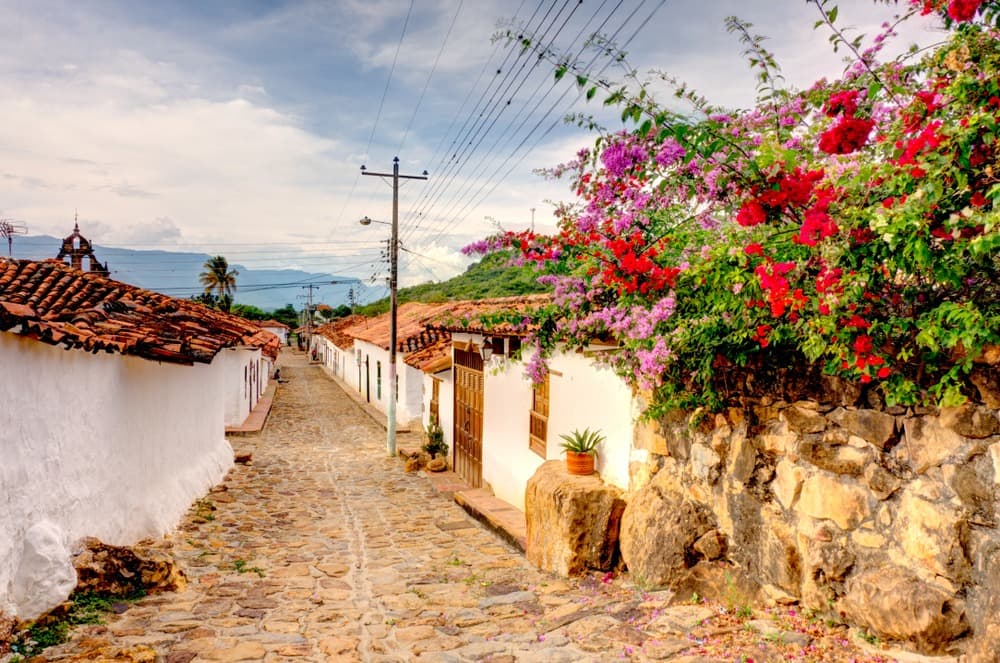
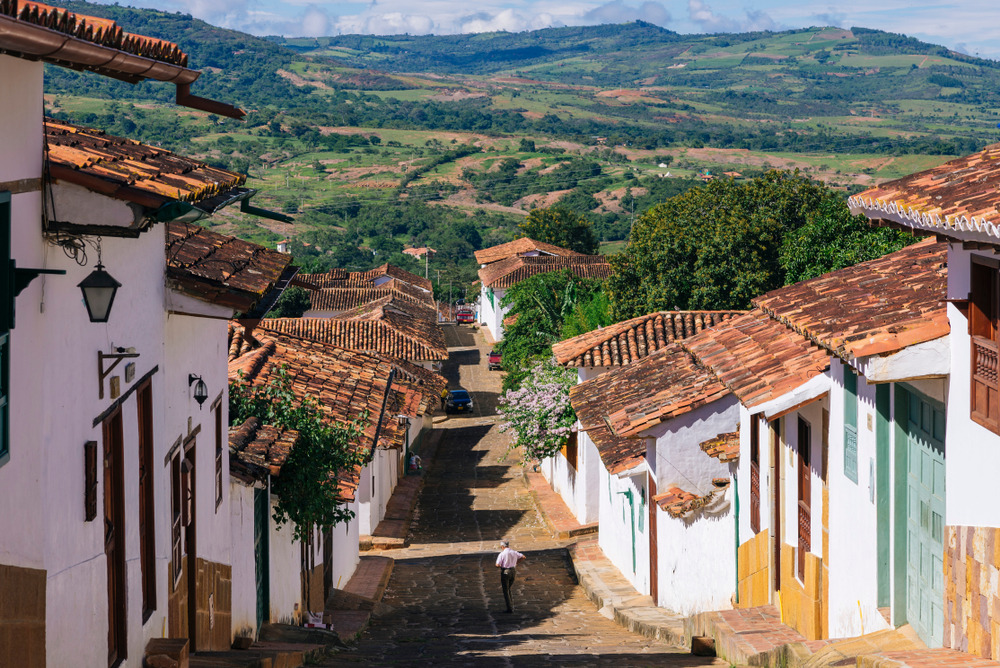
Guane appeals for three distinct reasons. First, it is one of the few places where the memory of the Guane people is preserved tangibly, through the collections of the local museum. Next, the village has retained its Spanish colonial architecture—whitewashed houses, orange-tiled roofs, cobblestone lanes—without the tourist crowds of Barichara. Finally, the subsoil of Santander holds a significant number of marine fossils, and Guane's museum displays a notable collection of them.
A visit pairs naturally with a stay in Barichara, either by bus or on foot via the Camino Real, a restored colonial trail connecting the two settlements.
History of the Guane people and village
According to colonial chronicles, the Guane Native Americans are described as a population with fair skin and long hair, the first tribe to inhabit the territory. The group lived by weaving cotton blankets and crafting clay vessels, and traded fabrics with neighboring clans.
One cultural trait set them apart: the Guanes would mold the skull shape of their children, a practice that, according to local tradition, was meant to frighten their Yariguí enemies. The latter saw in them creatures that were part-human, part-jaguar.
The arrival of Spanish conquistadors brought this society to an end. The Guanes were massacred and survivors enslaved in the colony's gold mines. The remaining survivors were regrouped in the village of Móncora, which corresponds to present-day Guane. A recent genetic study has established links between the Guanes and populations from Mongolia, China, and Siberia—a hypothesis that remains debated but fits within broader research on the settlement of the Americas.
What to see in Guane
The colonial center and church
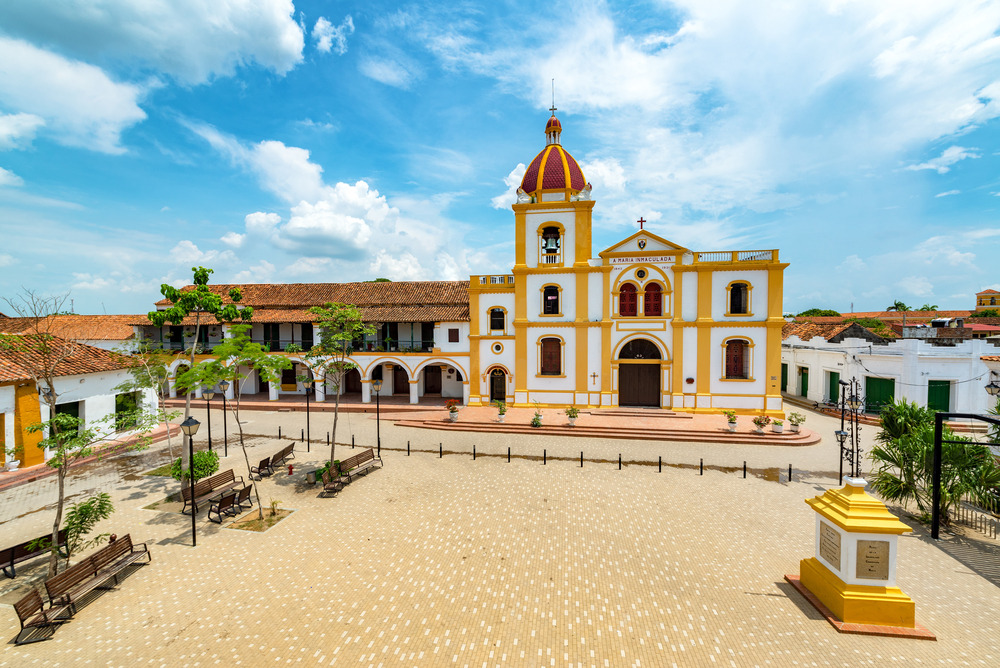
The village is organized around a central square dominated by the church, built during the colonial period. The whitewashed houses, crowned with orange tiles, illustrate the urban model imposed by the Spanish in the eastern Andes. The square remains lively on weekends, when locals gather around benches and cafés.
The Museo Paleontológico y Arqueológico
Housed in a stone building near the church, the museum is divided into two main sections.
- The Ceramics Room brings together bowls, pitchers, pots, and ancient vessels from the Guane people. The most striking piece is an Indian mummy on display, a direct witness to pre-Columbian funeral practices.
- The Marine Fossils Room presents several thousand remains—sea urchins, tower-shaped gastropods, plants, and large ammonites. These fossils testify that the region, mountainous today, lay beneath the sea roughly 60 million years ago.
Practical information
- Duration of visit: plan for a half-day to tour the village and museum, longer if you arrive on foot via the Camino Real.
- Museum admission: modest entrance fee, payable in Colombian pesos in cash.
- Hours: the museum generally opens during the day, with a possible closure at midday. Check on-site or with Barichara's tourism office.
- What to bring: water, hat, and closed-toe shoes if you plan the trek.
How to reach Guane
Two main options from Barichara, which is the logical base for your visit.
- By bus: minibuses connect Barichara to Guane several times daily. The distance is short but the road winds; allow roughly an hour depending on conditions.
- On foot via the Camino Real: this paved colonial trail descends from Barichara to Guane over approximately 9 kilometers. The walk takes two to three hours, downhill throughout, with views over the Santander hills. The return is usually by bus.
What to see nearby
Guane is visited as part of a circuit around Barichara, ranked among Colombia's most beautiful villages. Some 30 kilometers away, San Gil concentrates outdoor activities: rafting, paragliding, trekking. Further south, the Cañón del Chicamocha offers one of the country's most spectacular landscapes. To extend the cultural itinerary, stops like La Candelaria in Bogotá or the Botero museum round out a discovery of Colombian heritage.
Frequently asked questions
Frequently asked questions
A half-day is enough to explore the village and its museum. If you arrive on foot via the Camino Real from Barichara, plan for the full day including the walk and return by bus.
The trail is marked, paved in places, and descends from Barichara. It remains accessible to regular walkers but requires good shoes and water, especially during hot hours.
The dry season, from December to March and July to August, remains most favorable for trekking and village exploration. For the rest of the year, afternoon showers are possible.
The Museo Paleontológico y Arqueológico houses pre-Columbian ceramics, an Indian mummy, and several thousand marine fossils, including large ammonites dating from roughly 60 million years ago.
Yes, the village can be explored freely and the museum visited independently. A local guide can nonetheless enrich the experience with explanations on the Guane people and regional geology.
To incorporate Guane into a complete itinerary across Santander and beyond, consult our suggestions for travel in Colombia.
Interested in this visit?
We can include it in your personalised itinerary.